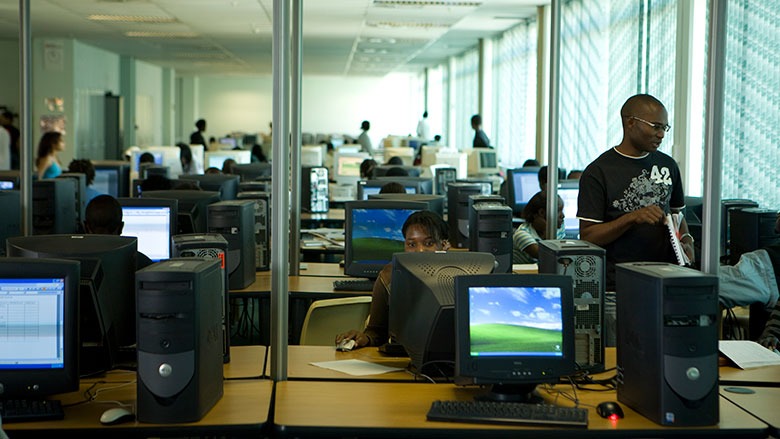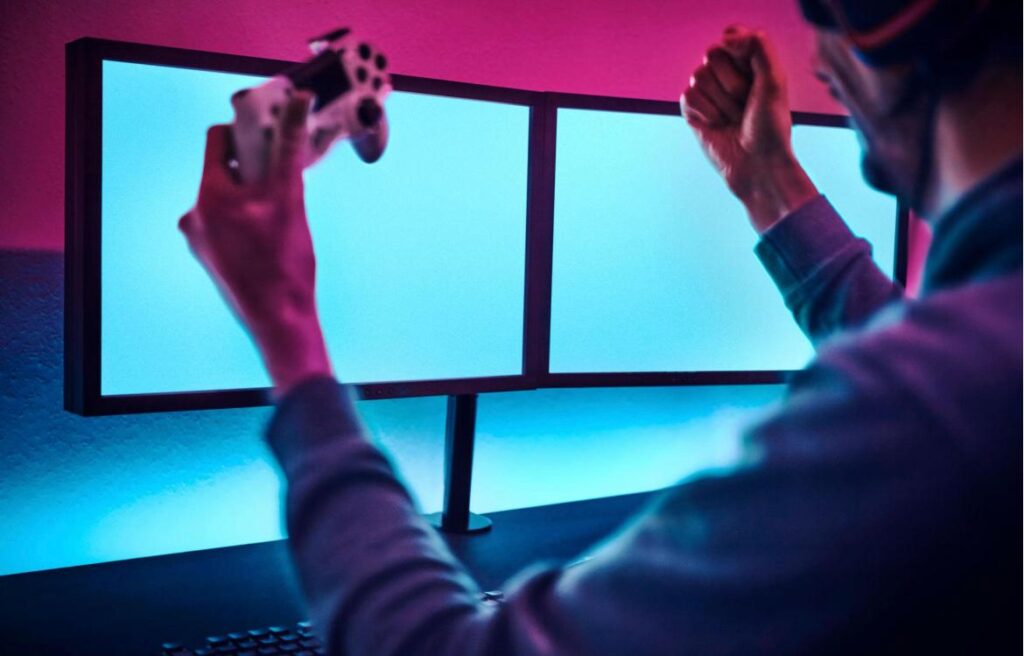

You’re 10 years old. You’ve been stuck on the same level for three days. No internet. No walkthrough. No hints. Just frustration – and eventually, a breakthrough.
Now? A glowing marker tells you exactly where to go. A voice tells you what to do. You’re never really lost.
The games didn’t just change. The way we think did.
We didn’t just play differently – we were forced to think differently. And that difference doesn’t stay in the game.
This isn’t about gaming. It’s about how a generation learns to deal with problems – whether they sit in confusion long enough to solve it, or reach for the next instruction.
Research shows that gaming does sharpen the brain. Studies link video games to improved decision-making, faster processing speed, and increased activity in areas responsible for planning and control. Players are not becoming less capable – if anything, they’re becoming more efficient.
But there’s a shift hiding inside that efficiency.
Modern game design is built around guidance. Waypoints. Markers. Step-by-step objectives. Systems that constantly steer you forward. Research shows these environments improve performance – but mostly within structured frameworks. You get better at making decisions, but inside a path that’s already been laid out.
That changes something subtle, but important.
Then:
No tutorials.
No maps.
No instructions.
You got stuck – and you stayed stuck until you figured it out.
Now:
Markers.
Hints.
Objectives broken down step by step.
You get stuck – and something pulls you forward.
One builds resilience. The other builds precision.
And here’s the part most people miss – modern games are not easier. In many ways, they’re more demanding. They require faster reactions, multitasking, coordination, and constant decision-making. Research shows they can even improve teamwork, conflict resolution, and adaptability.
But they are also more helpful.
And that help changes the relationship between you and the problem.
You stop asking, “How do I solve this?”
And start asking, “What am I supposed to do next?”
That shift doesn’t stay on the screen.
You see it in how we move through the world. We don’t get lost anymore – we reroute. We don’t sit with questions – we search them. We don’t experiment – we look for the correct method.
We are becoming incredibly capable at navigating systems.
But less comfortable when there is no system.
That’s the trade-off no one talks about.
Because real life doesn’t always give you waypoints. It doesn’t highlight the right answer. It doesn’t break problems into clean, manageable steps.
Sometimes, it just leaves you stuck.
And being stuck used to be part of the process.
Studies on gaming behaviour even show a darker edge. Excessive exposure to highly guided and stimulating environments has been linked to attention difficulties, reduced memory performance, and increased anxiety. Not because games are the problem – but because constant direction reduces the need to think independently for long periods.
The problem isn’t that kids can’t solve problems.
It’s that they’re rarely forced to sit in them.
And that might be the real shift.
Not from hard games to easy ones – but from uncertainty to instruction. From figuring things out… to following systems that already have.
Maybe the real question isn’t whether games got easier or harder –
-but whether we’ve quietly lost the ability to sit in confusion long enough to think our way out of it.
Article written by:
Hudaa Ahmed
Journalist at Radio Al Ansaar