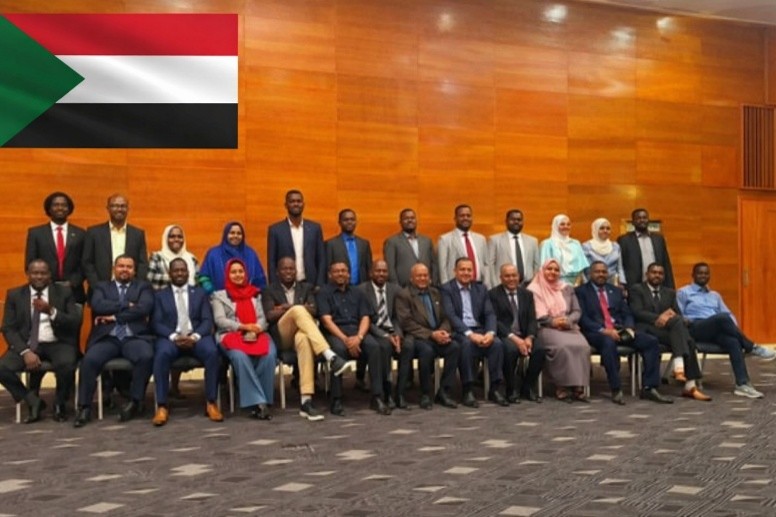

The formation of a broad coalition of Sudanese political and civil groups moved forward on Thursday with an announcement that they had reached a rare consensus. This consensus was based on a shared vision for launching a peace process leading to a comprehensive political settlement to end the conflict – the most significant agreement between Sudanese parties since 2021.
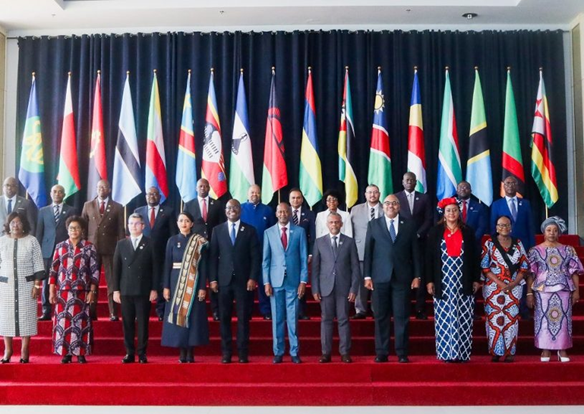
The pact was reached during meetings held in Addis Ababa, Ethiopia. These were facilitated by the Quintet mechanism which compromises the United Nations, the African Union (AU), the European Union (EU), the Arab League, and the Inter-Governmental Authority on Development (IGAD).

The forces that reached the consensus include the Sumoud Alliance, the Democratic Bloc, the Arab Socialist Ba’ath Party-Original, the Popular Congress Party, the National Umma Party, and a number of civil society, women’s, and youth organisations. In a joint statement, the forces said the meetings produced “an agreement on launching a Sudanese peace track through a preparatory committee that will initiate the political process and pave the way for a comprehensive peaceful settlement.” They said the consensus reflects a growing will among political and civil forces to work together to end the suffering caused by the war, counter hate speech and racism, promote dialogue, and repair the damage done to Sudan’s social fabric. The statement called for the political process to lead to comprehensive social reconciliation and agreement on a new social contract based on social justice, equality, equal citizenship, and addressing marginalisation, poverty, and uneven development.
The Sudan Liberation Army led by Abdelwahid al-Nur declined to sign the joint vision, citing disagreements over the exclusion of the National Congress Party and the Islamist movement from the political process.

It must be made clear that in order for this transitional political road map to succeed all armed groups inside Sudan have to agree to a truce. This means all interested neighbouring parties including those bordering Sudan must do their part to crack down on the illegal arms and ammunition trade that sustains the conflict. Of course, all parties involved in the talk acknowledge that there can be no single victor between the country’s regular army; the Sudanese Armed Forces (SAF) and the Rapid Support Forces (RSF) militia. The only result would have to be to bring both sides to the negotiating table. Economic, military, and personal sanctions on both the SAF and RSF command structures appear to have taken their toll. If a cease fire is imminent, then it has to create an atmosphere for negotiations that would lead to the transition of a civilian government.
This means that all relevant parties including the National Congress Party, and the Islamic-orientated movement must be included in the process of negotiations. Sudan even with the secession of South Sudan in 2011, could be an influential state in North and East Africa and all relevant neighbours and internal parties must assist it back on the path to recovery.
Even Egypt and Eritrea at a joint summit agreed that that their shared neighbour’s conflict must end. Egyptian President Abdel Fattah El-Sisi and Eritrean President Isais Afwerki met in Cairo, Egypt to discuss among other things the unrest in Sudan.

The two presidents also discussed developments in Sudan, where El-Sisi reaffirmed Egypt’s support for Sudan’s unity, sovereignty, security, and stability. Both sides stressed the need to end the ongoing conflict and support efforts aimed at restoring comprehensive stability in the neighbouring country. The leaders further reviewed cooperation to ensure security in the Red Sea and maintain freedom of maritime navigation. El-Sisi stressed the importance of closer coordination between Red Sea coastal states, reaffirming Egypt’s position that responsibility for the governance and security of the waterway rests exclusively with its littoral countries.
Afwerki supported this position, and both leaders agreed to continue consultations and coordination to promote regional peace, stability, and development.
An unstable Sudanese state will not be in Cairo or Asmara’s best interests. It can only lead to a refugee crisis that neither nation bordering Sudan can prevent, unless there is security and stability in the nation concerned. Khartoum could be a significant player among the Red Sea and Nile basin nations. It depends on how Sudan’s own leadership determines this matter. Egypt and Eritrea are forming a close partnership alongside Somalia to counter the growing influence of Ethiopia in both the horn of Africa and the Nile Basin region. In the case of Cairo and Asmara both countries do not want chaos in the form of a power vacuum in Sudan.
However, it will completely be up to Sudan’s people to determine their faith. The country has long been acquainted with authoritarian rule. The Sudanese people desire a fairer system of government where they have a say. How this transpires remains to be seen.
Article written by:
Yacoob Cassim
Journalist at Radio Al Ansaar