
When a loved one becomes seriously ill, many South Africans begin asking the same question:
“Can they be treated overseas?”
For decades, there has been a perception that the world’s best healthcare exists somewhere beyond our borders. Europe. America. The Middle East.
Families spend years saving for specialist treatment. Some sell possessions. Others launch fundraising campaigns. Many cling to the belief that the answer to their prayers lies on a flight out of South Africa.
But what if the breakthrough they are searching for is already here?
What if the future of medicine is not waiting in London, New York or Dubai?
What if it is being built in Pretoria?
Several years ago, South Africa quietly achieved something that stunned the medical world.
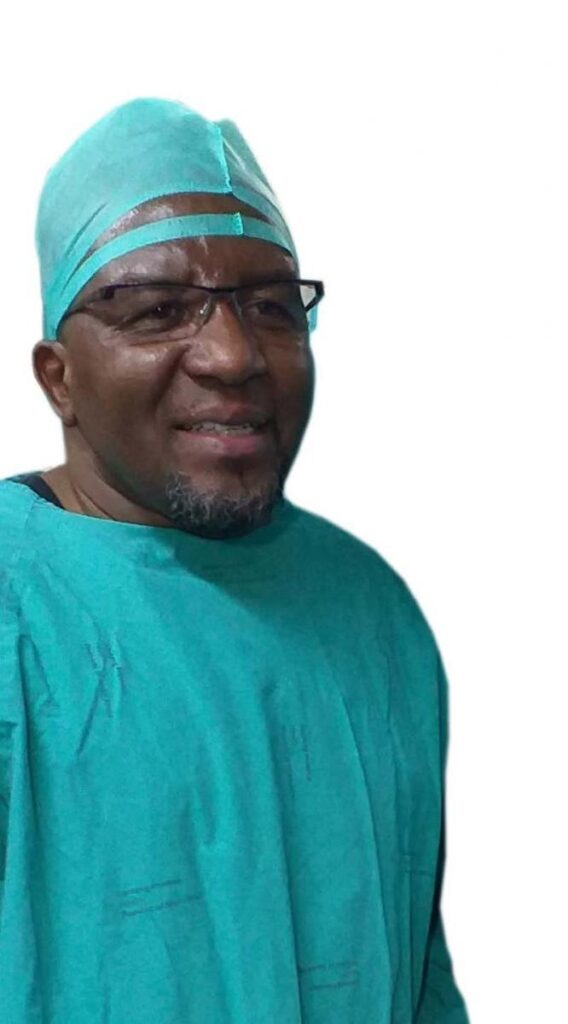
A team led by Professor Mashudu Tshifularo at the University of Pretoria and Steve Biko Academic Hospital successfully performed the world’s first middle-ear transplant using 3D-printed bones.
The procedure was designed to help patients suffering from hearing loss caused by damaged middle-ear bones. Using advanced 3D-printing technology, the team created customised implants capable of replacing tiny bones inside the ear, offering patients the possibility of restored hearing and an improved quality of life.
For someone living with hearing loss, that is not simply a medical procedure.
It is the possibility of hearing a child’s voice clearly again.
It is the ability to participate in conversations without embarrassment.
It is hearing the sounds of everyday life that many people take for granted.
And the world had never seen anything like it before.
The operation was a global first.
Not in London.
Not in New York.
Not in Berlin.
Not in Dubai.
Pretoria.
South Africa.
At a time when headlines are often dominated by stories of corruption, failing infrastructure, crime and economic uncertainty, this achievement tells a different story.
It reminds us that South Africa is not only a country facing challenges.
It is also a country producing solutions.
A country of innovators.
A country of researchers, doctors and healthcare professionals whose work is changing lives.
Perhaps the most powerful part of this story is not the technology itself.
It is what the technology represents.
For too long, many South Africans have been conditioned to believe that excellence comes from somewhere else.
That the best universities are elsewhere.
The best hospitals are elsewhere.
The greatest innovations are elsewhere.
Yet one of the most significant advances in hearing restoration came from South African minds working on South African soil.
That matters.
Because every breakthrough achieved locally strengthens confidence in our healthcare system.
Every innovation developed here creates opportunities for future patients.
Every success story reminds young South Africans that they do not need to leave the country to make a global impact.
In many ways, this story is about more than medicine.
It is about belief.
Belief in local talent.
Belief in local institutions.
Belief that South Africans can compete with — and even outperform — the best in the world.
For ordinary citizens, that message carries enormous weight.
It means hope may be closer than we think.
It means the next life-changing medical breakthrough could emerge from a South African laboratory, hospital or university.
And it means that somewhere, right now, a patient searching for answers may not have to look halfway across the world to find them.
The world’s first middle-ear transplant using 3D-printed bones made history.
But its greatest legacy may be the lesson it leaves behind.
South Africa’s future is not defined solely by its struggles.
It is also defined by the brilliance, determination and innovation of the people working every day to build something better.
Sometimes hope does not arrive from overseas.
Sometimes it is waiting right here at home.
Article written by:
Hudaa Ahmed
Journalist at Radio Al Ansaar