Danny Jordaan won a fourth term as president of the South African Football Association after delegates voted at the elective conference in Midrand on 12 September 2026. Jordaan secured 157 votes while his challenger, Sandile Zungu, received 82 votes. He defended his record and highlighted coach development and recent milestones for Banyana Banyana as evidence of progress under his leadership.
Jordaan told delegates that sending South African coaches abroad has strengthened the national coaching pool and raised the profile of South African football across the continent. He pointed to growing opportunities for coaches in countries such as Egypt and Morocco as proof that SAFA’s development programmes are bearing fruit.
Election Tensions and Criticism
During the conference, journalists pressed Jordaan on concerns about grassroots development and governance. Critics argue that SAFA must do more to improve transparency and to prioritise long‑term development over short‑term gains. Jordaan acknowledged the criticism but said the association has made measurable progress and will continue to invest in coaching and player pathways.
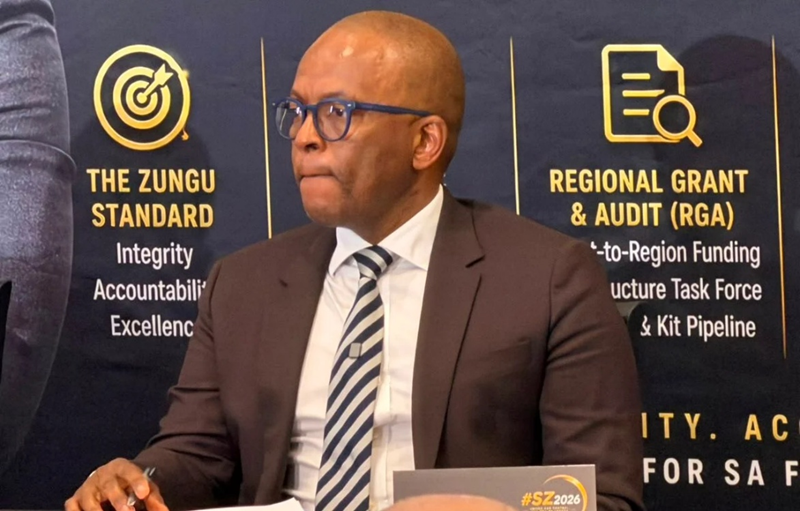
Sandile Zungu, an AmaZulu FC owner and businessman, accepted the result but voiced dissatisfaction with the lead‑up to the vote. He described the credentialing process as “less than satisfactory” and said he would not pursue legal action. Zungu campaigned on promises of reform, stronger governance, and a more professional approach to running the game.
What the Result Means for SAFA
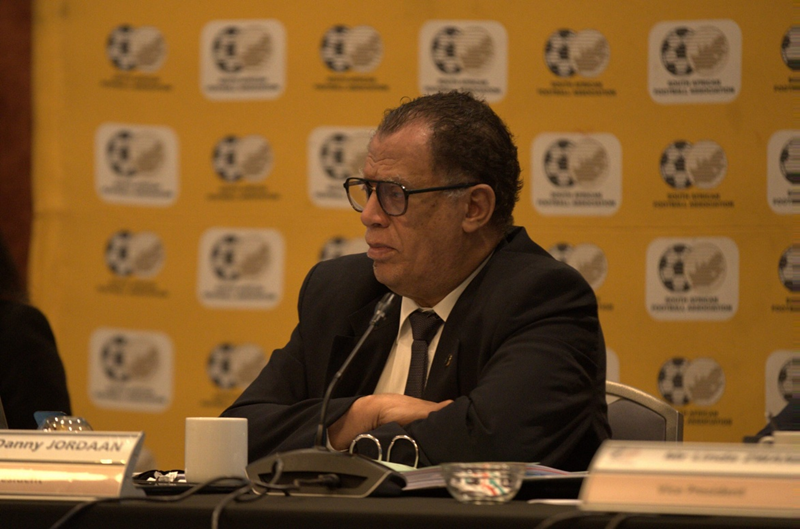
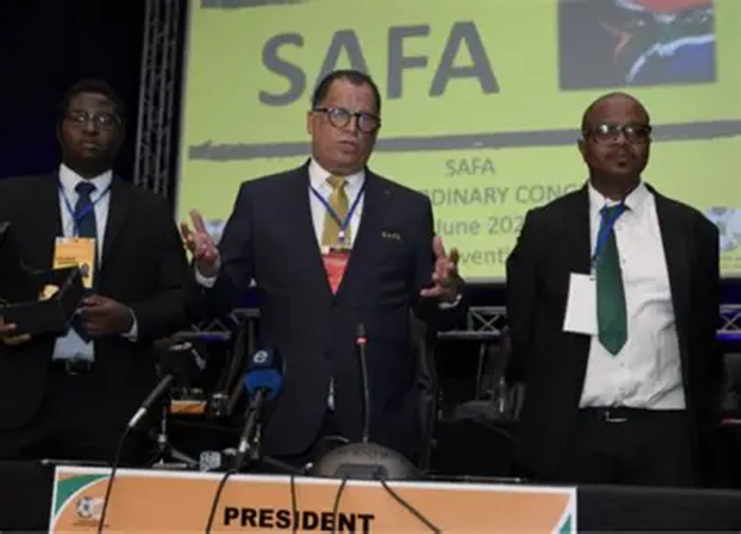
Danny Jordaan addresses delegates at the SAFA elective conference in Midrand. IMAGE: Supplied
Jordaan’s victory extends his leadership, which began in 2013. Supporters say continuity will help SAFA complete long‑term projects and maintain momentum for national teams. Meanwhile, opponents warn that prolonged tenure risks entrenching power and that fresh leadership could accelerate governance reforms.
Jordaan said he plans to step down in 2030, signalling a future transition. For now, he will continue to focus on coach development, improving domestic competitions, and strengthening ties with other African football associations to learn from their successes.
Financial and Governance Questions
Media reports raised questions about honoraria and campaign spending during the election. Observers called for clearer financial disclosures and stronger accountability measures. Many delegates and stakeholders urged SAFA to adopt stricter governance standards and to publish regular, transparent reports on finances and development outcomes.
Next Steps and Priorities
SAFA must balance immediate priorities with long‑term reform. In the short term, the association will continue to support national teams and coach development programmes. At the same time, stakeholders expect SAFA to implement governance reforms, improve grassroots funding, and increase transparency around elections and financial management.
Community Reaction and Outlook
Reactions to the result split along familiar lines. Supporters praised Jordaan’s record on coach development and international visibility. Critics reiterated calls for structural reform and a stronger focus on grassroots football. Ultimately, SAFA faces pressure to deliver measurable improvements on and off the pitch while preparing for a leadership transition in the coming years.