
While millions of people around the world are focused on wars, political tensions and the rising cost of living, a quieter battle is taking place behind closed doors.
It is a battle for influence.
A battle for economic power.
And a battle that could help determine who shapes the global economy for decades to come.
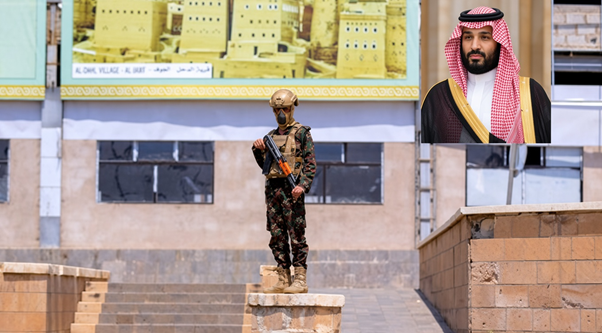
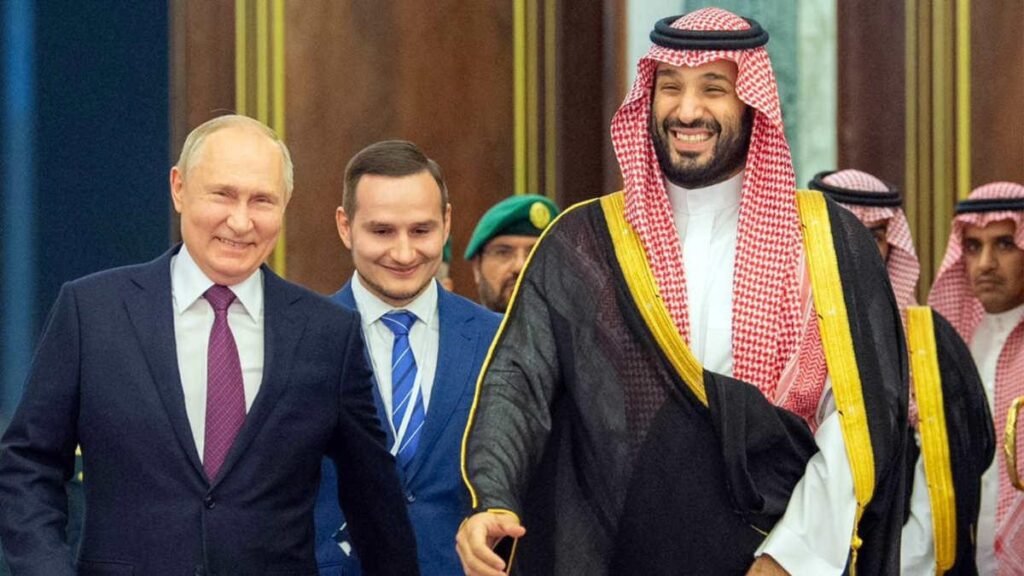
This week, Saudi Arabia took centre stage at the St. Petersburg International Economic Forum in Russia as the event’s official guest of honour. Senior Saudi ministers, investors and business leaders joined their Russian counterparts as both countries strengthened ties through a series of agreements covering energy, investment, industry, tourism, technology and education.
To many people, it may seem like just another international summit.
But history is often shaped in rooms like these.
Long before ordinary people feel the effects, world leaders, investors and economic powerhouses are already positioning themselves for the future.
And that future may be arriving faster than many realise.
For decades, the global economy largely revolved around the influence of the United States and its Western allies. Trade routes, financial institutions and international partnerships were often built around a system that placed the West at the centre of global decision-making.
Today, however, the world is changing.
Countries are increasingly looking beyond traditional alliances and forging new partnerships based on economic opportunity rather than political loyalty.
Saudi Arabia’s growing relationship with Russia is one of the clearest examples of that shift.
For generations, Saudi Arabia was regarded as one of Washington’s closest strategic partners in the Middle East. Russia, meanwhile, has spent years facing sanctions and economic pressure from Western nations.
Yet despite those realities, the relationship between Riyadh and Moscow continues to grow stronger.
And that is why this week’s gathering has attracted so much international attention.
The significance is not simply that agreements are being signed.
The significance is who is signing them.
Just a few years ago, many analysts would have considered a Saudi Arabia-Russia partnership of this scale unlikely. Today, it is becoming increasingly normal. That reality reflects a world in which nations are no longer automatically aligning themselves with traditional power centres. Instead, they are pursuing their own interests, building new alliances and reshaping the global economy in ways that would have been difficult to imagine a generation ago.
The forum also comes at a symbolic moment.
This year marks 100 years of diplomatic relations between Saudi Arabia and Russia.
What began as a diplomatic relationship a century ago is now evolving into a strategic partnership with growing economic influence.
That matters because Saudi Arabia and Russia are not simply important countries.
Together, they are two of the most powerful energy producers on earth.
When they make decisions, markets pay attention.
When they cooperate, investors listen.
And when they move in the same direction, the ripple effects can travel across continents.
For the average South African, this may seem like a story unfolding thousands of kilometres away.
But in reality, it is much closer to home than many people realise.
Energy remains the foundation of the modern economy.
It fuels trucks delivering food to supermarkets.
It powers industries and factories.
It moves goods through ports and transport networks.
It influences the cost of almost everything we buy.
When major energy-producing nations strengthen their cooperation, the impact eventually filters through global markets.
And when global markets move, ordinary households often feel the consequences.
Fuel prices can rise.
Transport costs can increase.
Food becomes more expensive.
Businesses face higher operating costs.
Families are forced to stretch already strained budgets even further.
That is why events like this matter.
Not because of the speeches.
Not because of the handshakes.
But because decisions made by powerful nations today can influence economic realities tomorrow.
What is happening in St. Petersburg is also part of a much larger story.
Across Asia, Africa and the Middle East, countries are increasingly pursuing independent foreign policies and building relationships that serve their long-term interests.
The result is a world that is becoming more multipolar.
Power is no longer concentrated in a single region.
Influence is becoming more dispersed.
And the rules that governed the global economy for decades are gradually being rewritten.
For South Africa, this presents both opportunity and uncertainty.
As a member of BRICS and a nation that maintains relationships with both Western countries and emerging powers, South Africa occupies a unique position in this changing landscape.
The choices made today regarding trade, diplomacy, investment and international partnerships could shape economic opportunities for years to come.
History does not always announce itself with dramatic headlines.
Sometimes it arrives quietly.
Through agreements.
Through partnerships.
Through decisions that seem insignificant at the time but later prove to be turning points.
The gathering in St. Petersburg may well be remembered as one of those moments.
Most South Africans will never sit at the negotiating tables where these decisions are made.
But they may eventually feel the consequences.
Because when economic giants begin redrawing the map of global influence, the effects rarely remain confined to world leaders and boardrooms.
They reach businesses.
They reach communities.
They reach households.
And eventually, they reach every person standing at a fuel pump, pushing a trolley through a supermarket or trying to make a monthly salary last until the end of the month.
Saudi Arabia and Russia are sending a message to the world.
The message is simple:
A new global order is taking shape.
The question is whether the rest of the world is prepared for what comes next.
Article written by:
Hudaa Ahmed
Journalist at Radio Al Ansaar