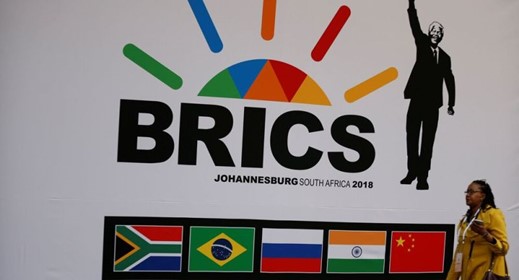

BRICS Plus Foreign Ministers had met to call in a joint statement for inclusive, globally representative governance of Artificial Intelligence (AI) under the United Nations, emphasizing meaningful participation from developing nations. The Foreign Affairs/International Relations Ministers held their annual meeting on the margins of the 80th Session of the United Nations General Assembly on Friday. India chaired the meeting in its capacity as the incoming BRICS Chair for 2026.
The Ministers also underscored the transformative impact of Information and Communication Technologies (ICTs) on socioeconomic growth and digital transformation in BRICS nations. They reiterated support for a safe, open, secure, and interoperable ICT environment, while advocating for global norms and legal frameworks to prevent cybercrime, malicious software, disinformation, and misuse of digital technologies. Highlighting the peaceful application of science and technology, the Ministers reaffirmed their commitment to international cooperation in areas such as health, vaccine development, tuberculosis, antimicrobial resistance, nuclear medicine, and traditional medicine systems. They welcomed intra-BRICS initiatives, including digital health cooperation, vaccine manufacturing, and knowledge sharing.
On space security, the Ministers reiterated support for the prevention of an arms race and the weaponization of outer space, including the adoption of legally binding agreements and confidence-building measures to ensure global security. They also called for accelerated negotiations on the WHO Pandemic Agreement and its Annex on Pathogen Access and Benefit-Sharing.

BRICS Plus (Brazil, Russia, India, China, etc) is an ambitious and growing bloc. Their main goals are to build partnerships and connections with each other, as well as maintain competitive parity with the western world. Hence the focus on AI governance, the space race and other forms of technological advancement. The interest in the sphere of medical research and advancement is an indication that BRICS nations are looking after their citizens. BRICS Plus is aiming to competing with major international markets in the progress and development of medicine and digital technology. The cutting-edge research is just the tip of the ice berg.
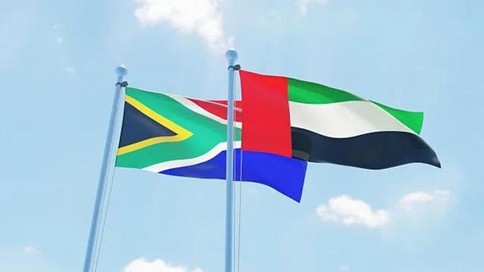
South Africa is a key centre and player in this advancement of BRICS. Our leadership needs to utilize its role in BRICS and as a gate way to Africa. New heights can be achieved even when approaching the matter of a space race. China, India and Russia are leading the charge and South Africa must forge closer relations with them to accelerate its own trajectory. South Africa has also moved to forge a new alliance with the United Arab Emirates (UAE).

The South Africa–UAE trade surge is a microcosm of a wider transformation. The UAE is now among Africa’s largest foreign investors, with major stakes in agriculture, digital infrastructure, and renewable energy. When Kenya turned to the UAE to rescue its stalled railway project after Chinese financing retreated, it revealed a critical inflection: African states are increasingly viewing the UAE not as an alternative to the West, but as a central partner in their economic futures. South Africa, as Africa’s most industrialized economy and a G20/BRICS+ member, represents a particularly strategic anchor for Abu Dhabi. By strengthening ties with Pretoria, the UAE also gains leverage into continental trade frameworks like the African Continental Free Trade Area (AfCFTA), reinforcing its role as a conduit between Africa and the global economy. Yet opportunities carry responsibilities. As Emirati investment flows into mining, logistics, and large-scale infrastructure, African partners must ensure alignment with global ESG standards.
The UAE, as a state intent on building credibility as a sustainable investor, has a strong incentive to integrate environmental safeguards, fair labor practices, and community benefits into its African ventures. Doing so will not only secure African buy-in but also position the UAE as a leader in ethical investment across the Global South.

Abu Dhabi is looking to build a network in Africa that goes beyond the northern Arab nations of the continent where they have traditionally held sway. The UAE’s overall investments and partnerships in sub-Saharan developing nations of Africa can also be interpreted as a battle to stay relevant. Relevant in the economic and diplomatic affairs of the world. South Africa too needs to maintain its relevance not just within BRICS, the African Union, the African Continental Free Trade Agreement (AfCFTA) but global affairs as well. This alliance and partnership between Pretoria and Abu Dhabi could grow to be more than just a frienship of convenience. There could even be cooperation on military interests and defence pacts depending on how President Cyril Ramaphosa and UAE President and Amir of Abu Dhabi Sheikh Muhammad Bin Zayed Al Nahyan play their cards. South Africa is the gateway to trade and investment on the African continent hopefully free trade depending on AfCFTA’s success.
The UAE still has a lot of work cut out for it. They have to focus on diversifying their economy away from oil. Another matter, the Emirati monarchies have to realize when it comes to unionizing organized labour you cannot do so with out allowing some form of democratic representation in your country. This goes hand in hand with ethical values as mention in the extract above. It remains to be seen how the UAE an absolutist state fares on the global stage alongside South Africa.
South Africa for its part can be a key pillar in global South relations shaping a more inclusive world order.
Article written by:
Yacoob Cassim
Journalist at Radio Al Ansaar