
As Sudan threads a difficult balance, its fractured military must contend with being restructured. General Abdel Fattah al-Burhan, has launched a sweeping reorganization of the armed forces loyal to him. This comes amid the ongoing conflict with the Rapid Support forces (RSF). Al- Burhan issued a decree on August 18 consolidated control over all allied armed groups – including former Darfur rebels, tribal militias, Islamic orientated brigades, and civilian defence volunteers – bringing them under Al-Burhan’s formal military’s command. Al-Burhan’s decision reflects a decisive attempt to centralize military authority and prevent division from brewing amongst pro-transitional government forces.
Burhan also made key changes within the Sudanese armed forces (SAF), appointing a new inspector general and air force chief, while retaining General Mohammad Othman al-Hussein as Chairman of the Joint Chiefs of Staff.
The RSF for their part have proposed setting up a rival government in West Sudan. But the UN Security Council rejected the proposal.

In a statement issued on Wednesday, Council members said the step posed “a direct threat to Sudan’s territorial integrity” and could fragment the country, fuel the fighting, and deepen an already dire humanitarian crisis. Ambassadors reaffirmed “unwavering” support for Sudan’s sovereignty, independence and unity, stressing that unilateral actions that undermine these principles jeopardise not only Sudan’s future but also peace and stability across the wider region. The Council called on the RSF and Sudanese Armed Forces to return to talks aimed at reaching a lasting ceasefire and creating the conditions for a political settlement involving all political and social groups.
The goal, they said, is a credible, inclusive transition to a civilian-led government that can lead the country towards democratic elections and deliver “a peaceful, stable and prosperous future” in line with the Sudanese people’s aspirations.

The re-establishment of a civilian government in Khartoum will certainly be a step in the right direction for the country. Security and stability are vital to returning to a semblance of normality. No one involved with international diplomatic relations want to see the Sudanese state unravel at the seams. The decision by the RSF to separate their territory as West Sudan has been met by bitter opposition from the rest of the world. The priority is to conserve the territorial integrity of Sudan as a whole. The purpose of ending the conflict is to create national cohesion and prevent escalation of the armed insurgency to neighbouring regions.
To that end a cease fire needs to be negotiated between the regular Sudanese Military and the RSF led by General Mohammad Hamdan Dagalo (nicknamed Hemedti). This way a transitional government can be set up to draft a new constitution and lead to new elections for the Sudanese people.

Meanwhile United Emirates Paramount ruler/President Sheikh Mohammed bin Zayed Al Nahyan has come under fire by Khartoum for alleged support of the RSF.
The UAE is part of a coalition of countries seeking to agree on the parameters of future peace talks between the Sudanese army and the paramilitary Rapid Support Forces (RSF), which have been fighting for control of the country for more than two years. Sudan’s army-backed government has long accused the UAE of supporting the rebel militia, a claim denied by Abu Dhabi. “The idea that the UAE can be part of any peace process is an absurd idea because it is the main sponsor [of the RSF],” Babikir Elamin, the head of mission at Sudan’s London embassy, said at a briefing on Tuesday. “The UAE is the main reason for prolonging the war, and without putting real pressure on them, we can’t expect any peaceful settlement of the crisis in Sudan.”
Efforts to revive peace talks have faltered in recent months amid disagreements among Arab states.
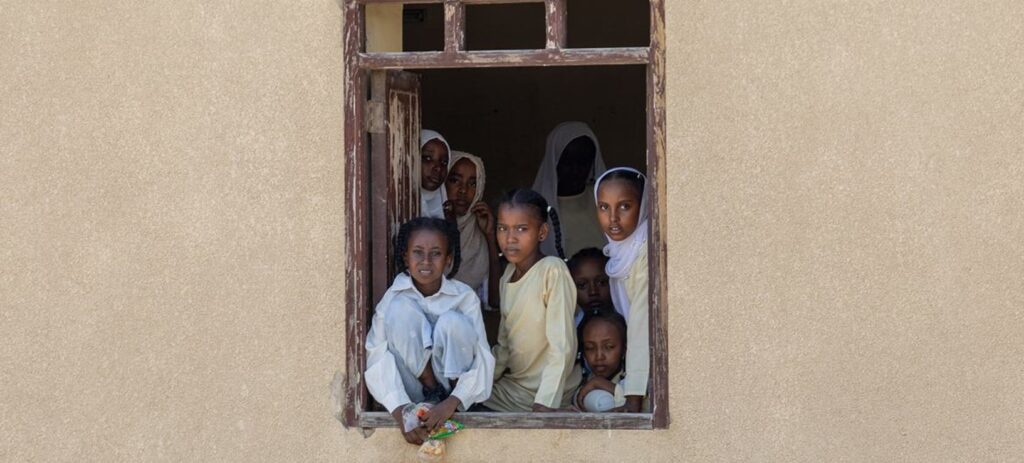
There needs to be an agreement to lay down arms between the Sudanese military proper and the RSF at the same time. Sheik Bin Zayed Al Nahyan may not be able to put a spin on this situation and should withdraw from the peace process. Sudan needs a firm cease fire in place so that food aid can be delivered to the Sudanese people and their children. The ceasefire should also allow focus on the formation of a civilian government. The one country that is wearing of Sudan splintering into two is Egypt to the North. Egypt does not want prolonged instability with the risk of triggering a massive refugee crisis on its southern border. Sudan could have a flourishing agriculture sector if the country strategically aligned with Egypt. Economically, Sudan needs to be politically stable. Abu Dhabi for its part is foolish to undermine the country’s unity.
Cairo if it cares about a stable Sudan needs to tell Sheikh Al Nahyan to stop pulling the strings on the RSF. The time for the Sudanese people to decide their future is now.
Article written by:
Yacoob Cassim
Journalist at Radio Al Ansaar