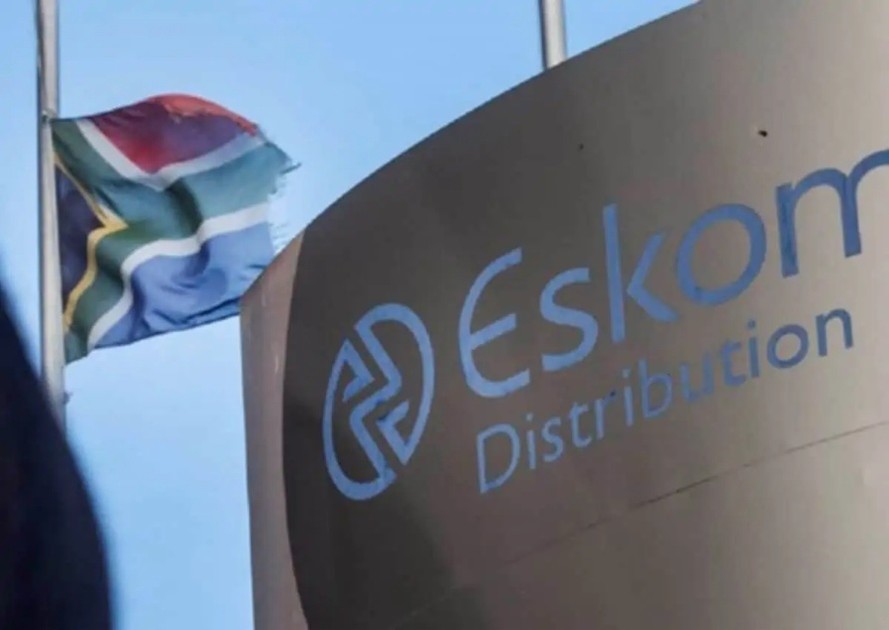

State owned Power Utility Eskom is seeking to protect its monopoly over South Africa’s energy resources. This is a resistance in opposition to an envisaged transition to a liberalized energy market. The utility has taken its case to the Gauteng High Court to prevent the issuing of new electricity trading licences to private sector operators. Four trading licences were issued by the newly formed National Energy Regulator of South Africa (NERSA) last year to add to the five issued since 2012. This was during the era of the Presidency of Jacob Zuma and Eskom had never previously objected. They say power tends to corrupt and Absolute power (in this case monopoly over state resources) tends to corrupt absolutely.
It can be argued Eskom’s current stance is a reflection of a deeper struggle over control and accountability.
The actions of the parastatal obstruct implementation of the 2019 Roadmap for Eskom in a Reformed Electricity Supply Sector (‘the Roadmap’) which lays out a plan to unbundle the entity into three independent businesses – generation, transmission and distribution. Under the Roadmap, the energy utility’s primary business is expected to be buying energy from a diverse range of generating entities and transmitting it across the country. In line with this, the National Transmission Company of South Africa (NTCSA) was established and commenced trading in July last year. Two of the leading private sector representatives in the country, Business Leadership South Africa (BLSA) and Business Unity South Africa (BUSA) have strongly condemned Eskom’s action. In a joint statement, they have urged Eskom to drop the case, arguing that it threatens national energy security, blocks the development of a competitive electricity market, and ‘sends a negative signal to investors’.
The business organisations argue that ‘Eskom cannot be both the primary cause of out energy crisis and the gatekeeper of its solution’.

It is time Eskom realized this is the end of the road for its monopoly on South Africa’s resources for electricity. The road to renewable energy requires decentralization of power and energy resources. The path to redistributing administrative power between different independent companies responsible for generation, transmission and distribution is in direct contrast to Eskom’s energy accumulation. Delegation and decentralization of energy resources away from a single power utility company is long overdue. In terms of the transition to renewable energy such as solar, wind and hydropower this is a step in the right direction. Eskom should not resist its break up in terms of power distribution. With the advent of the Fourth Industrial Revolution (FIR) and the need to transition to a more skills-based education. To do so power needs to be provided and distributed to the rural areas in terms of homes and schools.

Eskom has failed to deliver in this regard. President Cyril Ramaphosa is right to lead the charge in dissolving the power utility and moving to a decentralized grid. The new grid will be agile and diversified.
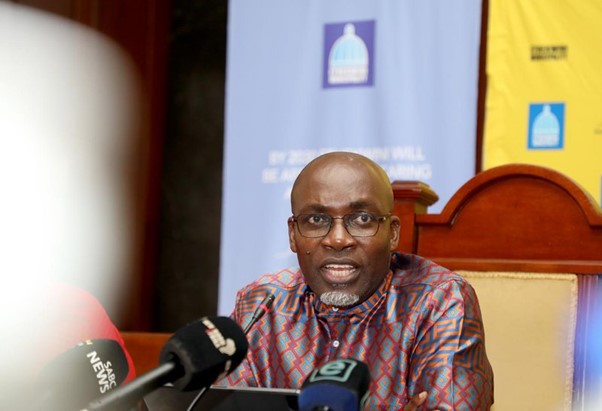
Minister of Electricity and Energy Dr Kgosientsho Ramokgopa insists there is no turning back and has had on more than one occasion asked the Power utility not to proceed with its legal case against NTSA’s decision to licence five additional electricity traders last year.
Having called a media briefing to provide an update on the performance of the grid amid concerns that Eskom was again relying too heavily on its expensive diesel generators, Ramokgopa fielded a series of questions about the status of the reform process and Eskom’s move to have the High Court review and set aside five domestic trading licences. The briefing also followed a statement by the South African Local Government Association (Salga) in which it joined Eskom in voicing opposition to the licensing of traders by the National Energy Regulator of South Africa (Nersa) “without a clear regulatory framework”.

South Africa cannot continue to rely on coal-powered diesel generators, when that resource is being depleted. The world is shifting to renewable power in the long run and South Africa must move in step with it. Load shedding is largely caused by the failure of the central power utility Eskom to adapt its infrastructure. This is due to the infrastructure being outdated. Decentralization between three different companies is more flexible and adaptable to current circumstances. Salga however is right to call for Pretoria to provide a “clear regulatory framework” as regards the generation, transmission, and distribution of energy. This frame work will take some time but it is necessary and achievable.
As a nation South Africa deserves an energy system that empowers its people, fuels innovation, and lights the way forward. The future is renewable, decentralized and inclusive power.
Article written by:
Yacoob Cassim
Journalist at Radio Al Ansaar