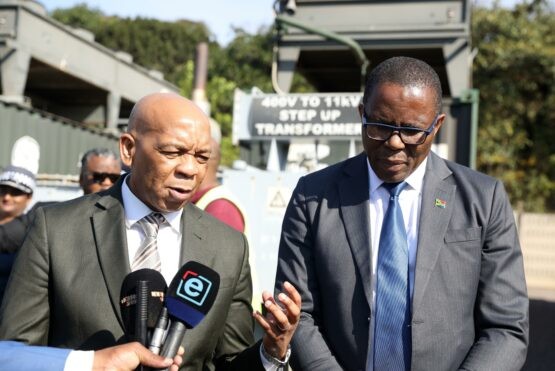

The Municipality of eThekwini in Durban has become the first metro in the country to receive official approval to generate its own electricity from sources of renewable energy. The goal of this programme aims to generate 400 MW of gas and solar power to boost savings, jobs and sustainability. Electricity and energy minister Kgosientsho Ramokgopa recently announced a section 34 Ministerial Determination, empowering the municipality to procure 400 megawatts (MW) of new generation capacity to meet its growing energy demands. Addressing a joint media briefing with eThekwini regional Mayor Cyril Xaba, the minister commended the municipality for its persistence and strategic foresight, noting that the approval marks a major step forward in municipal energy autonomy and financial sustainability.
The programme includes 100 MW of solar photovoltaic (PV) power and 300 MW of gas-to-power (GTP), with a focus on dispatchable, reliable, and low-carbon technologies. “This is a game-changer for our city. It enhances energy security, reduces dependence on the national grid, and positions eThekwini as a leader in sustainable urban development. The programme is projected to save the municipality R5 billion over the duration of the power purchase agreements (PPAs), translating to R250 million in annual savings,” he said. The initiative is also expected to unlock R8.5 billion in private investment and create approximately 2 200 jobs during the construction and operational phases. Once fully operational, it will reduce eThekwini’s reliance on the national grid by 18%.

The goal of the transition to solar power is to decentralize the source of concentrated energy to cities away from a main power utility company. A company such as Eskom. This transition is taking place step by step. South Africa is now on the cusp of decentralizing the power utility to improve its energy production. Durban and eThekwini region is the starting point. The process will be slow, from a hundred mega watts of sola photovoltaic (PV) power to an increase of that number. The goal is to decrease our reliance on gas. Five billion Rand saved in the long term is enough to lower the cost of living. The decentralization of the power grid if it manages to overcome the obstacles in its way could lead to the municipality’s finances being diverted elsewhere. When we say elsewhere, we mean to other projects.
The pilot programme known as the Energy Efficiency in Public Buildings Infrastructure (EPPBI) will focus on connecting ten buildings in the eThekwini region to the new energy utility.

South Africans need a better way to protect their water sources and be weary of the risks of harmful bacteria. Disease knows no borders and that is why it impacts such a wide area of land. The use of boreholes as a source of water needs to be closely monitored by civil society groups. The concern that harmful bacteria in the water can be deadly needs to be communicated by local doctors. Communities close to industrial or other sources of pollution such as human waste need to be educated about the harmful effects of the diseases, the E. coli can be the least dangerous virus if treated properly with chloride. Boiling the water also helps. More deadly diseases caused by harmful industrial chemicals such as pesticides need to closely monitored by medical personal. The information gathered needs to be communicated to the local community and their authorities.
South Africans in different areas also find themselves without water for several other reasons like natural disasters, damage to infrastructure and electricity outage linked interruptions. With planned water interruptions set to happen due to maintenance in different areas, residents have been asked to store water to ensure that they won’t be caught unprepared. Bronwyn Ragavan, brand manager for Milton cautions that storing water to help mitigate the impact of the water interruptions is not as easy as filling up a container. According to Ragavan, there are specific ways in which to store water properly for longer periods of time so that it can be used safely. “Water is an essential resource, vital for survival and daily activities, and knowing how to store water correctly is crucial for the health of your family,” said Ragavan.

The next phases of implementation, and championing the broader rollout of Energy Performance Contracting (EnPCs) across the municipal property portfolio, were given the go-ahead at a council meeting on Thursday. This pilot project is a replicable model for institutionalised energy efficiency delivery. eThekwini has been an active participant in the Energy Efficiency and Demand Side Management (EEDSM) programme since 2011, focusing on reducing municipal energy consumption: improving energy performance in public infrastructure, and promoting sustainable urban services. The municipality has been awarded a conditional allocation of R7 million through the Division of Revenue Act as part of the Energy Efficiency and Demand Side Management (EEDSM) programme for the fiscal years 2025 and 2026.
The city is participating in the EEPBI programme, which is a sub-project of the EEDSM initiative led by the Department of Electricity and Energy (DEE).
A major goal of this project is to create jobs through skills training. There is also a strong desire to increase energy output using available resources such as solar photovoltaic. When it comes to transitioning to renewable energy such as solar, wind and hydro power it is essential that you have civil society and business on hand in a consultative and cooperative form when you are pursuing change. This includes having everyone in terms of citizens and private enterprise on board and in agreement when you shift energy policy to renewable power. Yes, the shift is inevitable as Minister Ramokgopa will be able to point out as he pushes forward with these projects across South Africa on behalf of President Cyril Ramaphosa.
However, it is essential to proceed would care and, on the advice, and consultation of the people whose lives will be affected by the project. This is a process that must be handled with caution.
Article written by:
Yacoob Cassim
Journalist at Radio Al Ansaar