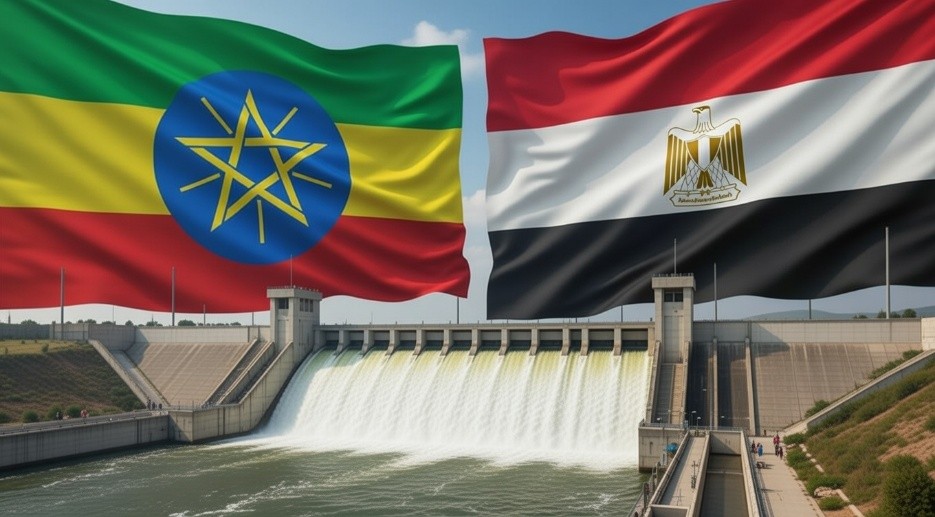

The Grand Ethiopian Renaissance Dam (GERD) in Ethiopia has been completed and is now generating electric power. Africa’s largest dam has a capacity of 9.6 gigawatts (GW). The hydropower project is beginning to redefine Ethiopia’s economic and geopolitical position after more than a decade of controversy and negotiation. Addis Ababa is positioning the mega dam as a catalyst for the nation’s industrial production, agricultural irrigation, and comprehensive electricity infrastructure.
Egypt and Sudan have long feared that the dam’s construction would reduce water flow to their territories, depriving them of the floodwaters essential for their agriculture. The Ethiopian government, however, has repeatedly emphasized that the dam’s hydropower generation will benefit all Nile Basin countries.
Financed largely through domestic efforts, the GERD project stands as a symbol of Ethiopia’s drive for self-reliance amid foreign pressures.

According to (Ethiopian Minister of Water and Energy) Habtamu (Iteffa), the completion of the GERD has increased Ethiopia’s installed power capacity to 9.6 gigawatts, with 1.1 gigawatts generated in the past six months alone. That expansion has accelerated industrial output, boosted agricultural productivity through irrigation, and improved electricity access in both urban and rural areas. The power surplus is also reshaping Ethiopia’s regional role. Nearly 21,000 kilometres of transmission infrastructure have been installed in recent years, linking Ethiopia’s grid with neighbouring countries and supporting cross-border electricity trade. Officials say this growing energy connectivity is turning the GERD from a national project into a regional economic asset.
Beyond hydropower, Ethiopia is expanding off-grid solutions using solar, wind, and biogas, while power investments are transforming Addis Ababa’s urban infrastructure and industrial zones. Habtamu said reliable electricity has become central to food security, industrialisation, and broader economic stability.

The GERD project is set to make Ethiopia a regional economic powerhouse, rivaling—and potentially overtaking—South Africa and Nigeria. GERD is not just a symbol; it is one of the largest hydropower generators on Earth. Ethiopia, largely an agriculture-based economy, has long been prone to drought and famine. The introduction of hydropower, followed by solar, wind, and biogas, will enhance economic growth and revenue generation by increasing manufacturing output and energy exports. Ethiopia is moving swiftly toward becoming one of Africa’s wealthiest nations.
The dam itself is an engineering marvel, generating 1.1 gigawatts every six months to power infrastructure across the Horn of Africa and its neighbouring countries. Addis Ababa is poised to become a centre of regional power.
Although this newfound hydro energy is central to transforming Ethiopia into a major hub of diplomatic, economic, and industrial influence, not everyone is pleased. Egyptians have expressed fears that the mega dam will not only reduce but potentially prevent the flow of Nile floodwaters. Egypt remains heavily dependent on the Nile’s flow for its water supply.

Together, the Ethiopian highlands, through the Blue Nile and Atbara, contribute up to 85% of the total water reaching Egypt, particularly during the summer monsoon season. Unfortunately, the Nile’s average discharge is relatively low at ~3,075 cubic meters per second due to significant evaporation through the arid Sahara desert. This makes every drop invaluable for the Egyptians. With a population of 118 million people and growing water scarcity (already below the UN poverty threshold), Egypt fears that reduced Nile flows threaten its entire agricultural sector and domestic water supply. Cairo has accused Addis Ababa of taking unilateral, illegal actions by building the dam without laying out binding agreements on water and drought management. “If you store 64 billion cubic metres of water that used to flow to Egypt, is it not going to cause harm?” Prof Sharaky told BBC, dismissing Ethiopia’s claims that the dam would not negatively affect Egypt’s water supplies.
A major source of contention contributing to the decrease in the Nile River’s water flow is climate change. The construction of the GERD, as far as Cairo is concerned, has added fuel to the fire. Ethiopia may need the dam to meet its development needs, while Egypt fears it could become the final obstacle, further reducing the river’s flow and leaving Egypt vulnerable to drought and famine.
The Nile plays a vital role in Egyptian agriculture, transporting rich volcanic silt from the Ethiopian highlands, washed down by rain. Egypt has been slow to address the water shortage crisis it is already facing. As the regime of President Abdel Fattah El-Sisi seeks to support projects to desalinate coastal seawater, the country continues to suffer under extreme heat. The prospect of drought followed by famine is becoming a serious concern.
El-Sisi and Ethiopian Prime Minister Abiy Ahmed must work toward a solution to the current dispute.
Article written by:
Yacoob Cassim
Journalist at Radio Al Ansaar