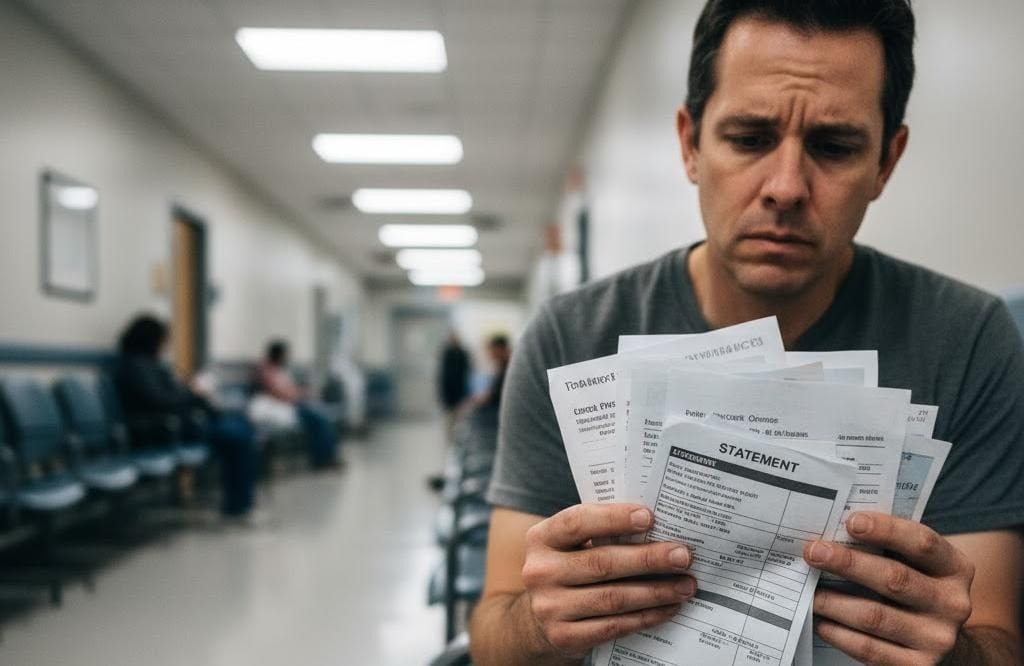

As medical aid costs continue to rise, growing numbers of South Africans are being forced to make an impossible choice between financial survival and healthcare security.
There was a time when South Africans cut back on holidays when money became tight.
Then they cut back on restaurant meals.
Then came entertainment, new clothes and other non-essential expenses.
Today, many families have run out of luxuries to sacrifice.
Now they are cutting healthcare.
Across South Africa, a growing number of people are questioning whether they can still afford medical aid. Faced with rising food prices, electricity increases, fuel costs, school fees and mounting household expenses, families are being forced to make difficult financial decisions simply to stay afloat.
Recent reports show that younger South Africans are increasingly opting out of medical aid schemes because they can no longer justify the monthly cost. While this may offer short-term financial relief, experts warn that it could create a much bigger problem for the future of private healthcare.
Medical aid schemes depend heavily on younger, healthier members who generally make fewer claims. Their contributions help balance the higher healthcare costs associated with older members and those living with chronic illnesses.
When younger members leave, that balance begins to disappear.
The average age of scheme members increases.
Claims increase.
Healthcare costs rise.
Monthly contributions increase.
More younger members leave.
And the cycle repeats itself.
Industry experts have warned that this affordability crisis is becoming one of the biggest challenges facing medical aid schemes. The very people needed to keep private healthcare affordable are increasingly finding themselves unable to participate in it.
But behind every statistic is a family trying to make ends meet.
Parents are sitting around kitchen tables, reviewing budgets and searching for ways to stretch their income a little further.
What gets paid first?
What can wait until next month?
What can be cut completely?
For many households, there are no easy answers.
The luxuries disappeared long ago.
The holiday fund is gone.
The entertainment budget is gone.
The takeaways have become occasional treats rather than weekly habits.
The family budget has already been trimmed to the bone.
Yet the bills keep coming.
For a growing number of South Africans, medical aid has become the latest casualty of the cost-of-living crisis.
The danger is that healthcare is not like other expenses.
You can postpone buying a new television.
You can delay renovating your home.
You can cancel a holiday.
You cannot schedule an emergency.
Illness does not wait for a better financial month.
A heart attack does not check your bank balance.
A cancer diagnosis does not arrive only when you can afford it.
A serious accident can change a family’s circumstances in a matter of minutes.
The very purpose of medical aid is to provide protection during these moments. Yet thousands of South Africans are finding themselves in the uncomfortable position of having to gamble with that protection because they simply cannot afford the alternative.
This is about more than healthcare.
It is about the growing pressure on South Africa’s middle class.
It is about working families who earn too much to qualify for assistance but not enough to comfortably absorb constant increases in the cost of living.
It is about people doing everything right and still finding themselves under financial strain.
The growing number of South Africans leaving medical aid schemes should concern all of us, not because it affects the healthcare industry, but because it reveals something deeper about the state of household finances in the country.
Medical aid was once viewed as a necessity.
Today, for many families, it is becoming a luxury.
And perhaps that is the most worrying statistic of all.
South Africans are not walking away from medical aid because they no longer see its value.
They are walking away because they are running out of things left to cut.
And in a country where medical costs continue to rise and household budgets continue to shrink, the difference between financial stability and financial disaster may be just one diagnosis away.
Article written by:
Hudaa Ahmed
Journalist at Radio Al Ansaar