
KwaZulu-Natal is demonstrating its readiness to host more than one million visitors expected to travel to the province during the festive season, highlighting tourism as a key driver of job creation and economic growth.
As part of its broader festive-season initiatives, the KwaZulu-Natal Tourism and Film Authority (KZNTA) recently visited the Central Drakensberg ahead of its N3 activation at the Ultra City in Estcourt. One of the stops included Champagne Sports Resort, a flagship destination in the Drakensberg, long regarded as a premier attraction for both domestic and international tourists.
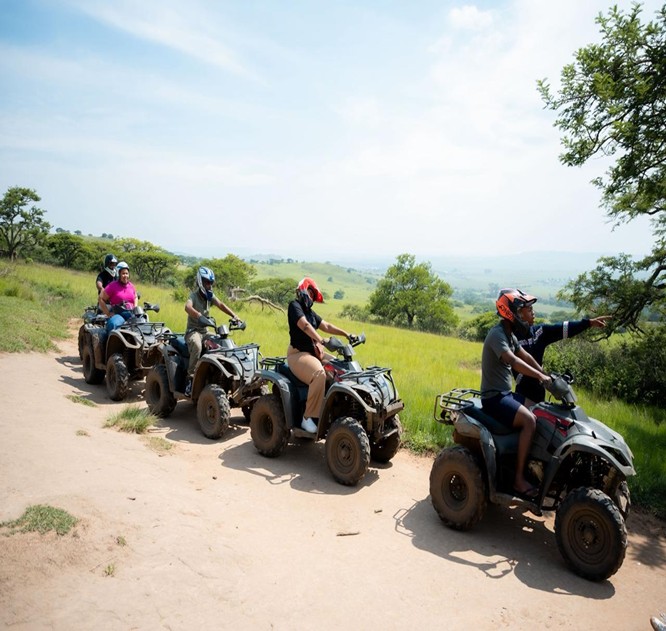
The Drakensberg continues to draw visitors with a wide range of adventure and leisure activities, including quad biking, ziplining and hiking, offered at various locations across the region. According to Champagne Sports Resort general manager Gary Foster, the resort is heading into one of its strongest summer seasons in recent years.
“We’re seeing stronger demand this summer compared to last year. Early December bookings are up, Christmas and New Year remain strong as expected, and early January is also looking positive,” said Foster.

Domestic travellers remain the backbone of the resort’s peak-season occupancy, particularly families and loyal repeat visitors. “Our occupancies are mainly driven by domestic families, many of them loyal return guests,” Foster added.
While international visitor numbers are typically lower in December, Foster noted a shift in local travel patterns, with South Africans increasingly opting for experiential and destination-based holidays within the province.
Like many tourism regions in KwaZulu-Natal, the Drakensberg continues to face challenges related to road conditions and ongoing provincial roadworks. However, Foster expressed optimism that accessibility will improve once major upgrades on the N2 and N3 routes are completed.

Looking ahead, the province’s long-term tourism ambitions for the Drakensberg include the proposed cable car project, which has been positioned as a catalytic development to unlock the region’s full tourism potential. The project is estimated to require close to R1 billion in funding, based on figures contained in a 2017 report by the Department of Economic Development, Tourism and Environmental Affairs (EDTEA), compiled in June this year.
Despite its potential, the project has faced growing scepticism. Councillors in the Okhahlamba Local Municipality, one of the key stakeholders, say they have not received updates on the project for nearly five years. EFF councillor Thulani Sibeko said uncertainty remains among councillors about whether the project will ever be implemented.
“Since the beginning of this term in 2021, we have not been told anything about this project. The mayor has not briefed the members of the council, and it is creating doubt among us as to whether this project will ever get off the ground,” Sibeko said.
EDTEA MEC Musa Zondi has dismissed claims that the project has been neglected, stating that he revived it after it had been dormant for 12 years. The cable car proposal, planned to run up a mountain along the Busingatha Valley, is expected to attract at least 300,000 visitors annually once completed.
Okhahlamba Municipality senior communications officer Suraya Asmal said it is possible that councillors may not have been fully briefed, but confirmed that the mayor had engaged on the project at the start of his term and again in a recent government meeting. She added that officials from the provincial government, Lesotho and the Free State are expected to meet in January next year to further discuss the project.
As KwaZulu-Natal enters the peak holiday period, provincial authorities remain focused on showcasing the province’s readiness, while balancing immediate tourism gains with long-term development plans aimed at strengthening the sector’s contribution to economic growth.
Article written by:
Thabile Duma
Journalist at Radio Al Ansaar