Public consultations on South Africa’s new water strategy have exposed a hard question in KwaZulu-Natal. How can government expand water infrastructure when communities living next to major water resources still can’t get reliable water?
The Department of Water and Sanitation held the consultations to gather input on its proposed Strategic Framework for Water and Sanitation Services. The draft aims to replace the existing 2003 framework. It targets ageing infrastructure, climate risks, urbanisation, and persistent service gaps in rural areas and informal settlements.
Communities Question Where Water Infrastructure Benefits Go
Participants from municipalities including Msunduzi and Abaqulusi raised strong concerns at the KwaZulu-Natal consultations. Communities and civil society representatives questioned how water resources and infrastructure get distributed.
One concern came up repeatedly. Dams and other infrastructure often get built in areas where local communities still lack adequate access to water, while those same resources support communities elsewhere.
For these residents, the issue goes beyond building more infrastructure. They want communities living near these resources to actually benefit from them.
Some stakeholders also questioned whether the consultations would lead to real action. They worried the process could become another “talk shop,” where government hears concerns but nothing changes on the ground.
Deputy Minister Points to Ageing Infrastructure
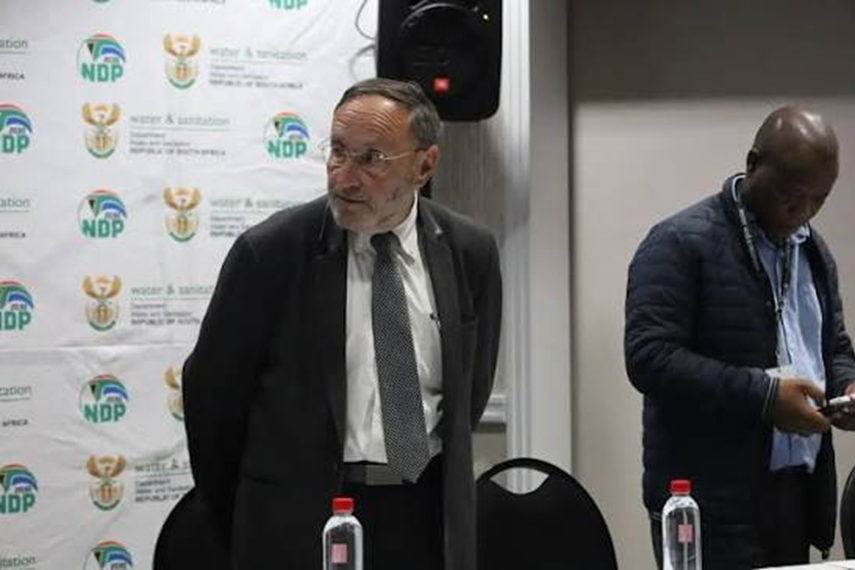
That concern lands as the department acknowledges the country’s water infrastructure is under serious strain. Deputy Minister of Water and Sanitation Dr Jack Bloom has identified ageing infrastructure and poor maintenance as major obstacles to reliable services.
Speaking at the Durban consultation, Bloom said the country needs to move beyond simply connecting households to water infrastructure. He argued government must now focus on whether those services stay functional and reliable.
“Reliability replaces mere connections. Climate risk assessment and adaptation become mandatory. Smart meters, digital asset registers and open reporting are required, not optional. Informal settlements, peri-urban areas and people on private land are planned for from the start,” Bloom said.
eThekwini’s Water Losses Show Scale of the Problem
The scale of the challenge shows clearly in eThekwini. During a visit to the municipality, Bloom found residents who had gone without tap water for years. He also encountered a backlog of about 13,000 leaks, along with sewage spills and flood damage still unrepaired.
“When I visited eThekwini last month, I saw residents [who had been] without tap water for years, a backlog of 13,000 leaks, sewage spills, and flood damage still unrepaired after four years,” Bloom said. “That’s the core of the problem … it’s a crumbling system.”
Water losses raise further questions about whether municipalities use available water efficiently. eThekwini recorded 58.7% non-revenue water in the last financial year. This means more than half of all treated and pumped water never reached paying customers.
Bloom argues that fixing leaks and improving revenue collection must form part of the solution. “But fixing the water leaks is not rocket science. We need to start with basic things – like sending out plumbers and sending out water bills,” he said.
Framework Sets Firm Targets for Repairs
The proposed framework tackles both sides of the problem. It aims to expand access for underserved communities while ensuring existing infrastructure gets properly maintained.
Under the draft proposals, Water Services Authorities would need to renew at least 10% of high-risk ageing assets every year. At least 30% of end-of-life pipelines, pumps and process units would need replacement by 2035. The framework also proposes cutting national non-revenue water to below 25% by 2035.
Bloom said grants should fund more than new projects. “Grants should fund repairs and renewal, not only new projects, too many of which deteriorate because they are not maintained. Water revenue should be ring-fenced and lifecycle costing made compulsory,” he said.
The framework also sets longer-term goals. These include safe water and sanitation at all schools and clinics by 2035, a free basic water and sanitation policy across all Water Services Authorities, and stronger compliance with drinking-water quality standards.
What Communities Want to See Next
For communities who took part in the consultations, results matter more than promises. The framework’s success will ultimately depend on what changes on the ground, not what gets written into policy.