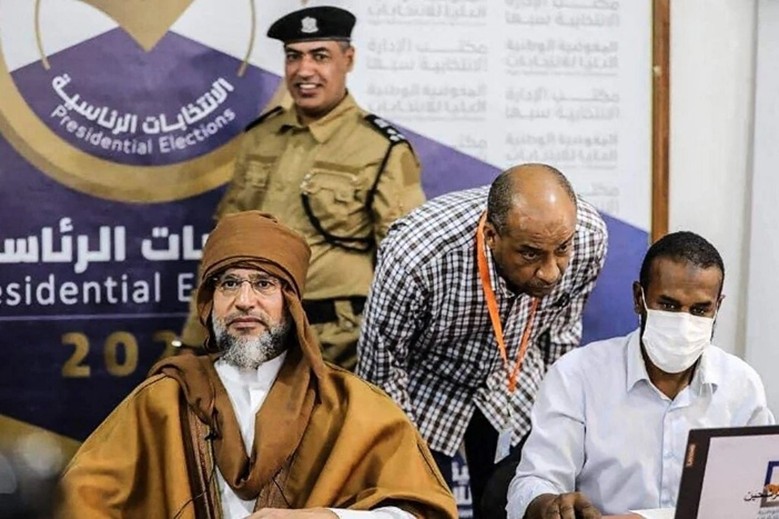

Saif al-Islam Gaddafi, son of the late Libyan leader Muammar Gaddafi, was murdered in the garden of his home in Zintan, Libya. His death was reported by state officials and local media. Saif served as a figurehead for loyalists of his father’s regime, which was toppled during the 2011 Libyan civil war amid the wave of mass uprisings known as the Arab Spring. His lawyer, Khaled al-Zaidi, and political advisor, Abdullah Othman, announced the 53-year-old politician and presidential candidate’s death in separate posts on Facebook on Tuesday, without providing further details. The Libyan news outlet Fawasel Media cited Othman as saying that armed men killed Gaddafi at his residence in Zintan, a town located 136 kilometres (85 miles) southwest of the Libyan capital, Tripoli.

Gaddafi’s political team later released a statement, saying that “four masked men” stormed his house and killed him in a “cowardly and treacherous assassination”. The statement said that he clashed with the assailants, who closed the security cameras at the house “in a desperate attempt to conceal traces of their heinous crimes”. Khaled al-Mishri, the former head of the Tripoli-based High State Council, an internationally recognised government body, called for an “urgent and transparent investigation” into the killing in a social media post. Gaddafi never had an official position in Libya, but was considered to be his father’s number two from 2000 until 2011, when Muammar Gaddafi was killed by Libyan opposition forces, ending his decades-long rule.
Saif al-Islam Gaddafi was captured and imprisoned in Zintan in 2011 after attempting to flee the North African country following the opposition’s takeover of Tripoli. He was released in 2017 as part of a general pardon and had lived in Zintan since. Born in June 1972 in Tripoli, Saif al-Islam Gaddafi was the second-born son of Libya’s longtime ruler. A Western-educated and well-spoken man, Gaddafi presented a progressive face to the oppressive government run by his father, and he played a leading role in a drive to repair Libya’s relations with the West, beginning in the early 2000s.

Al-Islam Gaddafi harboured unapologetic ambitions to restore his family’s prestige, viewing the chaos engulfing Libya as a ladder to the presidency. How the “four masked gunmen” managed to gain access to Gaddafi’s house remains a mystery. He was still one of the most popular figures in the country and also among its most well-educated. This raises the pressing question: who would want Gaddafi dead? Within Libya’s fractured political and military elite, there were surely those who did not trust a Gaddafi with power, fearing he might seek vengeance for his father’s death. Yet Al-Islam Gaddafi continued to enjoy the support of Libyan clans and was regarded by many as a potential unifying figure among them.
Saif could have been a rallying force amid the conflict plaguing the country. It is no secret that General Khalifa Haftar harbours ambitions to become Libya’s guiding force and president—and Saif stood in his way. If an impartial and transparent legal investigation were launched, it would likely point to powerful figures with clear motives. Haftar could emerge as a prominent player on the Libyan political landscape, using his position, experience, and connections to pursue the presidency. While Haftar and his forces are largely based in Libya’s east, Saif, by contrast, enjoyed widespread popularity and could have been a key leader capable of shaping Libya’s future.
Yet there was always the risk that, once he tasted the trappings of power, Saif might follow in his father’s footsteps and become a dictator. The assassination of Saif al-Islam reflects the chronic weakness of security in Libya.

Article written by:
Yacoob Cassim
Journalist at Radio Al Ansaar