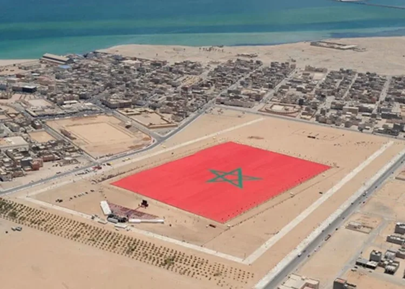

Morocco has had a revival of diplomatic fortunes as regards the matter of its sovereignty over Western Sahara. The territory which Morocco has argued it had retaken from Spain in the 1975 Green March has been disputed by the Polisario Front as being the independent Sahrawi Arab Democratic Republic (SADR). Rabat has retorted that the Western Sahara has always been a territorial part of Morocco. There has allegedly never been an independent state in that region. On the thirty first of October the United Nations Security Council approved, Resolution 2797 that reaffirmed Moroccan Sovereignty over the Western Sahara and endorsed Rabat’s plan to grant the territory regional autonomy.
The Gulf Cooperation Council (GCC) in the Arabian Peninsula and Persian Gulf region whose members have long had close relations with Morocco welcomed the resolution which described the autonomy proposal as the only realistic framework to negotiate a practical and sustainable resolution to the Sahara matter. The UN though supports self-determination and controversial opinion polls are banned in Morocco.

The council noted King Mohammed VI’s decision to formally present the initiative to the Security Council and to designate October 31 as a national holiday named “Unity Day.” This renewed position reflects the GCC’s consistent backing of Morocco while also expressing continued support for the country’s territorial integrity and sovereignty.
UN Security Council Resolution 2797 renews the mandate of MINURSO for another year and introduces a notable shift in the council’s language by describing the Moroccan Autonomy Plan as the most viable basis for advancing the political process. The resolution received 11 votes in favour, while Russia, China and Pakistan abstained, and one party chose not to participate in the vote. Morocco’s position on the Western Sahara has gained clear momentum in recent years, with growing diplomatic support and a more favourable international climate. The adoption of UN Security Council Resolution 2797 has added further weight to this shift and strengthened Morocco’s standing in the ongoing political process.

It should be noted that the Polisario Front allied with Morocco’s eastern neighbour Algeria may not accept the UN Resolution. The Militant resistance group has long been opposed to anything short of independence for the territory as SADR. Polisario even has some form of representation for their proposed state in the African Union (AU). However, some AU member states have withdrawn diplomatic recognition of the state and have closer relations with Rabat. The Polisario Front is an Arab nationalist socialist democratic movement that has long continued an armed conflict against the Moroccan Kingdom where the King still has the final say on all key decisions and policy as well as government and military appointments. In recent weeks there have been mass protests by the North African Monarchy’s younger generation demanding a change in the status quo.
However, the vast majority of Moroccans support continued rule over the region. It is even possible that the people of Western Sahara at least in terms of the majority support continued rule from Rabat. African nations have also warmed to Morocco improving the lives of those living in the territory.
Officially the AU supports the independence of SADR but cooperates with the UN to find a mutually-agreed upon solution. In principle the AU supports the self-determination of the Sahrawi people (african union.org). The UN’s position under Secretary General António Gutteres is the same calling for a mutually acceptable political solution in which the Sahrawi people have the power of self-determination (Sahara Press Service).

Former Liberian foreign minister Gbehzohngar Milton Findley emphasised the socio-economic development under way in the southern provinces, arguing that “the opening of African consulates in Dakhla and Laayoune reflects evolving positions across the continent.” He said “no solution can be envisioned without acknowledging the progress made.” In an interview on the sidelines of the panel, he described Resolution 2797 as “a positive signal for Africa,” citing Morocco’s role in Sahel security cooperation. Francis Kasaila, former foreign minister of Malawi, recalled his country’s policy shift in 2016 with the establishment of diplomatic relations with Rabat. He said Moroccan diplomacy “has helped clarify the historical context in several southern African countries,” describing this as “a beneficial evolution for the continent’s understanding of sovereignty and territorial integrity.”
It should also be noted that the Polisario Front as a liberation organization has no experience in day-to-day governance. Their closest allies are the Algerian military although they also have close relations with the governing African National Congress (ANC) which has more or less remained. Rabat may also not be eager to end its dominance of the territory’s sulphate mines. However, if Moroccan King Muhammad VI and his parliamentary government continue to expand development programmes in terms of education, health, job creation and basic infrastructure this will be a pillar in strengthening their sovereignty. Morocco re-joined the AU after thirty-three years absence in 2017. The AU’s predecessor organization the Organization of African Unity (OAU) had given member ship of the body to SADR. Several African nations such as Liberia and Malawi have since withdrawn their diplomatic recognition of the Polisario Front state.
Those African nations that now have close relations with Morocco see the country as an integral and necessary partner. Polisario Front and their Allies in Algiers are becoming isolated. However it remains to be seen how even Morocco fares in this climate and what freedoms will be given to the people of Western Sahara.
Article written by:
Yacoob Cassim
Journalist at Radio Al Ansaar