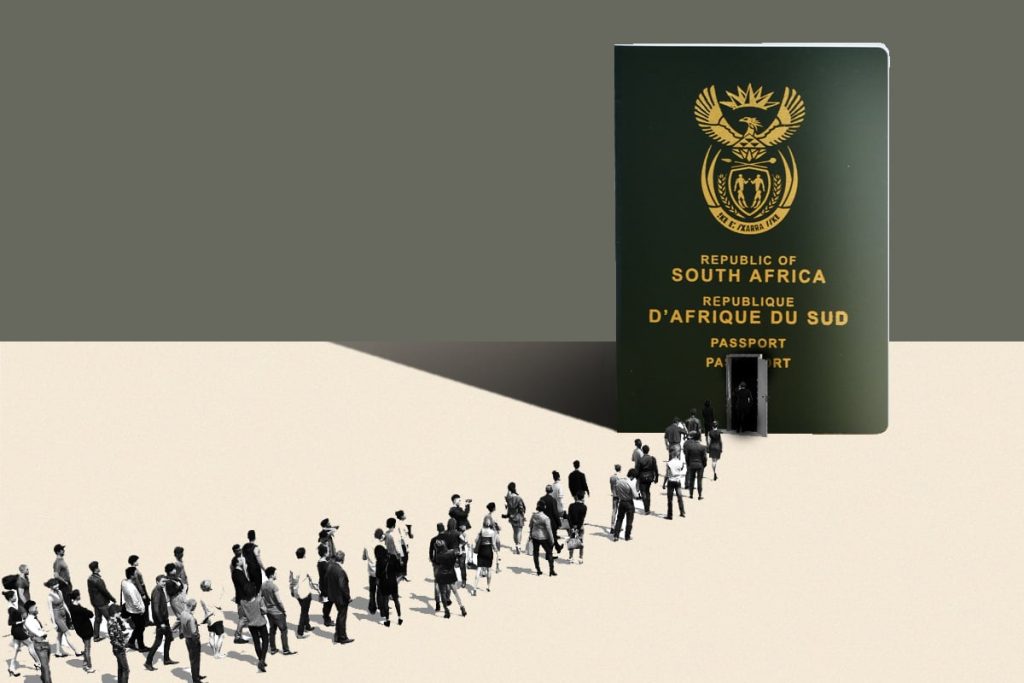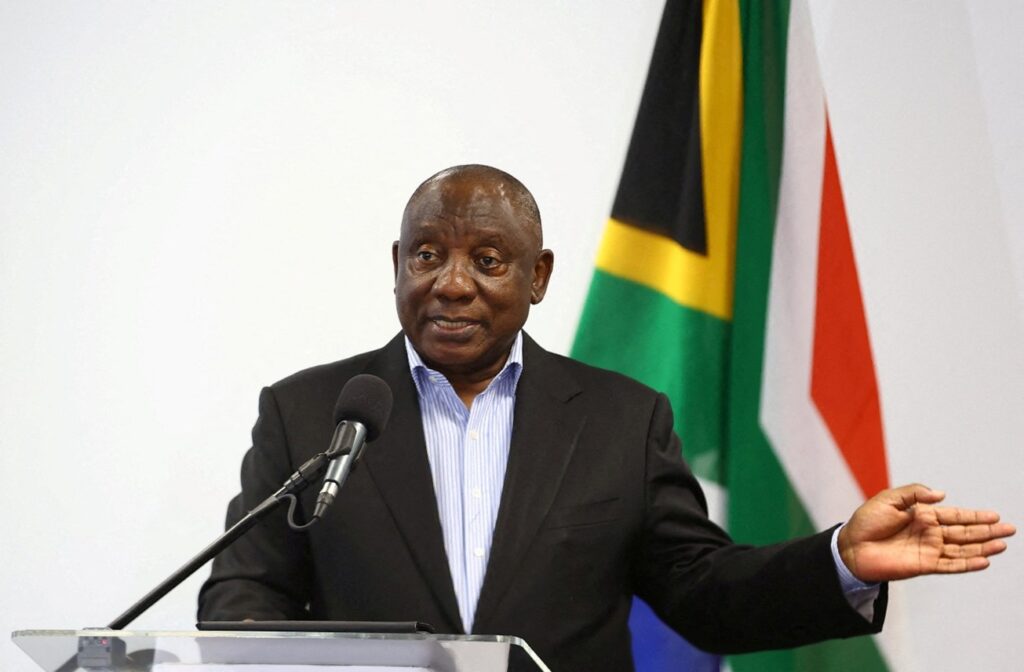

President Cyril Ramaphosa has warned against the spread of misinformation, dis-information and false narratives that have sought to portray South Africa as a society that is deeply divided, warning that such narratives are intended to sow fear, hatred and division. The president was delivering a speech at the National Day of Reconciliation Commemoration at the Ncome Museum in Nquthu on Tuesday, when he stated that there were certain individuals and groups, both locally and internationally, are deliberately misrepresenting the state of race relations and democracy in the Rainbow nation.
“There are those who are trying their utmost to paint a false picture of us as South African people,” the president said in his address.

Cyril Ramaphosa added that detractors also overlook positive developments such as successful land restitution, shared land use and the growth of black commercial farmers, instead promoting narratives designed to incite fear and hatred. He urged South Africans not to allow misinformation to undermine national unity, stressing that the country’s diversity should be seen as a source of strength rather than division. The President reiterated the importance of the National Dialogue process, which aims to bring together all sectors of society to forge a shared vision for South Africa’s future. “No person, no group and no community must be excluded from that dialogue. Let us use the National Dialogue to resolve our differences and to find common ground,” he said.

The president is right to put forward the above arguments. But there is still more to be done in terms of tackling poverty and wealth disparity. Disinformation and misinformation will always exist to mislead but cannot be allowed to dominate the air waves, social media and the internet of things in terms of the daily narrative. Lies will always be used to spread hate regardless of what the facts are. However, there is still much that needs to be done. The National Dialogue for example was not considered deeply inclusive and was dominated by the narrative and agenda of the governing party rather than being in consultation with all relevant parties and groups concerned. The condition of South Africa’s social fabric depends on national cohesion at this critical juncture.
The president also received the interim report from the Madlanga Commission of Inquiry. The commission said last week the report was handed over exactly three months after KwaZulu-Natal Police Commissioner Nhlanhla Mkhwanazi appeared as the first witness.

It was Mkhwanazi’s allegations of corruption and interference that lead to Ramaphosa establishing the inquiry. The commission has heard from 37 witnesses and will hear from more people in the new year. “The commission has heard 28 witnesses in Phase One as part of the airing, substantiation and corroboration of the allegations. As part of Phase Two, the commission has thus far heard 9 witnesses who have testified in reply to the allegations levelled against them and to tell their side of the story, with dozens more due to appear in 2026,” said the commission’s spokesperson Jeremy Michaels. The interim report will not be made public, while contents of the final submission will be published.
It is now the President’s prerogative to determine what the future of Mkhwanazi’s career and profession will be. If the commission determined that Mkhwanazi is guilty of wrongdoing than President Ramaphosa will have to dismiss him from the office of the commissioner and have him replaced. The allegations of interference could indicate his connections to the political murders that occurred in the province. In a world where transparency and accountability go hand in hand the president must not shy away from deeper reform. Decentralization of power and delegation of authority and law enforcement to the necessary judicial and prosecuting bodies will have to take place. The president has to determine that someone with the necessary ethical character replaces Mkhwanazi. As regards to Mkhwanazi’s future if he is indeed guilty of wrong doing he should face the just of the courts. Till then innocent until proven guilty.
President Ramaphosa has a full plate of fiascos and debacles while steering the ship of state. How he manages them will set the precedent for the future.
Article written by:
Yacoob Cassim
Journalist at Radio Al Ansaar