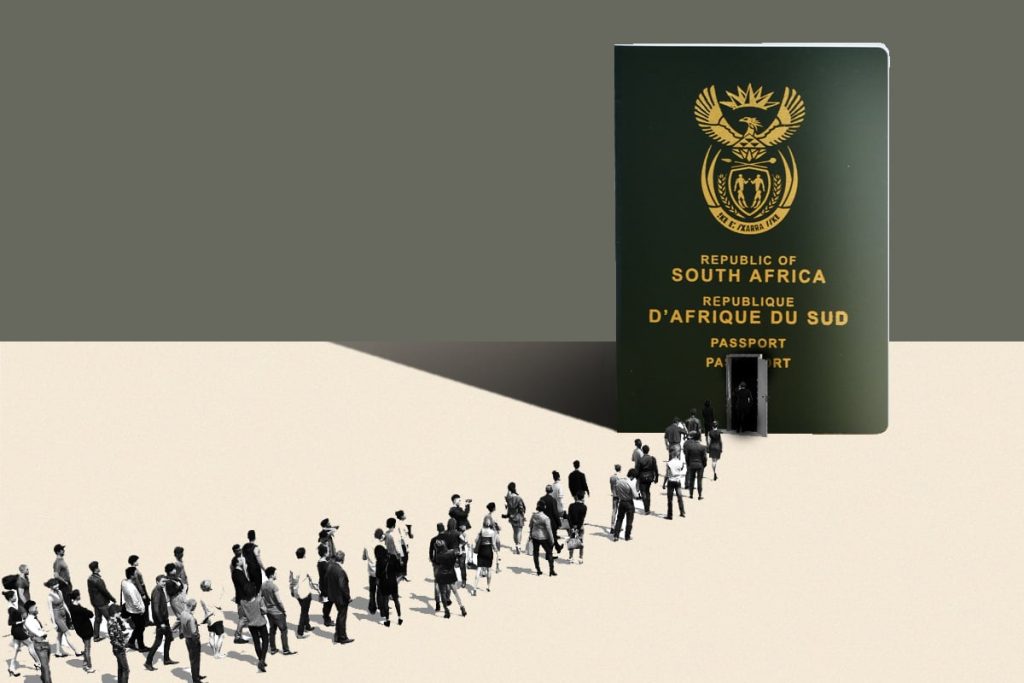
The Iranian embassy in South Africa has responded to recent remarks by Zane Dangor, the government’s Director-General of International Relations and Cooperation. President Cyril Ramaphosa and his cabinet have come under increasing pressure from Washington over their stance on the United States–led conflict with Iran. In an interview with Reuters, Dangor stated that South Africa had no reason to sever ties with Iran. In response, Tehran’s embassy in the country quoted South Africa’s first democratically elected president, Nelson Mandela: “We do not let others tell us who our friends are.” Dangor also reportedly rejected additional demands from Washington, including calls to withdraw South Africa’s genocide case against Israel at the International Criminal Court (ICJ), as well as to scrap black empowerment laws.

South Africa has long been vocal about what it describes as atrocities in the Middle East. The country’s position forms part of its broader foreign policy approach, which includes its ongoing case against Israel at the International Court of Justice (ICJ). Meanwhile, after two extensions, Israel has filed its response to South Africa’s written pleadings in the case before the ICJ. South Africa will now assess Israel’s response and decide whether to request the court’s permission to submit further written replies or proceed directly to the oral phase of proceedings. Ramaphosa said the country remains committed to the case. “At a time of growing global division and the systematic undermining of the multilateral system, the United Nations in particular, the crisis in Gaza represents an opportunity to unite humanity and remind us all of our shared values.”
We must all answer to the call to defend the principles of international law and to re-assert the vital role played by the UN and international dispute settlement mechanisms like the ICJ,” said the president.

President Ramaphosa has placed himself in a precarious position. He is a relatively good man with good intentions, standing on the global stage for what he believes is right: advocating for the restraint of the Israeli state security apparatus and Prime Minister Benjamin Netanyahu from pursuing a perpetual and gruesome genocide of Palestinian civilians in Gaza, as well as calling for the lifting of the siege on the Mediterranean coastal enclave. Tehran has extended a hand of friendship to Pretoria in this regard.
The United States is displeased with South Africa’s call for restraint on Tel Aviv. U.S. President Donald Trump and his ambassador to South Africa, Leo Bozel, are working to undermine popular support for the case against Netanyahu’s government at the International Criminal Court (ICJ) in The Hague, Netherlands, by attempting to turn the tide of public opinion within the nation.
The tragic truth about seeking justice in global institutions is that, with the new war fronts Israel has opened in Iran and Lebanon, it has become as elusive as an oasis in the desert. South Africa may find itself on the losing side of this conflict and end up with the short end of the stick. This is the worst-case scenario.
Director-General Dangor may be right to argue that South Africa should not bow to American and Israeli demands, but the country may be biting off more than it can chew

In his first media interview, new US Ambassador Leo Bozell was quoted by News24 as saying “an association with Iran is an impediment to good relations with the United States.”
“You (the United States) have a particular relationship with Iran … that many in the developing world (do not) have,” Dangor said. South Africa‘s relationship with the US has been at a low since Trump accused its Black majority government of persecuting its white minority, repeating false claims about land seizures from white farmers circulating on far-right chat rooms. Dangor said Pretoria was keen to improve ties with Washington, but “let’s engage about areas we agree on”.
Regarding the International Court of Justice case against Israel for its Gaza war, Dangor said: “it’s not even on the table … In my last engagement with the State Department people, we indicated that if you disagree with us on this, it’s a court process.”
Washington may have had a “particular relationship” with Tehran before the start of the war, but South Africa should be wary of antagonizing the Trump administration further with taunts and comments. Although President Ramaphosa’s advocacy for an end to the slaughter in Gaza is noble in intent, it comes at a time when defying the United States could cause detrimental harm to the South African economy. South Africa is already walking a tightrope regarding MTN’s business relationship with the Iranian Islamic Revolutionary Guard Corps (IRGC), which has not been well received by the American public. The last thing Pretoria should be advocating, especially while petrol prices are skyrocketing, is further antagonism toward Trump and his inner circle. The South African economy could end up being the biggest loser.
Trump is firmly in Netanyahu’s camp now, and the war he is waging against Iran has taken its toll on international petroleum markets. If South Africa pursues this case at the ICJ, the country risks losing whatever tax and duty-free agreements it currently enjoys with the United States under the African Growth and Opportunity Act (AGOA). Now may be the time for South Africa to consider withdrawing the genocide case at the ICJ.
As for the claims of a so-called “white genocide” occurring in the country, this is the least of our worries.
Article written by:
Yacoob Cassim
Journalist at Radio Al Ansaar