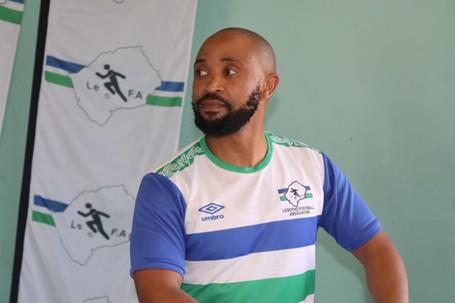
Highlanders FC Football Club of Zimbabwe, has appointed South African national Thabo Senong as head coach. According to reports coming out of the country, the Highlanders are adopting a new model with Benjani Mwruwari overseeing long-term planning, while Senong will lead the touchline. The Zimbabwean football club is looking to improve its standing, in national and regional levels for its players to compete with seriousness.
Hayatım Sale! Click to View
According to Highlanders FC, Senong will work alongside the returning Mkhokheli Dube as an assistant coach. “Coach Senong brings a wealth of experience at elite level football,” said the club in a statement. “His strong background in youth development, tactical organisation, and a team building makes him a valuable addition to the Bosso technical team. On behalf of the entire Highlanders FC family, the club warmly welcomes coaches Thabo Senong and Mkhokheli Dube, and wishes them every success in their new roles.”
Shop at Al Ansaar
Highlanders FC hired Senong to improve the team’s stamina. Professional soccer is demanding and depends on honing players’ skills so they remain composed on the pitch. The best time to focus on development is when players are young, so they are ready and in their prime for action. Tactics and team building are also important pillars; the goal for professional teams is to outmanoeuvre the opposition. Organising a well‑coordinated side with original tactics for each match is the responsibility of the head coach and assistant coach.
For both athletes and trainers, moving abroad is an opportunity for their training to improve significantly. Bafana Bafana coach Hugo Broos has argued that the Premier League is not strong enough to produce players of genuine international quality — the type who can compete at the highest level.
Al Asnaar Shop Trading Hours
Bafana exited the 2025 Africa Cup of Nations at the hands of Cameroon in the Round of 16 and, despite seeing plenty of the ball, struggled to break down an organised Indomitable Lions defence. Cameroon had only four shots on goal all game but scored from two of them, and it is that clinical execution South Africa lacks, according to Broos, something that can mostly only be gained by playing in top leagues week in, week out. “There are teams at the Cup of Nations with players who play in Europe. We mostly don’t have them, and that is a disadvantage for South Africa,” Broos said. “Cameroon is a brand-new team, and when you see where those players are playing, there’s a guy, the striker Christian Kofane, he’s playing for Bayer Leverkusen. He’s 19 years old.
South African professional footballers who test their talent abroad tend to improve significantly, becoming a force to be reckoned with on the pitch. Broos is right to argue this: regional and global football arenas are not easy. South Africa should encourage its players to compete on the international market so other nations will offer the same opportunities to South African talent. Global football is an expensive market, so South African clubs and the national federation must engage with it cautiously. In a world where talent and experience have a price, improvement is of greater value. It is up to the country’s football teams to offer incentives to attract players from abroad. If South African football wants to be taken seriously at continental and global levels, it must prove itself an enduring force to be reckoned with.