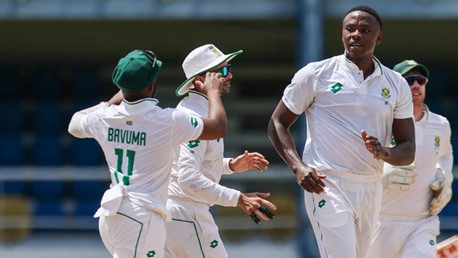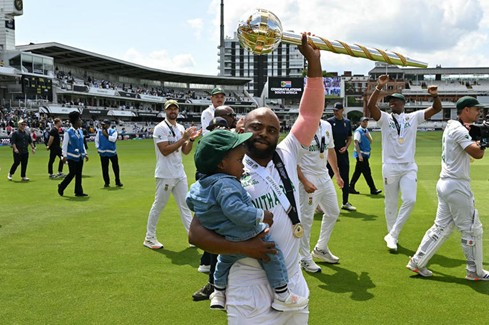

South Africans experienced a tectonic shift in excitement and thrills as the Proteas accomplished a historic victory in the International Cricket Council (ICC) Test Championship. The Proteas won five-wickets over Australia at Lord’s England, on Saturday. President Cyril Ramaphosa congratulated the team for beating Australia in the final match which lasted four days. The final win was accomplished through a superb team effort on English soil, the birthplace of Cricket.
“Your win is a major boost for cricket in South Africa, and you have inspired a new generation of cricketers. I call on the nation to come and greet the Cricket World Champions when they arrive back in the country this week,” the President said in a statement on Saturday. The President described the win as being built around excellent performances by the batsmen in the second innings. There was the brilliant batting by Aiden Markram who scored 136 and the captain, Temba Bavuma with his 66 runs. Their match-winning partnership was pivotal in the team’s success. The bowlers, led by Kagiso Rabada, also kept the pressure on the Australian batsmen and never allowed them to dominate.
“Coach Shukri Conrad, captain (Temba) Bavuma and the team have done South Africa proud. They started the match as underdogs but that indomitable spirit, that is a characteristic of our nation, carried the team through. The Proteas underlined the importance of being focussed on the field and triumphed,” the President said.

The four-day match would have been gruelling and intense. Both teams were tough, talented and skilled. This would have been a match that carried on into the night keeping the spectators on the edge of their seats. This would hold true from those in the stadium to those watching the televised final match from the comfort of their homes. President Ramaphosa was right to hail this victory given the intensity of the match and the effort the Proteas put into it. The wickets and runs scored by the team members of the Proteas to beat the Australian National Cricket Team would have been no walk in the park. The bowlers on the South African side too would have been a tough nut to crack.
The Proteas proved themselves to be experts at winning this ICC Championships and united the South African nation behind them. Both Coach Shukri, Captain Bavuma would have had their work cut out for them in focusing the efforts of the Proteas into blocking the Australian National Team. It is hopeful that this sets an example for all levels of sport South Africa participates in.

There was no such heartache at Lord’s, with Aiden Markram making 136 and Bavuma 66 as South Africa chased down a target of 282 for a five-wicket win over defending champions Australia before lunch on Saturday’s fourth morning. Bavuma, the first black African specialist batsman to play Test cricket for the Proteas, said his side had been inspired by South Africa’s Springboks, who who have won four Rugby World Cups — including the two most recent tournaments. “This is special for this group, special for myself, for the country,” Bavuma told reporters. “I have watched the rugby guys and the biggest thing I admire about them is the way with their success they have embraced what being South African actually means.

The Proteas have endured the most intense match in their career. They could not afford to lose this match or be overconfident in their abilities given how close they were to winning the trophy. The win of 282 wickets against the Australians would require all members of the Proteas team to pull together and undermine their opponents. The Proteas proved themselves to be a talented and skilful force under Bavuma’s captaincy. They beat the odds all the way through the test match championships to accomplish their ultimate win. It is interesting that Bavuma learned from the springboks how to play as a team and utilized this with the Proteas. South Africans will be deeply triumphant about the match. This will go down as a pivotal moment in the country’s history.
Article written by:
Yacoob Cassim
Journalist at Radio Al Ansaar