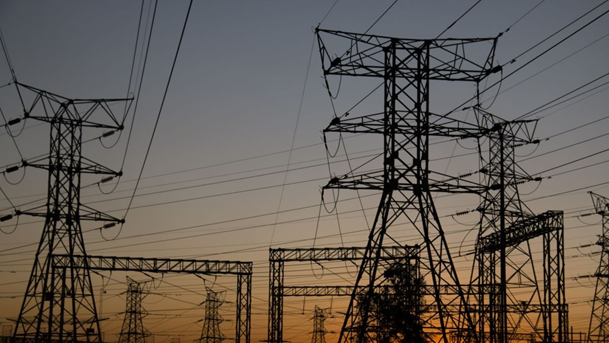

Seven groups of companies were selected as prequalified bidders for the country’s R440 billion transmission-grid expansions program overseen by the Department of electricity. Companies among the consortia include Adani Power’s Middle East Unit, Chinese firms State Grid International Development and China Southern Power Grid International, Electrite de Frace SA, the ministry said in a statement Monday in the capital, Pretoria. With technological innovation on the rise the SA Tech Challenge 2025 awarded recognition to six technology-driven small, medium, and micro enterprises. This took place at the 10th Science Forum South Africa (SFSA) in Pretoria. The grand prize was R3-million in grant funding awarded to support the commercialization and scaling of locally developed enterprises.
The progress of the power grid expansions is at the stage where the various companies participating can proceed with the plans for construction.

This stage of the program “marks a defining milestone in government’s strategic drive to expand, modernise and strengthen South Africa’s transmission network through diversified delivery mechanisms and sustained private sector participation, in support of long-term economic growth, industrial development and national energy security,” electricity minister Kgosientsho Ramokgopa told reporters on Monday in the capital, Pretoria. Ramokgopa also announced that four groups of companies had been selected as preferred bidders under Bid Window 7 of the Renewable Energy Independent Power Producer Procurement Programme. Upgrading South Africa’s transmission grid will underpin the government’s energy strategy.
South Africa is gradually retiring coal-fired plants it currently depends on to generate the bulk of its power, and intends to utilise a range of technologies from gas to renewables to meet future demand, the government’s latest blueprint shows.

If Pretoria were to succeed in this project, it could set the nation on a path to greater economic growth and job creation as well as innovative output in terms of industrial manufacturing. The main objective of the plan is to distribute energy along a decentralized energy grid. This energy will be drawn from renewable resources such as solar, wind and running water (hydraulics) as well as gas power. Minister Ramokgopa is focused on breaking up the state monopoly on power that the country’s citizens use everyday to power their appliances. The upgrades to the energy grid under the Renewable Energy Independent Power Producer Procurement Programme will lead to a better transition for service delivery across South Africa.
The country’s move away from fossil fuels such as coal offers a better opportunity to find energy in the abundant resources of solar and wind as well as gas such as hydrogen that are not just in a vast quantity but are also more powerful.
While at the 10th Science Forum South Africa (SFSA) in Pretoria Minister of the Department of Science, Technology and Innovation (DSTI) Blade Nzimande distributed awards to the designated participants at the CSIR International Convention Centre. This forms part of Pretoria’s drive to advance technologies that address the socio-economic development priorities of the nation. DSTI Deputy Minister Dr Nomalungelo Gina and Companies, Intellectual Property Commission Commissioner Adv Rory Voller and CSIR CEO Dr Thulani Dlamini were also present.

ROC Water Technologies secured first place and R1-million in grant funding for its technology that converts acid mine drainage into drinking-quality water using freeze crystallisation. Kasi Money placed second, receiving R750 000 for its fintech platform that provides digital banking services to informal sector workers. Third place went to Ortho-Desig, which was awarded R500 000 for its locally engineered orthopaedic implants and fixation devices. Snode Technologies received R250 000 for its real-time cybersecurity threat detection and response solutions, while SweepSouth was awarded R250 000 for its digital marketplace that supports dignified domestic and home services work. The Marking App Africa also received R250 000 for its artificial intelligence-powered system that automates exam marking to reduce teacher workloads.
The list of award recipients above serves as an incredible example of entrepreneurial skills that will form the backbone of South Africa’s future revolution in technology. It shows the private sector is taking the march of the Fourth Industrial Revolution and scientific research with the seriousness it deserves. This is a path that will formulate the importance of cooperation with personal enterprise by the state. The role and contribution in terms of job creation is huge and the pillars that support this contribution are education, skills-training and financial support. Environmental research such as converting acid water to a drinkable state and the fintech platform that provides digital banking services to informal sector workers is just the starting point of where South Africa’s entrepreneurial innovation can go. With investment in the decentralized power grid anything is possible.
Article written by:
Yacoob Cassim
Journalist at Radio Al Ansaar