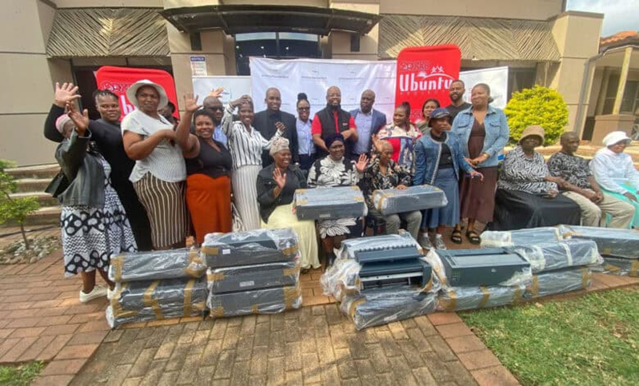

In iLembe, more than 120 Spaza shop owners are obtaining a significant financial incentive from the national government in a bid to improve the district’s informal economy. The group form the initial beneficiaries of the new Spaza Shop support Fund, a shared program between Enterprise iLembe and the district’s four local municipalities.

Enterprise iLembe chairperson Nkosenhle Mngadi said each approved business will receive support worth R100 000. “The funding is divided into three components. R10 000 is allocated for training, R40 000 for stock and R50 000 for infrastructure improvements to help businesses become compliant,” said Mngadi. The group have already received training on business management, hygiene standards, operational efficiency and compliance requirements. Further mentorship and business support will be offered over the next five years. Mngadi said the initial 120 beneficiaries had already been through an approval process, but encouraged other qualifying business owners to apply as the programme is ongoing.

The incentive of R100 000 and the instructions on how to use from the state are a positive example. The focus on training, stock and infrastructure is a step in the right direction. It serves as an example to promote expertise in employment, especially self-employment, respect for stock quality and improvements in infrastructure such as technology. In terms of infrastructure, the focus will again be on introducing the technologies of the Fourth Industrial Revolution (FIR) to the work place. The purpose of this restructuring and support for small businesses is to move these minor enterprises into the future. The government is committed to improving and upgrading the pillars of the local economy.
In terms of the Comrades next week, business of all forms (legally) from the formal to informal can expect another type of boost when it comes to sports tourism.
KwaZulu-Natal MEC for Economic Development, Tourism and Environmental Affairs, Reverend Musa Zondi, on Thursday said the Comrades Marathon remains one of the province’s most important economic catalysts, generating substantial spending across a range of sectors. “Every year, the race attracts tens of thousands of runners, supporters, technical officials, media representatives and visitors from across South Africa and around the world,” Zondi said. “These visitors spend money on accommodation, restaurants, transport, fuel, retail, entertainment and tourism experiences throughout the province.”
According to Zondi, the race’s economic impact extends well beyond race day, as many participants arrive several days before the event and remain in KwaZulu-Natal afterwards to explore local attractions.
The Comrades is a major attraction for KwaZulu-Natal as a whole. The race is instrumental in broadcasting not just the competing athletes but the beauty of the province as a whole. Thousands of athletes and spectators from across the world come to Kwazulu-Natal to either participate in the race or to support their favourite runner. When they come here, they also bring in revenue when they support local businesses, be they hospitality, accommodation, restaurants, and the like. These tourists eventually judge the services they offer and go back to their home countries to spread their experiences with our reputation by word of mouth and across social media.
Right now, KZN’s and South Africa’s international reputation is looking very bleak (negative). The xenophobic attacks have not helped improve the situation. What is said on social media platforms especially in relation to travel blogs are transmitted across the air waves via approval ratings (likes) like wild fire. Only time will tell how this plays out.
Article written by:
Yacoob Cassim
Journalist at Radio Al Ansaar