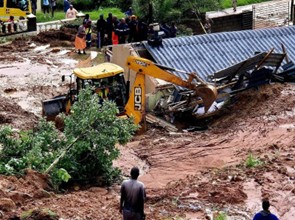

Thirty-five people have lost their lives in storm-related incidents since December. Cooperative Governance MEC Thulasizwe Buthelezi said in an official address to the press in Durban last Thursday. The KwaZulu-Natal Disaster Management Centre has launched a province-wide plan to help municipalities prepare for disasters. The MEC emphasized that early planning is critical to protecting communities. “Overall, KwaZulu-Natal Provincial Disaster Management remains committed to proactive planning and coordinated action to protect communities and critical infrastructure throughout the winter period.” Inclement weather across nine districts in KwaZulu-Natal has affected the lives of 9,400 people, and nearly 700 homes have been destroyed during the same period.

“In eThekwini, a resident was reported missing on 21 December in Ward 8 after being caught in powerful water currents. A 45-year-old man in Nquthu went missing on 3 January during flash flooding near a local river. Lastly, in Msinga, one [man] is missing from the incident that happened in Umsinga last week.” Provincial authorities say a series of severe weather incidents between December 2025 and March this year affected communities across large parts of KwaZulu-Natal. Heavy rains, flash floods, hailstorms, lightning strikes, fires and structural collapses were reported during the period. Disaster management teams were activated soon after weather alerts were issued by the South African Weather Service, allowing provincial and municipal teams to coordinate responses in high-risk areas.
Officials say damage assessments found that homes, roads, schools, health facilities and farms were affected across districts including uMgungundlovu, Amajuba, uThukela, uMzinyathi, Ugu, Zululand, uMkhanyakude and iLembe.

The risk of death during a thunderstorm is very high. Those living in rural areas, where service delivery and civic planning have yet to reach, face the greatest risk. The impact of heavy rain can be attributed to the acceleration of climate change. The provincial government and municipalities must brace themselves for urgent planning, particularly around shelter and housing, to address situations where lives can be saved. Even Pretoria and the national government departments of Environmental Affairs, Forestry and Fisheries, and International Relations and Cooperation have a role to play in raising concerns about these dangers at international forums. This is only the tip of the iceberg, as the risk of rising sea levels draws closer with each passing month.
Education in the field of natural disasters, especially among the youth, should be a priority. Lessons must be learned from these tragedies. Better infrastructure built on higher ground needs to be developed, as this could serve as shelter. The issue of climate change and global warming is becoming increasingly urgent, and South Africa as a nation must move to the forefront in addressing it.
There is, however, some good news on the horizon: 22 beaches in Durban have reopened after meeting safety standards. This marks a positive return to normalcy for the holiday-oriented metro.

Many of the city’s best-known swimming spots are currently open and operating normally. These include:
- uShaka Beach
• North Beach
• South Beach
• uMhlanga Main Beach
• Battery Beach
These beaches are monitored by lifeguards daily from 06:00 until 18:30, offering a supervised environment for swimmers, surfers, and families spending the day by the water. Durban’s coastline has always been central to its tourism identity. Stretching along the warm waters of the Indian Ocean, the beachfront blends urban energy with natural beauty. Visitors can move from a sunrise surf session to beachfront cafés, markets, and restaurants in a matter of minutes. For many South Africans, Durban’s beaches carry a sense of nostalgia. Generations have grown up with school holiday trips to the coast, beach cricket on the sand, and evening walks along the promenade.
The beaches are more than just places of recreation and relaxation; they serve as sources of income generation through tourism. The beaches were previously closed due to high levels of E. coli and other forms of bacteria in the seawater. The municipality typically undertakes an extensive water quality monitoring programme that covers more than 100 kilometres of the east coastline. Routine seawater samples are collected from official bathing beaches and sent to accredited laboratories. Scientists then test the water for microbiological indicators such as E. coli, which can signal contamination from runoff or pollution. The results are publicized, allowing residents and visitors to stay informed about environmental conditions at the beach.
The eThekwini region is a major hub of tourism and a key port for international trade and business. How it tackles major environmental and disaster-related issues will shape its future.
Article written by:
Yacoob Cassim
Journalist at Radio Al Ansaar