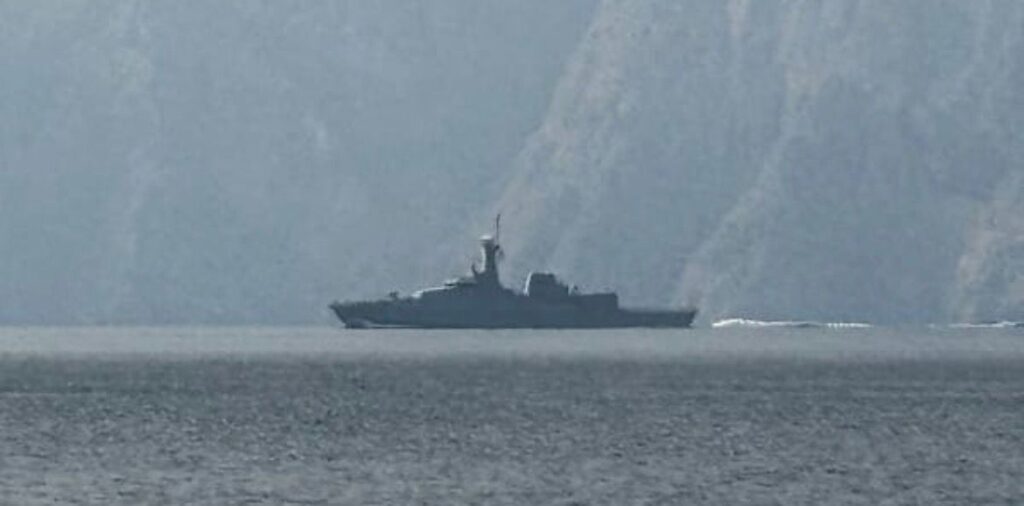

Escalating tensions involving Iran, Israel and the United States are raising fresh concerns about the stability of global trade, as analysts warn that the conflict could disrupt vital shipping routes and energy supplies that power the world economy.
The growing crisis has placed renewed attention on the Strait of Hormuz, one of the most strategically important waterways on the planet. Located between Iran and Oman, the narrow shipping corridor connects the oil-rich Gulf to global markets and handles roughly one-fifth of the world’s oil supply.
Any disruption in this passage could quickly send shockwaves through international markets, pushing up energy prices and placing further strain on already fragile global supply chains.
⸻
A Strategic Chokepoint for Global Energy
For decades, the Strait of Hormuz has been considered one of the most sensitive geopolitical flashpoints in the global economy.
Every day, millions of barrels of crude oil pass through the channel from Gulf producers such as Saudi Arabia, Iraq, Kuwait and the United Arab Emirates to markets across Asia, Europe and beyond. Because the waterway is both narrow and heavily trafficked, it represents a critical vulnerability in the world’s energy system.
Analysts warn that heightened tensions in the region could force shipping companies to reroute vessels or delay cargo movements, potentially triggering significant disruption in energy markets.
Patrick Penfield, a supply chain expert at Syracuse University, warned that instability in the region is already beginning to affect global logistics networks.
“The ripple effects can spread quickly,” Penfield noted, adding that disruptions in key shipping corridors can lead to delays, shortages and rising costs across multiple industries.
⸻
Asia’s Heavy Dependence on Middle Eastern Oil
The crisis carries particularly serious implications for Asia, which remains heavily dependent on Middle Eastern energy supplies.
According to energy market data, Asian economies import around 60% of their crude oil from the Middle East, with daily imports reaching more than 14 million barrels in 2025.
Some countries rely on the region even more heavily. Japan imports nearly 95% of its crude oil from Middle Eastern producers, while South Korea sources about 70% of its oil from the same region. China, the world’s largest oil importer, also relies significantly on Gulf exports to meet its growing energy demands.
This dependence means that any instability affecting the Strait of Hormuz could quickly ripple across Asian economies, impacting manufacturing output, electricity generation and transportation systems.
⸻
Shipping Routes Under Pressure
The risks are not limited to energy markets.
The Middle East sits at the crossroads of major global shipping routes that carry everything from electronics and industrial machinery to pharmaceuticals and consumer goods.
Disruptions in these routes could increase shipping times and transportation costs, particularly if vessels are forced to divert away from the Gulf region or take longer routes around Africa.
Global supply chains remain vulnerable following years of disruption caused by the pandemic, geopolitical tensions and shipping bottlenecks. Analysts say another shock to major trade routes could place additional strain on the movement of goods worldwide.
⸻
A Conflict With Global Economic Consequences
Energy traders and economists are now closely watching developments in the region as markets assess the potential economic fallout.
If tensions continue to escalate, analysts warn that oil prices could rise sharply, increasing fuel costs and adding inflationary pressure to economies around the world. Industries heavily dependent on energy – including aviation, shipping and manufacturing – would likely be among the first to feel the impact.
More broadly, the situation highlights how deeply interconnected the global economy has become with a handful of strategic trade corridors.
With around 20% of the world’s oil supply moving through the Strait of Hormuz, prolonged instability in the region could transform a regional conflict into a global economic shock.
As tensions continue to unfold, the narrow stretch of water separating Iran from the Gulf states once again finds itself at the centre of one of the world’s most consequential geopolitical flashpoints – where a regional confrontation carries the potential to reshape global trade.
Article written by:
Hudaa Ahmed
Journalist at Radio Al Ansaar