
Modern wars are no longer fought only with missiles and tanks. Increasingly, they begin with code.
As tensions escalate between Iran, Israel and the United States, a parallel battle is unfolding across the digital infrastructure that powers the modern world. Cyber activity linked to Iranian actors has reportedly surged during the current crisis, while analysts warn that the internet’s core systems -including cloud platforms and data centres – are emerging as strategic targets in geopolitical conflict.
Why It Matters
The modern global economy runs on digital infrastructure. Governments, banks, hospitals, airlines and communication networks rely on vast cloud systems that process and store enormous volumes of data every second.
These facilities are no longer simply technological assets. They are rapidly becoming geopolitical ones.
Experts increasingly warn that disrupting an adversary’s digital infrastructure could have consequences comparable to striking traditional military targets.
Data and Escalating Threats
Evidence of this shift is already emerging.
Cyber activity linked to Iranian actors has reportedly increased during the current conflict, targeting digital systems connected to governments and organisations aligned with Western allies.
At the same time, cybersecurity researchers warn that cyber threats are becoming increasingly industrialised. According to a recent global threat report, security networks now block more than 230 billion cyber threats every day, highlighting the immense scale at which digital attacks are launched across the internet.
Experts say modern cyber operations are increasingly automated and powered by advanced tools, allowing attackers to launch sophisticated campaigns against global networks at unprecedented speed.
A New Strategic Target
The conflict has also revealed how vulnerable digital infrastructure has become during geopolitical crises.
Iranian drone strikes reportedly targeted three Amazon Web Services data centres during the escalation. Two of the facilities were located in the United Arab Emirates, while another was based in Bahrain.
The attacks caused damage and temporary outages, forcing staff to evacuate the facilities and disrupting services relied upon by millions of users.
In parts of the United Arab Emirates, residents temporarily lost access to several everyday digital services – including banking applications, ride-hailing platforms and food delivery services – because those systems relied on cloud infrastructure hosted by the affected data centres.
Iran’s Islamic Revolutionary Guard Corps (IRGC) later claimed responsibility for targeting one of the facilities, arguing that the infrastructure supported United States military systems.
Expert Insight
James Lewis, a senior adviser at the Center for Strategic and International Studies, said the strategic importance of data centres has grown dramatically in the digital age.
He compared their importance today to the role railways and steam engines played during the industrial revolution -infrastructure that became central to national power and economic development.
Chris McGuire, an expert on artificial intelligence and technology competition and a former US National Security Council official, warned that attacks on digital infrastructure in the Gulf could undermine the region’s ambitions to become a global hub for artificial intelligence.
Sean Gorman, chief executive of the technology firm Zephr.xyz and a contractor to the US Air Force, suggested the strikes may represent a form of asymmetric warfare – targeting critical infrastructure to disrupt economic activity and exert strategic pressure on adversaries.
Meanwhile, Vili Lehdonvirta, professor of technology policy at Aalto University and a senior fellow at the Oxford Internet Institute, warned that future conflicts could also target fibre-optic cables and other key components of global internet infrastructure.
Historical Context
Cyber operations have played an increasingly visible role in geopolitical conflicts over the past decade. Digital attacks have been used to disrupt government networks, communications systems and critical infrastructure during several major crises.
Analysts say the current moment represents a new stage in the evolution of warfare, where cyber operations are increasingly integrated alongside conventional military strategies.
Global Implications
As the world becomes more dependent on digital systems, the potential consequences of cyber warfare continue to grow.
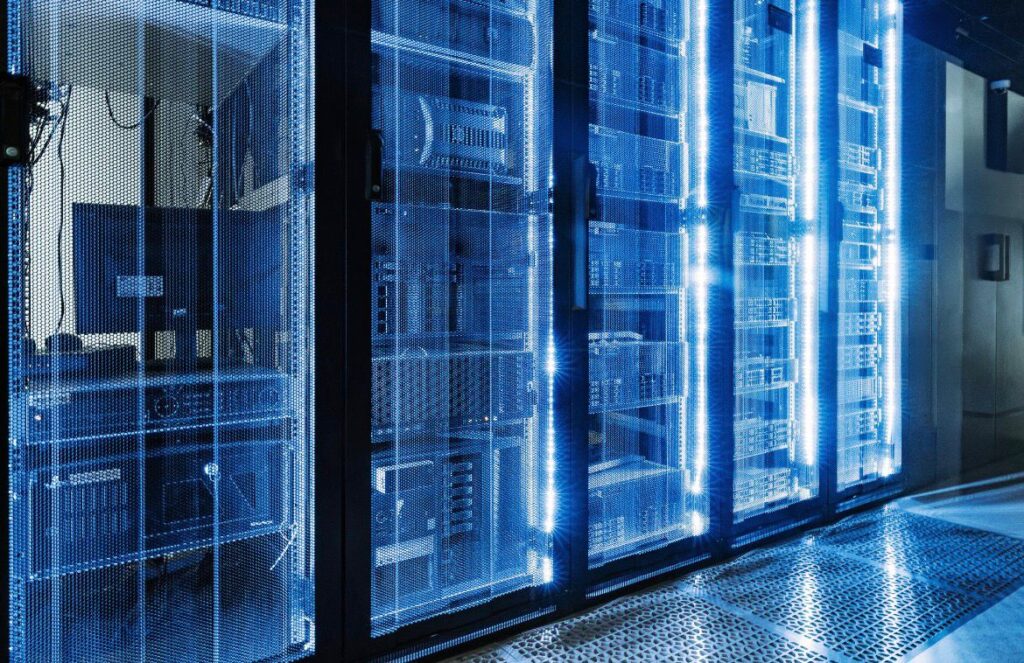
Cloud platforms host vast portions of the global internet, while data centres process the information that powers everything from financial markets to artificial intelligence systems.
Disruptions to this infrastructure could ripple across economies, affecting governments, corporations and millions of people who rely on digital services in their daily lives.
Strategic Conclusion
The strikes on data centres in the Gulf highlight a profound shift in the nature of modern warfare.
The infrastructure that powers the internet – servers, cloud platforms, fibre-optic cables and artificial intelligence networks – is rapidly becoming as strategically significant as oil pipelines, shipping lanes and military bases.
In the wars of the future, the most decisive battlefield may not appear on any map. It will exist inside the digital networks that connect the world – where a single cyberattack could disrupt economies, paralyse infrastructure and alter the balance of global power.
Article written by:
Hudaa Ahmed
Journalist at Radio Al Ansaar