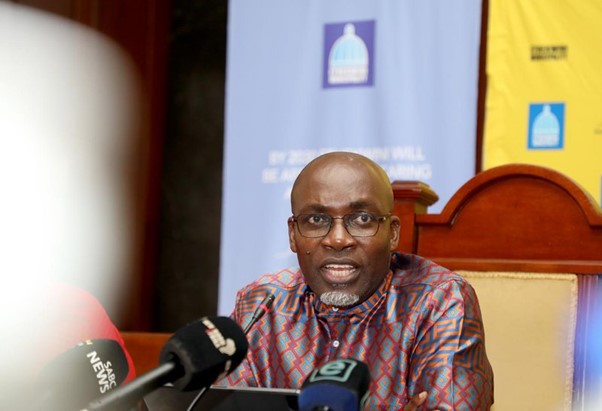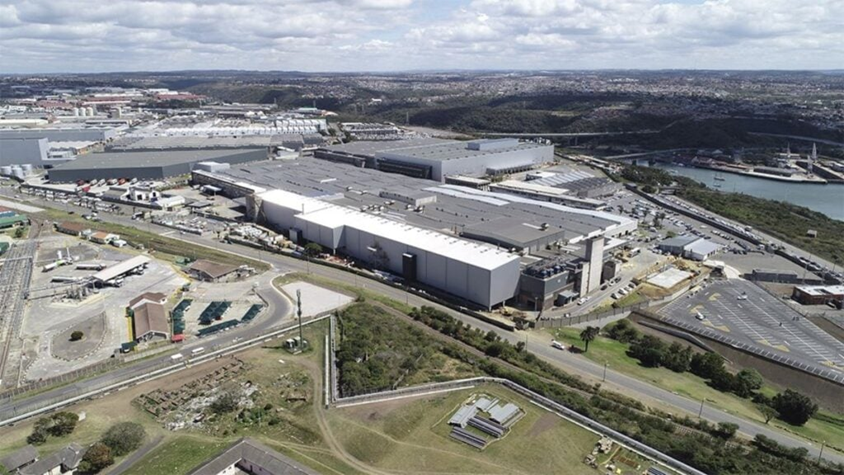

East London, one of the country’s oldest industrial hubs is facing a great risk of turning into a ghost town if Mercedes-Benz South Africa (MBSA) decides to scale back or shut down its local operations. Mikel Mabasa, CEO of the automotive business council Naamsa who admitted the city could turn in to a ghost town (become completely deserted) if the manufacturing plant shuts down. Mabasa was speaking at a recent industry conference in Sandton “East London could potentially face the burden of being classified as a ghost town if the Mercedes-Benz plant, an anchor of that local economy, comes to a grinding halt,” he said at a recent industry conference in Sandton.”

The problem comes down to trade with the United States, South Africa’s second-largest export market for vehicles. For years, Mercedes-Benz has been exporting its C-Class sedan from East London to the US under the African Growth and Opportunity Act (AGOA), which scrapped import duties for African-made cars. However, this arrangement collapsed when the Trump administration imposed a 30% tariff on South African imports. Overnight, the East London factory’s main business model was shaken, as the higher tariffs made the cars far less competitive. The consequences are already visible. Vehicle exports from South Africa to the US dropped 82% in the first half of 2025 compared to last year.
In August alone, exports of Mercedes-Benz passenger cars fell by almost half. Nearly all of these cars were C-Class sedans built in East London, showing how exposed the plant is to US trade policy.
The message of the financial losses of MBSA in East London is that sole reliance on a single market such as the United States is not good business. South Africa needs to look to other nations with more intelligent leadership. The loss of the African Growth and Opportunity Act (AGOA) act means South Africa needs to draw closer to more diverse markets both with in the continent of Africa and also towards Europe. South African cities like East London and Durban cannot put all their eggs in one basket. There is no telling how US President Donald Trump’s imposition of tariffs will create job opportunities in the US.
However, the world is ever changing and evolving. President Cyril Ramaphosa and the Government of National Unity (GNU) alongside major corporations and Brands like MBSA need to go further afield. Spread their markets across the world from Asia to Europe.
The internet social media trading company Amazon based in the United States has also abandoned its hiring drive in South Africa.

As of 19 September 2025, the US tech giant had 30 open positions in South Africa, compared with 95 at roughly the same time last year. The last time Amazon had fewer positions available in the country was in July 2023, when it advertised 30 jobs. At the start of that year, it had just 12 jobs open. At that time, the retailer was cutting jobs after extraordinary growth during the pandemic era, which boosted the IT and e-commerce industries. At the height of the Covid-19 pandemic in mid-2020, Amazon began hiring 3,000 remote working customer service agents in South Africa, which would increase its local workforce to 7,000.
The number of full-time vacancies had dropped to around 150 by September 2021, but surged back up to roughly 300 in June 2022.

Amazon may also be experiencing the financial pressures of trading in South Africa when we are under tariffs. Hence a withdrawal of Amazon’s business and trade interests from South Africa. This is a warning that South Africa needs to grow its local as well as regional economy and trade. The example being set here is that regardless of whether its rain or shine, whatever unforeseen event comes South Africa’s way, the country must adapt the same way corporations adapt. Amazon is at this moment contracting from South Africa to look elsewhere to generate its income. South Africa should rely on growing its own workforce through empowering local and regional corporate actors.
South Africa must look to new alternative markets to generate revenue. If not, its cities could be left to become deserted ghost towns and its citizens destitute. The country cannot be on the receiving end of Trump’s tariffs, waiting for a new trade agreement.
Article written by:
Yacoob Cassim
Journalist at Radio Al Ansaar