
Once more US President Donald Trump has made a public statement on world affairs that is detrimental at best. The President’s latest remarks were made concerning the Grand Ethiopia Renaissance Dam (GERD) dispute between Egypt and Ethiopia. Despite back-and-forth negotiations between Cairo and Addis Ababa, the two regional powers have yet to reach a consensus on the dam’s operation and water-sharing guidelines. Addressing a meeting with NATO officials in Washington, Trump appeared to align himself with Cairo’s regime in the prolonged dispute over the Dam being built on the Blue Nile, a major tributary of the Main Nile River and artery for Egypt’s farmlands.

Trump said in reference to GERD that, “closing up water going to the Nile,” which he described as “a very important source of income and life … to take that away is pretty incredible. But we think we are going to have that solved very quickly.” He added, “I think if I am Egypt, I want to have water in the Nile and we are working on that.”
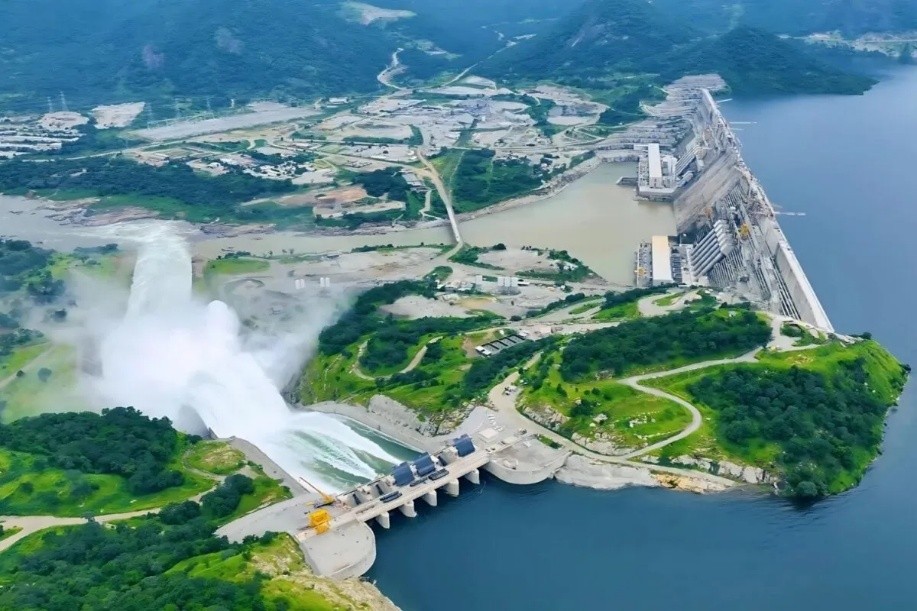
The Grand Ethiopian Renaissance Dam (GERD), nearing completion on the Blue Nile near Sudan, is Africa’s largest hydropower project and a centerpiece of Ethiopia’s development agenda. Valued at $5 billion, it is expected to generate over 6,000 megawatts of electricity, doubling Ethiopia’s power output and enabling it to export energy across the region. While Ethiopia sees the dam as vital for poverty reduction and economic growth, Egypt fears it could threaten its water security. With nearly 90 percent of its population dependent on the Nile, Egypt argues the GERD could significantly reduce the river’s flow during critical periods. The dispute has become a regional flashpoint. Both Ethiopia and Egypt have sought international backing, and the involvement of global powers has added diplomatic weight. President Donald Trump’s remarks appearing to support Egypt have been criticized in Ethiopia as undermining its sovereignty and risking greater tension.
Despite repeated negotiations, the parties remain divided over how the dam should be filled and operated.

GERD is meant to transform Ethiopia into an economic power house that could rival the likes of South Africa and India. The $5 billion powering infrastructure could quadruple Ethiopia’s Gross Domestic Profit (GDP). This will lead Addis Ababa to wrenching half its people out of poverty and emerging as a major energy exporter in east Africa. Cairo and Egyptian President Abdel Fatah El Sisi fears the dam will cut off the major lifeline for their agriculture fields. Trump’s favouritism to El Sisi and his regime could undermine the process of reconciliation and compromise between Egypt and Ethiopian Prime Minister Abiy Ahmed’s government. Trump does not have the patience and perseverance of an experienced diplomat. Lacking in that department could lead him to derail the peace process. The President would do well to listen to his advisors before issuing any random statements that could jeopardize the peace talks.
Sowing and even burying deep the seeds of discord between Ethiopia on the one hand and Egypt and Sudan on the other could lead to an escalation for conflict and a bitter stalemate. Since the completion of GERD on the third of July Ethiopia and Egypt are circling each other like two lions over a kill.

Sudan’s Sovereign Council General Chairman Abdel Fattah al-Burhan and Egyptian President Abdel Fattah el-Sisi both denounced unilateral actions in the Blue Nile Basin on 30 June. Both leaders reaffirmed their commitment to regional legal frameworks and water security. “The GERD is a collective opportunity, not a threat to neighbouring countries,” Abiy Ahmed emphasised. He declared that Ethiopia is willing to discuss water-related issues with Egypt and Sudan in a positive manner. Ethiopia’s advancement would not come at the expense of others, Abiy reaffirmed. Across the Nile basin, he promoted “collective advancement, collective energy, and collective water”. Ethiopia claims that economic growth and electrification depend on the Grand Ethiopian Renaissance Dam. Half of Ethiopia’s population does not have access to electricity, according to World Bank data.
The Ethiopians are a proud and patient people who have overcome adversity. They should be allowed to construct the hydropower dam in their own territory to improve their economy. That said Egypt has a right to express its concern about any alteration to the Nile flood waters. Egypt also has the right and responsibility to look for, extract and create alternative water sources on its own territory and in cooperation with other African nations. The same can be said of Sudan but that nation should stabilize itself first. Addis Ababa, Khartoum and Cairo need to sit down and negotiate what interests they have in sharing the water sources of the Nile and how those water sources should be distributed. An escalated conflict or war would not be in anyone’s best interests.
Trump and his administration for their part need to recognize this, respect the distribution of water sources and adopt a more neutral position. A peaceful solution should be reached that should satisfy all sides.
Article written by:
Yacoob Cassim
Journalist at Radio Al Ansaar