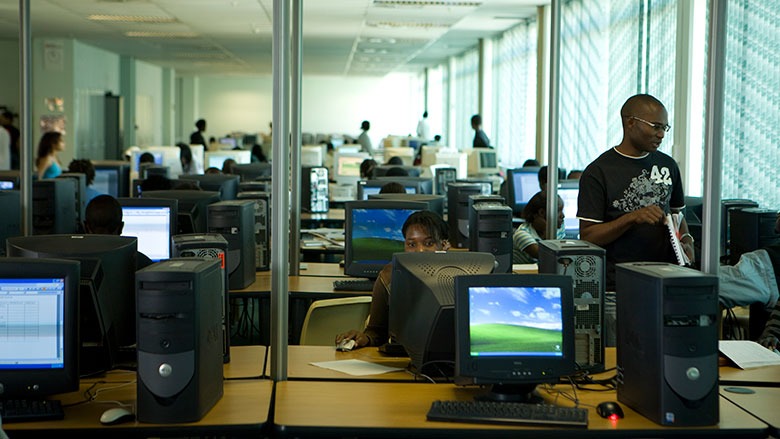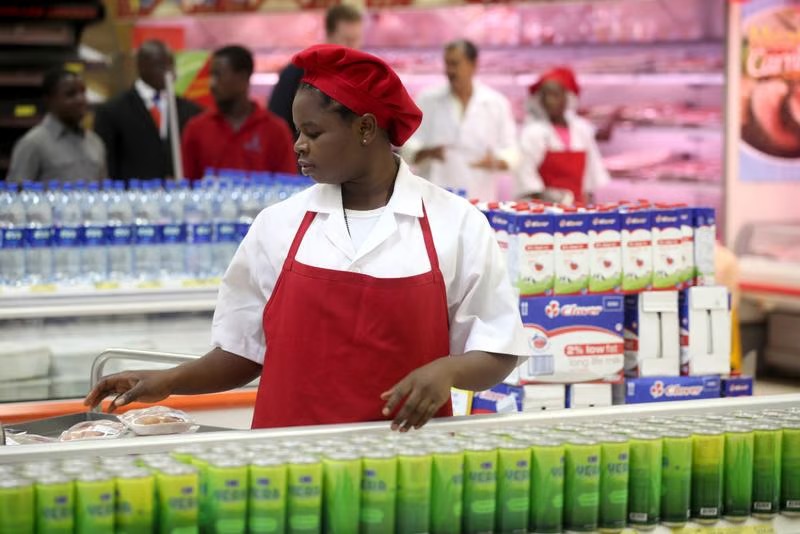
In South Africa, being counted as employed does not always mean earning enough to survive.
For a growing number of workers, employment means a few shifts a week, unpredictable hours and an income that changes from one month to the next. Their working hours may be reduced, but their rent, transport, electricity and grocery bills remain painfully full-time.
Behind South Africa’s worsening unemployment rate lies another crisis that receives far less attention: people who have jobs, but cannot secure enough paid hours to build a stable life.
South Africa’s Unemployment Crisis Is Deepening
According to Statistics South Africa’s Quarterly Labour Force Survey for the second quarter of 2026, the official unemployment rate increased from 32.7% to 33.6%.
The number of unemployed South Africans rose by 345,000 to approximately 8.5 million, while the number of employed people declined slightly to around 16.7 million.
However, unemployment tells only part of the story.
South Africa’s broad measure of labour underutilisation stood at 46.3%. This includes unemployed people, discouraged jobseekers, others who could potentially work, and employed people who want additional hours but cannot obtain them.
Approximately 740,000 employed South Africans experienced time-related underemployment during the second quarter. Stats SA defines this group as people working fewer than 35 hours a week who want to work more and are available to do so.
These workers are not choosing shorter schedules for convenience. They are ready to work, but the additional hours simply are not available.
Short-Hour Employment Is Growing Rapidly
The structure of employment in South Africa has changed considerably since 2010:
- People working fewer than 15 hours a week rose from about 253,000 (Q1 2010) to 456,000 (Q2 2026), an increase of 80.2%.
- People working 15 to 29 hours a week rose from 812,000 to approximately 1.14 million, an increase of 40.1%.
- Total employment grew by only 21.3% over the same period.
Most employed South Africans still work between 40 and 45 hours a week. However, short-hour employment is growing much faster than overall employment, revealing a labour market increasingly divided between workers with stable schedules and those surviving from one roster to the next.
Not everyone working fewer hours is underemployed. Some people deliberately choose part-time work because they are studying, raising children or caring for relatives. The real concern is the 740,000 people who want more work but cannot find it.
This Is Not a Four-Day Working Week
Reports about changing working hours could leave readers with the impression that South Africa is moving towards a four-day working week without reducing salaries.
Sadly, nobody is handing workers a luxurious long weekend on full pay.
The Basic Conditions of Employment Act still generally limits ordinary working time to 45 hours a week. South Africa has not introduced a nationwide four-day working week or legally reduced ordinary working hours.
The actual shift is far less attractive. More people are working very short hours, receiving fewer shifts or relying on casual and temporary employment.
Retail assistants, restaurant employees, domestic workers, construction workers and seasonal labourers are among those most exposed to unpredictable schedules.
For someone living from one wage payment to the next, losing a single shift can mean losing the taxi fare needed to return to work. Losing two shifts could mean falling short on groceries or prepaid electricity.
Flexibility may sound progressive in a boardroom. Without predictable income, it is simply financial insecurity with better branding.
Household Bills Remain Full-Time
The cost of living makes underemployment especially damaging.
The Pietermaritzburg Economic Justice and Dignity Group found that its average household food basket cost R5,530.52 in July 2026. The basket increased by R28.11 in one month and by R87.81 compared with July 2025, and that figure covers food alone.
A worker scheduled for 20 hours a week does not receive half-price rent. Taxi fares do not decrease because a shift was cancelled. Electricity, school expenses and debt repayments do not adjust themselves according to an employee’s roster.
Hours and income can shrink. The cost of survival does not.
This is how someone can wake up, pay to travel to work and perform a job, yet remain trapped in poverty.
The damage also spreads through the wider economy. When workers have less money, they spend less at local shops and businesses. Falling consumer demand then makes it harder for businesses to expand, employ more people or offer additional shifts.
South Africa risks becoming trapped in a cycle where households cannot spend because they lack sufficient work, while businesses cannot grow because households are spending less.
KwaZulu-Natal Is Also Feeling the Pressure
KwaZulu-Natal’s official unemployment rate rose from 31.2% to 32.5% in the second quarter of 2026.
The province added only around 3,000 employed people during the quarter. Although eThekwini gained approximately 30,000 jobs, the improvement was not enough to prevent the provincial unemployment rate from increasing.
Young South Africans remain particularly vulnerable. Around 36.4% of people between the ages of 15 and 24 were neither employed nor participating in education or training.
Manufacturing also lost 100,000 jobs nationally compared with the same period last year, while community and social services lost 101,000.
These figures represent more than movements on a spreadsheet. They mean fewer opportunities for young people, fewer stable household incomes and greater pressure on families already struggling to keep up with living costs.
Businesses Are Struggling Too
It would be unfair to blame every employer for reducing working hours.
Many businesses, particularly small companies, are battling weak consumer demand, rising operating costs and an economy that is not growing quickly enough.
When revenue declines, reducing shifts or using temporary workers may help a business avoid shutting down completely. However, when this becomes a widespread pattern, the country ends up with thousands of workers who are officially employed but cannot plan beyond their next roster.
COSATU has described South Africa’s worsening unemployment crisis as a “ticking time bomb.” The federation has called for economic stimulus, affordable financing for small and medium-sized businesses, greater investment in public services and an expansion of employment programmes.
South Africa Needs Better Jobs, Not Only More Jobs
Government cannot continue treating every form of employment as an equal success.
A job offering stable hours, predictable income and opportunities for advancement is not economically equal to a few uncertain shifts each month. Both may place someone in the employed category, but only one provides a realistic path out of poverty.
South Africa needs stronger economic growth, functioning infrastructure, support for small and labour-intensive businesses, workplace training and proper enforcement of labour protections.
More importantly, the country must begin measuring the quality and stability of the jobs being created, not simply their existence.
A person who wants to work should not have to beg for enough hours to survive.
Employment that cannot cover the journey to work, food at home or electricity for the month may improve the official statistics. But when every bill remains full-time, a fraction of a job is simply not enough.