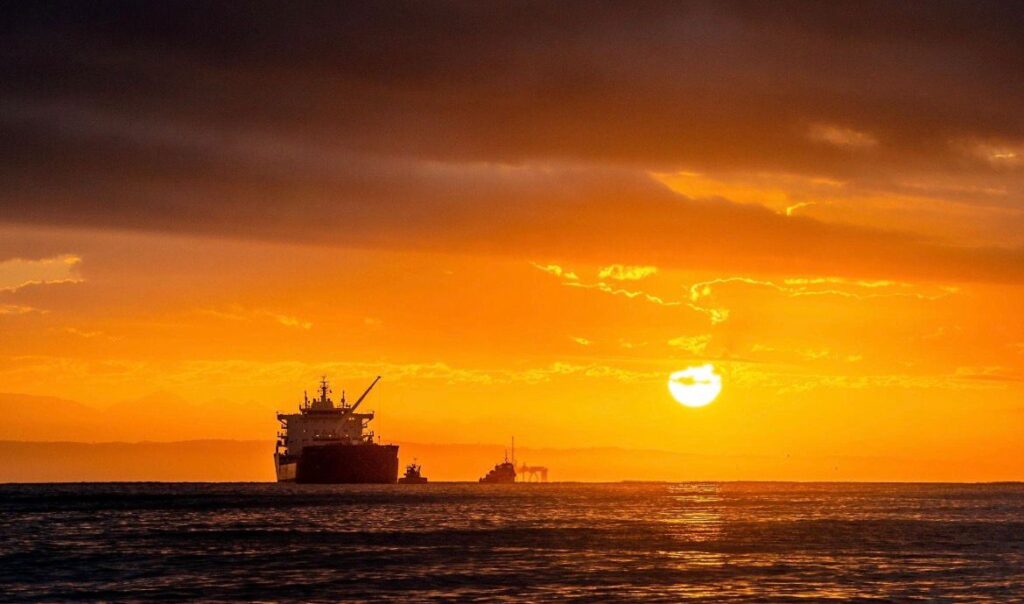

The United States has begun guiding commercial vessels through the Strait of Hormuz as tensions involving Iran continue to raise concerns about the security of one of the world’s most important maritime routes.
The move comes amid growing international efforts to keep trade flowing through the narrow waterway, which lies between Iran and Oman and serves as a critical gateway for global energy supplies.
According to reports, US naval forces are assisting commercial ships travelling through the Strait following months of uncertainty and security concerns in the region. The development highlights growing fears that any disruption to shipping traffic could have serious consequences for the global economy.
The Strait of Hormuz may appear as a small stretch of water on a map, but its importance is enormous.
Roughly one-fifth of the world’s oil trade passes through the route, making it one of the most strategically significant waterways on the planet. Every day, millions of barrels of oil and other energy products move through the Strait on their way to markets across Asia, Europe and beyond.
Any threat to that flow immediately attracts the attention of governments, businesses and financial markets.
The latest developments come as Iran has reportedly proposed arrangements aimed at easing tensions in the region. While Tehran has indicated a preference for diplomatic solutions, concerns remain among Western governments and international shipping operators about the long-term security of the route.
The European Union has also stressed the importance of maintaining freedom of navigation through the Strait of Hormuz, warning that uninterrupted access to international shipping lanes remains essential for global stability and trade.
For many people, the situation may seem like a distant geopolitical dispute unfolding thousands of kilometres away.
In reality, the consequences can travel far beyond the Middle East.
When uncertainty affects major shipping routes, energy markets often react quickly. Oil prices can rise, shipping costs can increase and businesses may face higher expenses moving goods across international markets. Those costs can eventually filter down to consumers through higher transport, fuel and living expenses.
For countries already facing economic pressures, even small disruptions in global energy supply chains can create additional challenges.
The situation serves as a reminder of how interconnected the modern world has become.
A security concern in a narrow waterway between Iran and Oman can influence decisions in boardrooms, affect international trade routes and shape the prices paid by consumers on the other side of the world.
As diplomatic efforts continue and international naval forces work to secure commercial shipping, global attention remains fixed on the Strait of Hormuz.
The challenge for world leaders is not only preventing conflict but ensuring that one of the world’s most important economic arteries remains open.
Because if traffic through the Strait slows or stops, the impact will not remain confined to the Middle East.
It will be felt across the global economy — from financial markets and fuel stations to ordinary households trying to keep up with the rising cost of living.
Article written by:
Hudaa Ahmed
Journalist at Radio Al Ansaar