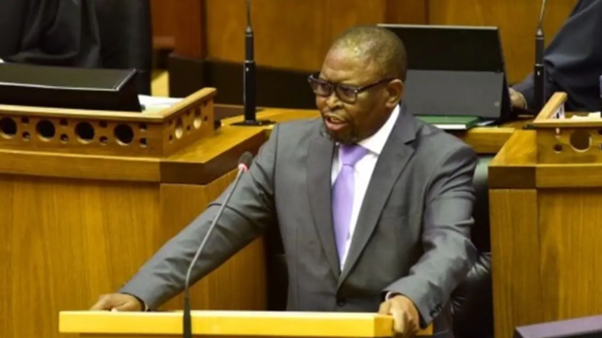

Act two of Finance Minister Enoch Godongwana’s budget proposals took place yesterday. Both houses of Parliament convened in separate sittings to consider voting on the fiscal framework and revenue proposals for this year’s budget speech. The framework serves as the blueprint for how South Africa plans to raise revenue, spend money and manage the country’s debt. The last framework had to be withdrawn after Action SA and Build One South Africa (BOSA) helped the African National Congress (ANC) get through a vote, with the Democratic Alliance (DA) and Economic Freedom Fighters (EFF) went to court over the Value-Added Tax (VAT) increased it proposed to generate revenue for the treasury.
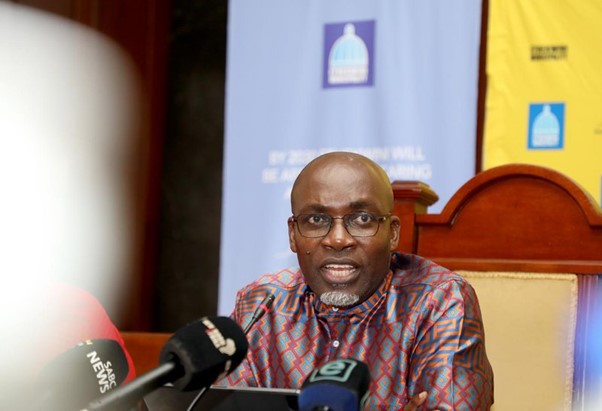
On Tuesday the MK party’s motion to censure Godongwana for what it termed the mishandling of the budget process, failed. Parliamentary Spokesperson Moloto Mothapo explains what will be required to get the fiscal framework approved. “The fiscal framework is being considered within the stipulated time frame of 16 days since the tabling of the budget. And in terms of voting requirements in the National Assembly, the fiscal framework consideration will require one third of MPs to be present, and the majority of those present must vote in favour of it to pass. [In the National Council of Provinces, at least five provinces must vote in favour for the fiscal framework for it to pass.] Only once the framework has been passed by both houses – will committees then set to work on processing the two money bills that apportion money to all spheres of government, and state departments.”

Pretoria and the provinces will have their work cut out for them depending on whether this budget is passed. The key is how the revenue for the national treasury is generated. The income is needed to pay jobs in the public and state department sectors and to keep provincial administrations, legislatures and staffs running. A majority vote by MPs in the National Assembly may be required to pass the framework could come down to whether the MK and the EFF will approve of it. Minority parties like BOSA in the Nation Assembly might risk losing their constituents depending how they vote. If the framework is considered fare to South African tax payers and consumers it should pass. The country’s upper parliamentary House, the National Council of Provinces could then be the determining body if the legislation makes it to President Cyril Ramaphosa’s desk in Pretoria.

The bill needs a majority of fifty to pass in the ninety member NCOP. The economy has however found itself on steadier ground.
However, some economists remain optimistic that the local economy is proving resilient in the face of trying circumstances, particularly since many had predicted a contraction in the first quarter. The key challenge will be to sustain this fragile recovery while turning modest gains into meaningful, inclusive prosperity. “Sustainable growth, however, depends on clear policy direction, prudent fiscal management, and fostering investor confidence,” Mitchell added. “Improving trade accessibility, combined with targeted reforms, will help reduce unemployment, which remains a pressing challenge.” The first quarter’s almost non-existent growth was primarily driven by agriculture, which expanded by 15.8% quarterly, as well as finance. However, sectors such as mining, manufacturing and construction continue to face setbacks, with declines ranging from 2.4% to 4.2%.
South Africa’s potential loss of the African Growth and Opportunity Act (AGOA), would curtail South Africa’s exports to the US, particularly in sectors such as manufacturing, precious metals and minerals.
They say money makes the world go round. But what good is money if its value is reduced? The economy may be on stable ground but enjoying somewhat slower growth. The fact that AGOA was suspended by US President Donald Trump is a significant blow to the South African economy which could have benefitted immensely. Africa’s largest industrial economy and Gateway to its southern region will have to look elsewhere for reliable trading partners and markets. Does Ramaphosa’s government have what it takes to improve the country’s trade deficit and economic growth? The passing of the National Budget frame work for this year could be a key factor in determining the trajectory the country’s economy. It will also determine the overall success of the Government of National Unity for Ramaphosa’s second term.
South Africa could turn to further economic integration with its fellow African states within the Southern African Development Community (SADC) as well as better relations with the European Union, Britain and possibly the BRICS nations to build the necessary infrastructure in said region. Ramaphosa and his advisors need to brace themselves for new opportunities.
Article written by:
Yacoob Cassim
Journalist at Radio Al Ansaar