
Could a war in the Middle East really make food more expensive in South Africa?
As tensions escalate, the answer is increasingly yes.
The global focus has been on oil prices and military developments, but a quieter and more dangerous disruption is unfolding beneath the surface. The conflict is beginning to affect fertiliser supply chains and global trade routes – two critical pillars of modern food production.
Fertiliser exports linked to the region are already under pressure as instability affects production and movement. At the same time, shipping routes are becoming more uncertain, with rising risks, higher insurance costs and delays beginning to reshape global trade flows. These disruptions are not isolated – they are directly tied to the cost of producing and transporting food.
Modern agriculture runs on energy. Fuel powers machinery, irrigation and logistics, while fertiliser depends heavily on energy-intensive production processes. When energy markets are shaken, agriculture follows.
Agricultural economist Dr Muhammad Kadwa explains that the impact moves quickly and cannot be contained. “Farming is heavily dependent on fuel and fertiliser. When those costs increase, it moves through the entire system – from production to distribution – and ultimately reaches the consumer as higher food prices.”
That chain reaction is already taking shape.
Rising fuel costs are increasing transport expenses. Shipping disruptions are forcing longer, more costly routes. Fertiliser is becoming more expensive and, in some cases, harder to access. For farmers, this creates mounting pressure at every stage of production.
Most cannot absorb these increases indefinitely.
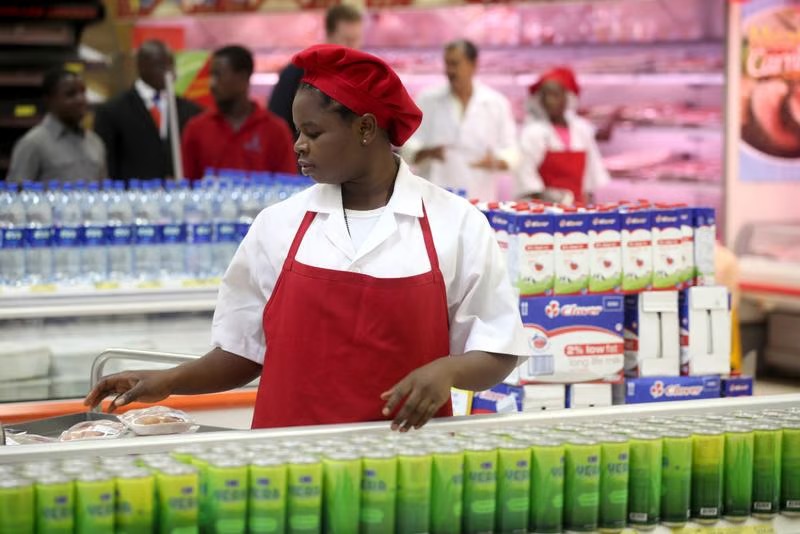
The result is a steady and unavoidable shift – from global conflict to local consequence. What begins as instability in one region moves through supply chains, into agricultural systems, and eventually onto supermarket shelves.
There are also broader risks for South Africa’s economy. Trade disruptions linked to the conflict are raising concerns about exports, particularly as global shipping becomes more complex and unpredictable. For a country deeply connected to international markets, these shifts carry real economic consequences.
This is not without precedent. Previous global conflicts have shown how quickly disruptions to fertiliser and trade can drive up food prices and strain supply systems. The difference now is the pathway – not just through agricultural exports, but through energy and logistics.
For South Africa, the exposure is clear. The country relies on imported fuel and global supply chains for key inputs, making it vulnerable to external shocks. As international costs rise, local systems have little choice but to adjust.
Petrol becomes more expensive.
Farming becomes more expensive.
Food becomes more expensive.
And households begin to feel the pressure.
What makes this moment particularly dangerous is how quietly it unfolds. There is no sudden collapse – only a gradual build-up of costs moving through the system until the impact becomes unavoidable.
The battlefield may be far away, but its effects are already moving closer.
If the conflict continues to escalate, South Africans may soon feel it not only when filling up their cars – but when paying for basic food.
Article written by:
Hudaa Ahmed
Journalist at Radio Al Ansaar