
Oil markets moved within minutes. Shipping companies began reassessing routes through the Gulf. Diplomats scrambled behind closed doors. Yet despite the rising global tension, no new missile had been launched.
That may be the clearest sign that modern conflict has changed.
In previous generations, the world waited for invasions before fearing war. In 2026, the fear often arrives first — through headlines, market panic, disrupted supply chains and political uncertainty. The conflict begins long before the battlefield does.
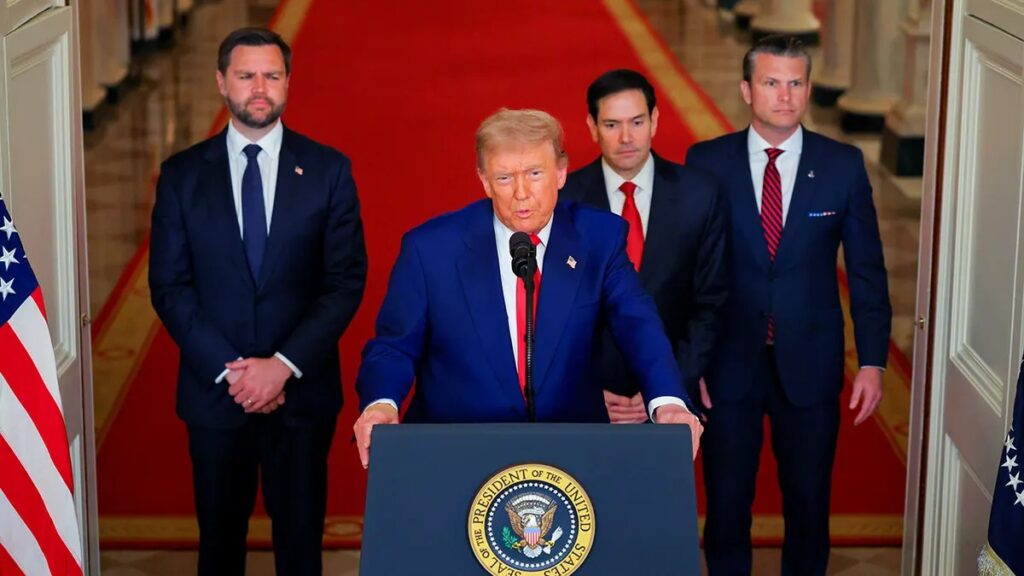
As United States President Donald Trump intensifies his warnings against Iran, analysts increasingly believe the threat itself may now be part of the strategy.
Fresh tensions escalated after Trump rejected Iran’s latest response to a proposed peace framework, dismissing Tehran’s position as “unacceptable” while warning that further military action remains possible. The remarks sharply weakened hopes of a near-term diplomatic breakthrough and reignited fears of wider instability across the Middle East.
But beyond the military rhetoric lies a more important reality: modern geopolitical power is increasingly exercised psychologically before it is exercised militarily.
Today, a single warning from a global power can move oil prices, pressure governments, shake currencies and dominate international headlines before a single shot is fired. In modern conflict, markets often panic before soldiers move.
That pressure is already being felt across the global economy.
The Strait of Hormuz, one of the world’s most critical energy corridors, remains at the centre of international concern. Roughly a fifth of global oil supplies pass through the narrow route, meaning even the possibility of escalation involving Iran immediately affects fuel markets, shipping costs and investor confidence worldwide.
Energy analysts warn that prolonged instability in the region could disrupt supply chains and place renewed pressure on already fragile economies still recovering from years of inflation, conflict and financial uncertainty.
At the same time, Trump’s handling of the crisis appears to be creating growing political confusion.
A recent Reuters/Ipsos poll found that many Americans believe the administration has failed to clearly explain its long-term goals regarding Iran. The findings reflect broader concerns surrounding inconsistent messaging, particularly as tensions continue rising without a clearly defined diplomatic outcome.
Reports from the Associated Press also suggest that fears surrounding Iran are beginning to influence wider negotiations involving both China and the United States. Analysts warn that any further escalation in the Middle East could place additional strain on trade routes, energy markets and already fragile global supply chains.
Critics argue that Trump’s approach relies heavily on unpredictability — using sudden policy shifts, public threats and aggressive rhetoric to keep opponents strategically off balance. Supporters, however, believe the uncertainty strengthens Washington’s leverage by applying pressure before formal negotiations begin.
Either way, unpredictability itself has become a weapon.
The modern objective is no longer always direct military victory. Increasingly, it is strategic pressure: forcing markets to react, influencing diplomatic behaviour and creating enough instability to shift global calculations without necessarily entering full-scale war.
Political analysts increasingly warn that modern geopolitical conflicts are now shaped as much by economic pressure and strategic uncertainty as by direct military confrontation. The growing role of market disruption, energy instability and political signalling continues to influence global behaviour long before conventional conflict even begins.
For countries like South Africa, the consequences are difficult to ignore.
A geopolitical crisis thousands of kilometres away can still reach South African households through the petrol pump, the grocery aisle and the weakening rand. Rising instability in the Middle East places direct pressure on fuel prices, transport costs and inflation, while shipping disruptions increase the price of imported goods and essential supplies.
That may be why global markets now react not only to military action, but to political language itself.
In previous decades, wars were measured by troop deployments and territorial gains. In 2026, they are increasingly measured by economic disruption, market volatility and the ability to control uncertainty before violence even begins.
The battlefield may still involve missiles and military power. But increasingly, the first strike is psychological.
Article written by:
Hudaa Ahmed
Journalist at Radio Al Ansaar