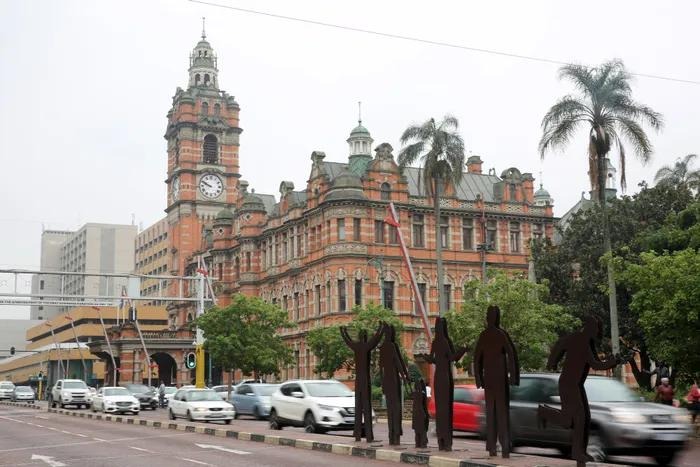

Cities do not collapse overnight.
They decline slowly – through failing infrastructure, neglected public spaces, economic stagnation and the gradual erosion of public confidence until dysfunction becomes so routine that people stop expecting things to improve.
In Pietermaritzburg, many residents fear that moment may already have arrived.
In parts of the CBD, deteriorating buildings, weakened infrastructure and visible social challenges have become part of daily life for residents and businesses alike. Rising concerns around crime, homelessness, substance abuse and urban decay have steadily eroded confidence in KwaZulu-Natal’s capital city.
For many residents, the decline no longer feels temporary.
It feels normalised.
This week’s Urban Development Indaba, hosted by Msunduzi Municipality at Golden Horse Casino, may represent more than another policy discussion or development conference.
It may be the city’s clearest acknowledgment yet that the decline can no longer be ignored.
The two-day Indaba has brought together government officials, urban planners, investors, financial institutions, engineers, academics and community organisations to discuss strategies aimed at reversing years of decline and repositioning Pietermaritzburg as a competitive economic hub.
But beneath the presentations and development frameworks lies a more urgent question:
Can the city still restore belief in itself before the damage becomes irreversible?
Because urban decline is never only about infrastructure.
It is also about confidence.
Businesses invest in cities that appear functional, safe and capable of long-term growth. Once confidence begins to collapse, the effects spread quickly – investment slows, tourism weakens, property markets stagnate and skilled professionals increasingly look elsewhere.
Cities rarely fail all at once.
They decline gradually through years of deferred maintenance, weak urban management and growing public frustration until deterioration becomes embedded within everyday life.
Msunduzi Mayor Mzimkhulu Thebolla acknowledged the seriousness of the crisis during the Indaba, describing Pietermaritzburg as a city standing at a “critical turning point”.
He identified deteriorating infrastructure, pressure on the CBD, unemployment, crime and social instability as major barriers undermining investor confidence and economic growth.
Importantly, the municipality appears to recognise that restoring Pietermaritzburg will require more than repairing roads or upgrading infrastructure.
It will require restoring credibility.
Across South Africa and globally, cities are increasingly competing for investment, tourism and economic relevance. For Pietermaritzburg, the challenge is no longer simply preserving its historical importance – but proving it can still function as a modern, competitive and investable city.
Despite its challenges, Pietermaritzburg still holds significant strategic value.
Positioned along the N3 corridor linking Durban Harbour to Gauteng’s economic heartland, the city remains important for logistics, tourism, industrial development and regional trade.
The concern, however, is that strategic location alone is no longer enough.
Modern investment increasingly flows toward cities perceived as efficient, stable and forward-thinking. Competing urban centres are aggressively positioning themselves for growth while Pietermaritzburg risks being defined by stagnation if long-standing structural problems remain unresolved.
The municipality says the Urban Development Indaba is intended to move beyond discussion and toward measurable implementation, with proposals including an “Urban Development Compact” focused on long-term urban renewal.
Discussions throughout the gathering have centred on infrastructure investment, urban safety, transport systems, public-private partnerships and economic recovery strategies.
Yet residents are likely to approach these promises cautiously.
Pietermaritzburg has heard ambitious plans before.
Years of infrastructure failures, stalled projects and declining service delivery have created skepticism around whether meaningful long-term change can actually be achieved.
Because the challenge facing Pietermaritzburg is no longer identifying the problems.
Residents experience many of them every day.
The real test will be whether the city can move beyond speeches and political messaging and deliver visible improvements capable of restoring public trust.
Execution – not ambition – will determine whether this Indaba becomes a genuine turning point or simply another discussion about a city struggling to regain momentum.
Because before infrastructure can be rebuilt, confidence must be rebuilt first.
And whether that confidence can be restored may shape Pietermaritzburg for decades to come.
Article written by:
Hudaa Ahmed
Journalist at Radio Al Ansaar