
As Ukraine continues its struggle against Russia, another battle is unfolding far from the front lines. It is a battle that cannot be won with tanks, missiles or soldiers. It is a battle against corruption.
At a time when Ukraine is fighting to defend its territory, rebuild damaged infrastructure and maintain the confidence of international partners, a new corruption investigation involving a major state-owned energy company has once again raised questions about accountability, transparency and the cost of misconduct during wartime.
According to Ukrainian anti-corruption investigators, alleged irregularities have been uncovered in contracts linked to a hydropower infrastructure project involving Ukrhydroenergo, one of the country’s most important state-owned energy companies. Authorities claim that contracts for the construction of protective structures at hydroelectric facilities were awarded at inflated prices, potentially resulting in substantial financial losses to the state.
The investigation forms part of a broader anti-corruption effort that has continued despite the pressures of war. Investigators have conducted searches and gathered evidence as they seek to determine whether public procurement processes were manipulated and whether state funds were misused.
While the legal process remains ongoing and no final court findings have been reached, the allegations have attracted significant attention because they involve infrastructure that plays a critical role in Ukraine’s energy security.
The timing is particularly sensitive.
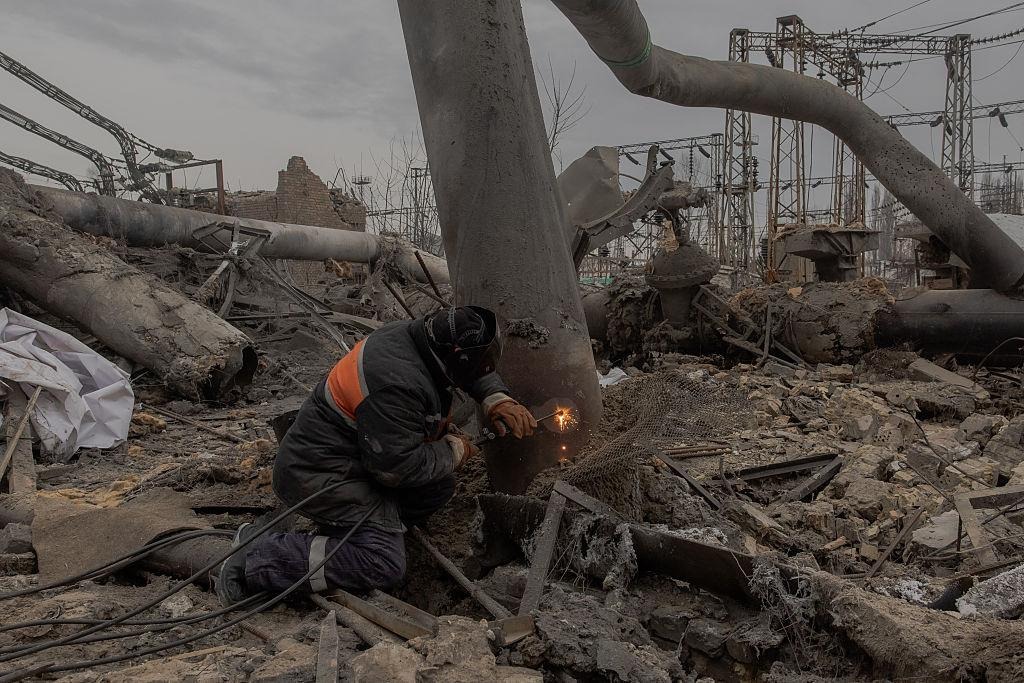
Since the escalation of the conflict, Ukraine’s energy network has repeatedly come under pressure. Power generation facilities, transmission infrastructure and other strategic assets have faced disruption, making energy security one of the country’s most urgent priorities. Protecting these facilities is not simply an economic issue; it is a matter of national resilience.
In this environment, every project matters.
Every contract matters.
And every public dollar matters.
For that reason, corruption allegations involving strategic infrastructure carry consequences that extend far beyond financial statements and procurement documents.
The latest investigation has also reignited debate about Ukraine’s broader reform efforts. Critics argue that repeated corruption allegations risk undermining public trust and could raise concerns among international partners that continue to provide financial and military assistance.
Yet supporters of Ukraine’s anti-corruption drive point to a different conclusion.
Ukraine’s Deputy Prime Minister for European and Euro-Atlantic Integration, Olha Stefanishyna, recently argued that the existence of such investigations demonstrates that anti-corruption institutions are functioning as intended. According to her, the willingness to investigate politically sensitive cases involving powerful officials and state entities reflects exactly the type of accountability and transparency expected by European institutions.
The European Union has consistently identified anti-corruption reform as a key requirement for closer integration, making these investigations an important test of Ukraine’s institutional credibility.
For many observers, the situation presents a difficult paradox.
On one hand, corruption allegations damage confidence and raise legitimate concerns about the management of public resources.
On the other hand, the fact that investigators continue pursuing high-profile cases during wartime may itself be evidence that oversight mechanisms remain active and independent.
The challenge facing Ukraine is therefore larger than any single investigation.
The country must simultaneously defend itself against external threats, rebuild critical infrastructure, maintain international support and convince its citizens that public resources are being protected.
That is no small task.
For ordinary Ukrainians, corruption is not an abstract political issue. It can influence the speed of reconstruction, the effectiveness of infrastructure projects and the ability of communities to recover from the disruption caused by war. Resources lost through alleged fraud or inflated contracts are resources that cannot be used elsewhere.
This is why the story matters.
Not because of paperwork.
Not because of procurement regulations.
But because trust becomes one of a nation’s most valuable assets during a crisis.
History has shown that countries facing major challenges depend not only on military strength or economic resources, but also on public confidence in the institutions responsible for managing them.
As investigators continue their work, the outcome of this case will be watched closely both inside Ukraine and abroad. The findings may influence public trust, international confidence and perceptions of Ukraine’s commitment to reform during one of the most difficult periods in its modern history.
The question facing Ukraine is no longer simply whether corruption occurred.
The larger question is whether a nation fighting one war can successfully win another at the same time.
The answer could help shape Ukraine’s future long after the guns fall silent.
Article written by:
Hudaa Ahmed
Journalist at Radio Al Ansaar