Afghanistan’s Children Are Starving While the World Looks Away
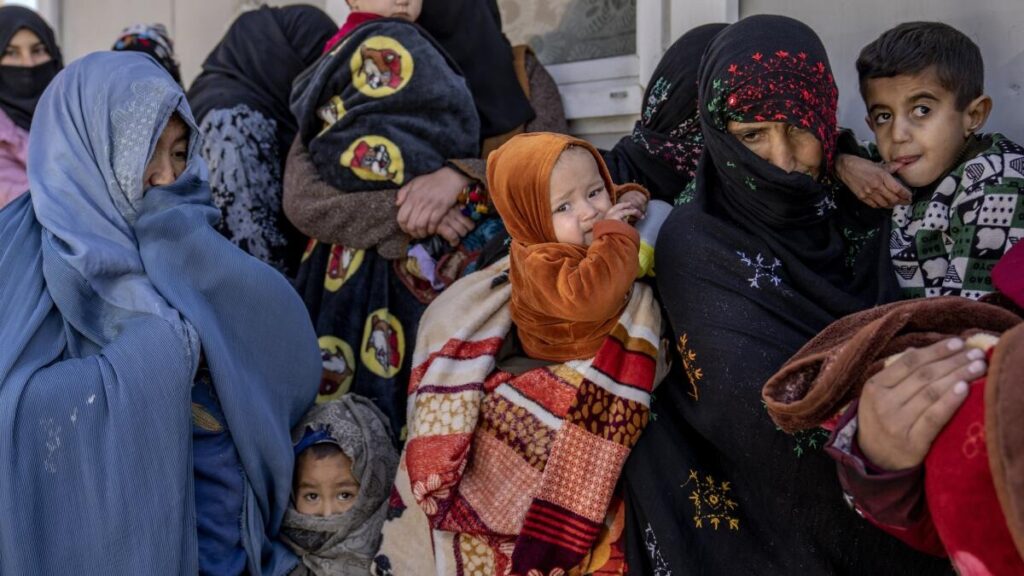
Across Afghanistan, parents are carrying dangerously underweight children to health centres in search of therapeutic food, medicine and urgent medical care.
Increasingly, they are finding closed doors, empty shelves or healthcare workers with too little assistance for too many families.
In remote communities, there may be no second clinic nearby. The next facility could be hours away, while transport remains unaffordable for families already struggling to buy bread. Even after completing the journey, parents have no guarantee that treatment will be available.
When a rural clinic closes, a family does not simply lose convenience. A critically malnourished child may lose their last realistic chance of survival.
Nearly 600 health facilities have reportedly closed or suspended operations across Afghanistan since the beginning of 2025 because of severe funding shortages. The closures have affected access to healthcare for approximately four million people, around half of them children.
At the same time, approximately 3.7 million Afghan children under five are projected to suffer from acute malnutrition in 2026. Another 1.2 million pregnant and breastfeeding women are also expected to be malnourished.
The figures are enormous, but the reality is painfully intimate. They represent mothers who cannot produce enough breast milk because they are also hungry, children surviving largely on bread and tea, and parents reaching clinics only to discover that the treatment their child needs is no longer available.
When a Clinic Closes, a Community Loses Its Lifeline
Afghanistan’s healthcare system has been weakened by years of conflict, economic instability and dependence on international assistance.
The nearly 600 reported facility closures include more than 420 primary healthcare facilities that shut during 2025, followed by approximately 150 additional closures or suspensions reported in 2026.
Within that broader collapse, the World Food Programme says 142 health centres closed during 2025 following reductions in humanitarian assistance. More than 13,000 children consequently lost access to nutrition treatment.
These figures cover different sections of the healthcare system and different reporting periods, but they point towards the same crisis: Afghanistan’s medical safety net is rapidly disappearing.
In many rural areas, one clinic may serve several villages. When it closes, pregnant women lose access to maternal care, children miss vaccinations and severely malnourished babies lose access to therapeutic feeding.
Facilities that remain open are also battling shortages of medicine, specialised nutritional products, equipment and trained healthcare workers.
The medical knowledge required to treat these children already exists. Therapeutic food exists. Healthcare workers know what must be done. What is disappearing is the funding and supply network needed to place those resources in their hands.
What Acute Malnutrition Does to a Child
Acute malnutrition, also known as wasting, occurs when a child becomes dangerously thin for their height because of food deprivation, illness or both.
It is not simply an empty stomach.
Wasting weakens the immune system, leaving a child unable to fight infections that a healthier body might survive. Illness then makes it more difficult to absorb nutrients, causing the body to lose even more strength.
Without timely treatment, the cycle can become fatal.
UNICEF says wasting has worsened across 26 of Afghanistan’s 34 provinces compared with 2025. Children under two are bearing the greatest burden, accounting for 83 percent of severe acute malnutrition cases and 77 percent of moderate cases.
These are babies and toddlers whose bodies and brains should be developing rapidly. Even children who survive severe malnutrition may experience lasting damage to their growth, health and ability to learn.
Afghanistan is therefore not only at risk of losing children today. It risks weakening an entire generation before it has had the chance to grow.
Families Are Surviving on Almost Nothing
Reports from Afghan clinics describe families living largely on bread and tea because healthier food has become unaffordable.
Parents are unable to buy rice, milk, beans, medicine, clothing and other basic necessities. Some depend entirely on humanitarian clinics for the nutritional supplements helping to keep their children alive.
One mother interviewed by the World Food Programme said her family relied on a clinic for medicine and nutrition support for her anaemic children. Her husband’s small income from selling cups was not enough to provide the healthy food they needed.
“If food is not here, my children will die,” she said.
For families in this position, therapeutic food is not an optional supplement. It can mean the difference between recovery and a child’s body continuing to waste away.
Yet severe funding shortages are forcing health workers to turn families away.
Parents who have already endured war, displacement, drought and poverty are being told there is nothing left for their children. Not because the children are healthy, and not because treatment is impossible, but because programmes have run out of money or supplies.
That is what makes this emergency particularly cruel. Many of these deaths are preventable.
Hunger Is Colliding With Poverty, Drought and Disease
Clinic closures did not create Afghanistan’s child malnutrition crisis, but they are dismantling one of the country’s final defences against it.
Years of conflict and economic instability have left millions of people without reliable work. Drought has destroyed crops, damaged livelihoods and reduced access to clean water. Rising food prices have pushed nutritious meals beyond the reach of many households.
Disease outbreaks, inadequate sanitation and low immunisation coverage are placing further pressure on children already weakened by hunger.
Millions of Afghans returning from neighbouring countries have also increased demand for scarce housing, employment, food and public services.
Regional conflict and the prolonged closure of the Pakistan border disrupted crucial supply routes into Afghanistan. According to the World Food Programme, the disruption increased costs and contributed to nearly one million malnourished women and children missing essential nutrition services for five months.
A parent may overcome poverty, distance and exhaustion to reach a functioning clinic, only to discover that the therapeutic food their child needs never arrived.
Aid Is Shrinking at the Worst Possible Time
Child malnutrition in Afghanistan generally peaks between July and October as hunger, disease and poor sanitation intensify.
Twelve provinces have already reached critical levels of acute child malnutrition, the highest number recorded in the country.
Yet humanitarian organisations are reducing food distributions, treatment programmes and preventive services during this dangerous period.
The World Food Programme says it urgently requires $540 million over six months to prevent the crisis from deteriorating further.
The broader humanitarian picture is equally severe. The United Nations estimates that approximately 21.9 million people, around 45 percent of Afghanistan’s population, will require humanitarian assistance during 2026.
As resources disappear, aid workers are being forced to make impossible choices about which families receive food and treatment and which families must leave with nothing.
No parent should have to prove that their child is close enough to death to deserve help.
The World Cannot Say It Did Not Know
Afghanistan’s children did not create the wars, political divisions, border closures or funding decisions surrounding them. Yet their bodies are carrying the consequences.
For Muslims around the world, including South Africa’s Muslim community, Afghanistan cannot become another tragedy acknowledged briefly before attention moves to the next crisis.
Concern for the Ummah must mean more than sharing a distressing image or expressing momentary outrage. It should lead to sustained attention, responsible giving and support for credible humanitarian organisations delivering food, healthcare and nutrition treatment inside Afghanistan.
The world already possesses the knowledge, medicine and therapeutic food needed to save many of these children.
What it is failing to provide is the funding and determination required to reach them.
Afghanistan’s children are not growing weaker because nobody knows how to help them.
They are growing weaker in full view of the world, while the clinics that could keep them alive continue to close.