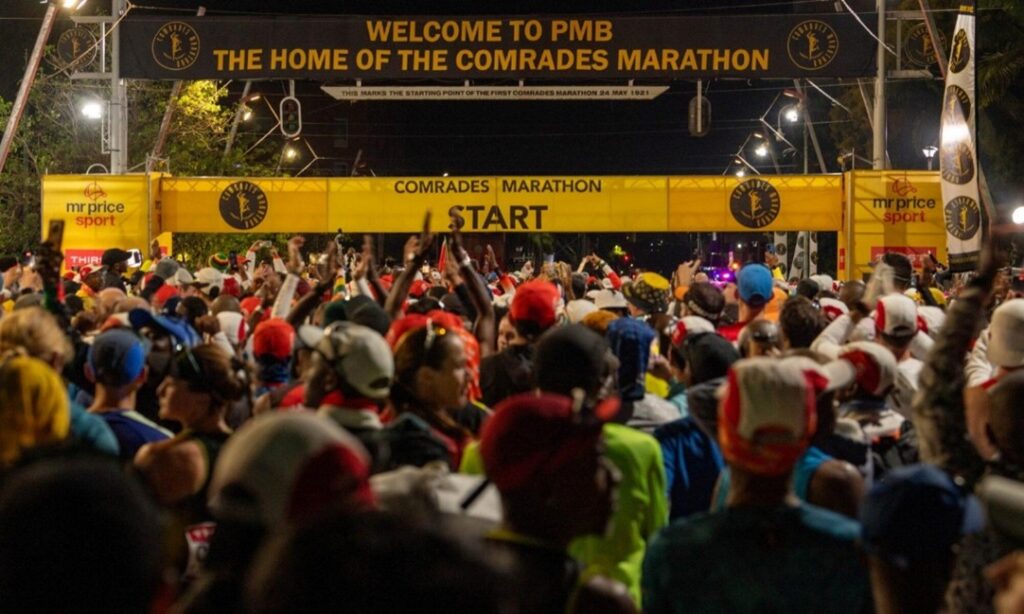
The Comrades Marathon has survived brutal climbs, extreme weather, global conflict and a pandemic. Now, as it prepares for its historic 100th running in 2027, South Africa’s most famous ultramarathon faces a very different challenge: a battle over who has the authority to govern it.
Athletics South Africa has formally distanced itself from the 2027 Comrades Marathon, saying the event has not been sanctioned through KwaZulu-Natal Athletics.
That does not mean the race has been cancelled. The Comrades Marathon Association says preparations are continuing and insists that it has the resources, experience and commitment needed to stage the event independently.
However, the dispute has created uncomfortable questions around one of South Africa’s most valuable sporting events, which reportedly contributed approximately R1 billion to KwaZulu-Natal’s economy in 2026.
Why Is the Comrades Marathon Not Sanctioned?
On 1 August 2026, members of the Comrades Marathon Association (CMA) voted not to reaffiliate with Athletics South Africa or KwaZulu-Natal Athletics.
The CMA believes there is no legal requirement forcing the organisation to affiliate with either athletics body. Its members have instead chosen what the association describes as a “Comrades-first” approach to the future of the race.
CMA chairperson Mark Leathers said the association remains confident that it can continue presenting a world-class event.
The organisation has spent decades managing one of the largest and most demanding ultramarathons in the world. From the CMA’s perspective, it has the experience and institutional knowledge required to continue operating independently.
Athletics South Africa strongly disagrees.
In a statement issued on 18 August, ASA said the Comrades organisers had failed to recognise and comply with the governance and regulatory structures governing athletics in South Africa.
According to ASA, the organisers have not met the sanctioning requirements contained in the rules of KwaZulu-Natal Athletics, Athletics South Africa and World Athletics.
ASA has consequently distanced itself from the organisation, administration and conduct of the 100th Comrades Marathon.
Why ASA Says Sanctioning Matters
Athletics South Africa argues that all road-running events must operate within a consistent governance framework, regardless of their size, history or commercial power.
As the recognised national federation for athletics in South Africa, ASA says it has a responsibility to protect athletes, clubs, technical officials, partners and other stakeholders.
Its position is that no race should be allowed to disregard the established athletics system simply because it has a powerful brand.
ASA has also reaffirmed its support for KwaZulu-Natal Athletics as the recognised provincial body responsible for overseeing athletics in the province. It says KZN Athletics remains willing to engage with organisers who recognise its authority and comply with the required governance and sanctioning standards.
In simple terms, Comrades may be an institution, but ASA does not believe it should be treated as an exception.
Why the CMA Wants to Remain Independent
The Comrades Marathon Association believes the race can stand on its own.
The Comrades has an internationally recognised name and decades of experience behind it. The CMA believes its future should not depend on rejoining organisations that its members do not consider legally necessary for the race to operate.
The association says it remains open to engagement, but it is equally firm that it can continue delivering the event independently.
That leaves the two sides at an uncomfortable impasse. ASA insists that recognised athletics structures must be respected. The CMA believes those structures are not essential to the continued success of the race. For now, neither side appears ready to give way.
What Does This Mean for Comrades Runners?
The most important point for runners is that the 2027 Comrades Marathon has not been cancelled.
However, the lack of ASA sanctioning creates practical questions that need to be answered long before race day.
How will qualifying races and entry requirements be managed? What will the dispute mean for athletes, clubs and technical officials affiliated with recognised athletics bodies? Will there be any effect on elite participation, the recognition of results or the race’s international standing?
The statements released so far do not fully answer these questions.
That uncertainty matters because runners do not casually wake up one Sunday morning and decide to tackle the Comrades. They spend months, and sometimes years, preparing. They invest in coaching, equipment, qualifying races, transport and accommodation. International runners may plan entire trips around the event.
They deserve clear answers about how an independently operated centenary race will function and what protections will be in place.
Nearly R1 Billion Is Tied to the Race
The dispute is not only about athletics administration.
The 2026 Comrades Marathon reportedly contributed approximately R1 billion in economic value to KwaZulu-Natal, including around R210 million in direct visitor spending.
Thousands of runners and supporters travel through Durban, Pietermaritzburg and communities along the route. They spend money at hotels, guesthouses, restaurants, petrol stations, retailers and transport services. Smaller traders and tourism businesses also benefit from the crowds that arrive before race day and remain in the province afterwards.
For these businesses, Comrades weekend is not merely a sporting celebration. It can be one of the most commercially important periods of the year.
There is currently no evidence that the governance dispute will erase this economic contribution. However, prolonged uncertainty could weaken confidence among runners, sponsors and commercial partners if the conflict is not resolved or properly explained.
Why the 100th Comrades Marathon Matters
The 2027 race will not be an ordinary edition.
It will mark the 100th running of an event that began in 1921 and grew into one of South Africa’s most recognisable sporting traditions.
The centenary should be a celebration of endurance, sacrifice and the history of the “Ultimate Human Race.” Instead, its build-up now risks being overshadowed by arguments over authority, governance and control.
The CMA must demonstrate that an independent race can deliver the same level of credibility, organisation and athlete protection associated with the Comrades name. ASA and KZN Athletics must also explain what the lack of sanctioning will mean in practical terms. Institutional statements are not enough when thousands of runners and millions of rands are involved.
The Race Is Still On, But the Questions Remain
Both sides say they are acting in the best interests of athletics and the Comrades Marathon. Yet unless they find common ground, runners, sponsors and businesses may be left carrying the uncertainty created by a fight they did not start.
The 100th Comrades Marathon may still proceed successfully. But a race of this magnitude cannot rely on reputation alone. Clear rules, credible oversight and public accountability will be essential, whether they come through the existing athletics structures or a convincing independent framework.
Comrades was founded on the idea of triumphing over adversity. Before thousands of runners confront the road in 2027, the organisations behind the race must overcome a very different obstacle: each other.