South Africa Hosts SADC Summit as Anti-Migrant Protests Grip Durban
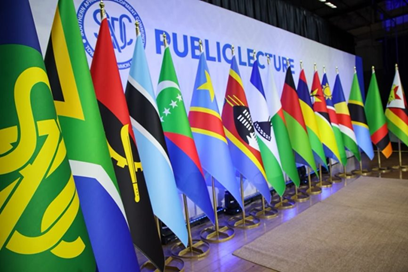
The 46th Southern African Development Community (SADC) Summit ordinary session took place at the Inkosi Albert Luthuli International Convention Centre (ICC) in Durban on Monday. South African President Cyril Ramaphosa will serve as the gathering’s chair for this year. Among the key issues the Summit will tackle are regional integration and infrastructure.
Security was tightened around the ICC ahead of the international gathering. The SADC Summit of Heads of State and Government was held amid a world grappling with several challenges, including conflicts and geopolitical tensions.
Experts Weigh In on SADC’s Priorities
The UJ Director of the Centre for Africa-China Studies, Professor David Monyae, says the region must live up to its founding principles.
“There are a number of pockets of hotspots in the region and others that are coming, and on top of it we also have new threats, your cybersecurity as we enter the 4th industrialisation. What is key is implementation: how best to ensure that the region pulls and steps up to issues, what are the lessons,” Monyae said.
Deputy National Police Commissioner, Lieutenant General Tebello Mosikili, addressed security around the summit. “We know of the marches that are going to happen; we have a Constitution, and it provides what can be done; we will engage with organisers; our role as police is to protect everyone, including the leaders of the marches,” Mosikili said.
Migration on the Agenda
Lesotho’s Foreign Affairs Minister, Limpho Tau, says the summit should thoroughly discuss the matter of migration.
“Even at the summit itself, South Africa will actually get an opportunity to lay its perspective when it comes to migration. So we really appreciate that, and we are happy South Africa has an opportunity based on that. We are happy that it actually tabled it. We are happy that we can even consult and engage on the issue of migration, not only as South Africa but as a region, because we deemed that as a collective responsibility for us,” Tau explained.
Economic and Geopolitical Priorities
The Summit will also determine how the Southern African region responds to pressures in financial markets, including rising fuel and energy prices. Leaders will discuss geopolitical conflicts within the region and across Africa, including the Democratic Republic of Congo, Mozambique, and, further afield, Sudan.
SADC as a body must prepare to engage with emerging economic powers such as China, India and Brazil, alongside established powers including the United States, the European Union and Russia.
Cybersecurity was also a point of focus, as artificial intelligence becomes more prevalent worldwide, along with the risks posed by digital threats. Leaders debated the development of Fourth Industrial Revolution (4IR) technologies, including AI, robotics, coding and data analytics, in terms of both infrastructure development and their impact on people.
The matter of migration, particularly the movement of foreign labour, whether documented or undocumented, was addressed by South Africa, its neighbours and SADC as a whole. Xenophobia remains a persistent concern, with even migrants and refugees legally in the country not spared from discrimination.
Anti-Migrant Protests Outside the Summit
Not everyone is satisfied with the promises made by SADC leaders, including President Ramaphosa. The March and March anti-migrant movement took its grievances to the streets of Durban ahead of the gathering at the ICC.
The movement’s leader, Jacinta Ngobese-Zuma, has vowed that March and March will continue protesting every Thursday until the government responds to its demands. Tensions over immigration have escalated in parts of the Western Cape, KwaZulu-Natal and Gauteng, with protests targeting undocumented migrants. Some foreign nationals have left South Africa amid the unrest.
The movement is demanding stricter visa controls, a review of asylum policies, action against employers who hire undocumented workers, accountability for corrupt police officials, and restrictions on access to public services for undocumented migrants.
March and March national spokesperson Sandile Dube confirmed that the movement would picket outside the SADC summit. “The March and March movement will hold its march and picketing outside the SADC Summit under the theme ‘It’s time to fetch your people,'” Dube said.
The anti-migration movement, March and March, was so determined to get their message across that they would have stirred further unrest if their interests were not adhered to.
The movement has set its sights on pressuring President Ramaphosa’s administration to restrict the movement of undocumented migrants and refugees alike. Ngobese-Zuma’s decision to have her organisation picket outside the ICC was aimed at drawing the attention of SADC leaders, including Zimbabwean President Emmerson Mnangagwa, Malawian Second Vice President Enoch Kanzingeni Chihana, and Congolese President Felix Tshisekedi, urging them to take back their citizens, though repatriation of foreign nationals could take time.
SADC’s Governance Challenge
SADC as a regional organisation of governments must now chart a future for its member states, determining the future of their peoples within an integrated transnational community and body. However, this will require several SADC governments, including Zimbabwe, Madagascar, Eswatini and Tanzania, to relinquish their culture of authoritarianism.