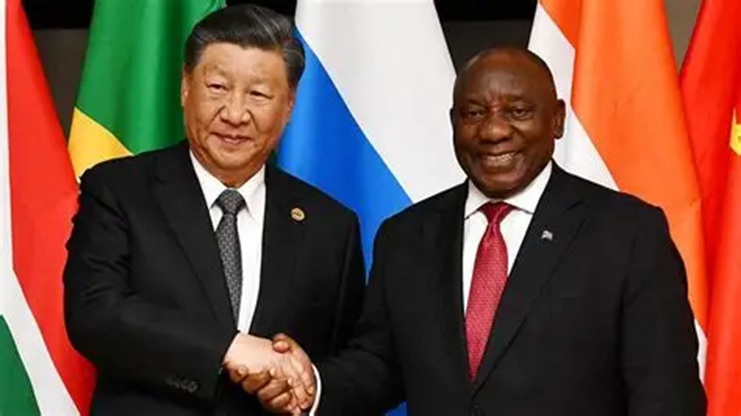
Since its exclusion from AGOA, South Africa, Africa’s largest industrial economy, has actively looked for new trading partners across the globe. As a result, Pretoria is drawing much closer to Beijing.
Recently, Standard Bank marked its ninth consecutive year of participation at the China International Import Expo (CIIE). The bank will once again showcase the strength, innovation, and export potential of African businesses by leading a delegation of 20 clients to Shanghai.
This delegation features representative businesses from seven African nations: South Africa, Ghana, Nigeria, Kenya, Malawi, Tanzania, and Uganda. Specifically, it comprises exporters from key sectors like agriculture and value-added processing. This reflects Africa’s growing ability to meet global demand with high-quality products. This year’s group includes producers of coffee, cocoa, tea, avocados, grains, cashews, and cherries.
CIIE is a leading platform for international trade and investment. It provides African businesses with direct access to Chinese buyers, distributors, and strategic partners. Consequently, the expo creates meaningful opportunities for African exporters to expand their footprint in one of the world’s largest consumer markets. Standard Bank’s participation forms part of a broader commitment to advancing Africa-China trade.
Navigating the AGOA Fallout and US Trade Tensions
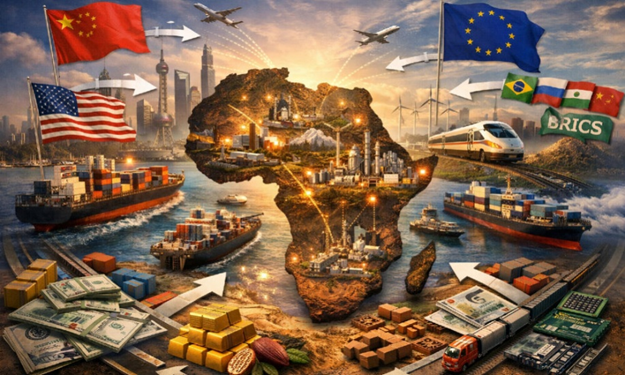
Historically, AGOA-related exports accounted for about 10% of South Africa’s total exports to the United States. However, when measured against South Africa’s total global exports, they accounted for only 1%.
Therefore, US President Donald Trump’s decision to exclude South Africa did not come as a surprise to President Cyril Ramaphosa’s administration. Several factors, including South Africa’s high-profile genocide case against Israel at the International Court of Justice, accusations of discrimination against its white minority, and internal land issues, have placed Pretoria and Washington on a path toward a perpetual trade war.
To mitigate the impact of the AGOA fallout, Pretoria has vigorously pursued new market opportunities. They targeted the African Continental Free Trade Area (AfCFTA), the European Union (EU), India, ASEAN, the UK, and the People’s Republic of China (PRC). Ultimately, the PRC stands out as the country offering the best policy plans to replace AGOA.
The Massive Impact of China’s Zero-Tariff Policy
On May 1, China implemented a zero-tariff policy for 53 African countries that maintain diplomatic relations with Beijing. Since then, Africa has reaped massive benefits.
Trade between China and Africa reached $312.11 billion in the first nine months of this year. This marks a 22% increase year-on-year, according to the PRC’s General Administration of Customs. For South Africa specifically, this zero-tariff arrangement enabled trade with the PRC to reach nearly $15 billion from May to August. This represents a nearly 24% year-on-year increase. Furthermore, South African agricultural exports to China surged exponentially to nearly $500 million during that same period.
Six Key Benefits for South Africa
The zero-tariff policy offers exceptional benefits for South Africa based on its long-term predictability:
- Respect for Sovereignty: Beijing has always adhered to its principles of co-existence. The internal affairs of a sovereign state like South Africa do not affect its strategic trade relations.
- Massive Market Access: The policy allows South African products to reach an enormous Chinese consumer market. It also encourages Chinese companies to invest heavily in South Africa.
- Industrial and Agricultural Growth: The agreement will revitalize South Africa’s industrialization and strengthen its agro-processing food chain. Additionally, key minerals like chrome, magnetite, and iron ore will gain better access to the PRC.
- Job Creation: The tariff-free arrangement will drive local value-added manufacturing. As a result, it will automatically improve livelihoods, stabilize employment, and boost incomes.
- FOCAC Implementation: The agreement provides the perfect platform to implement the 2024 Forum on China-Africa Cooperation (FOCAC) 10-point partnership action plan.
- Advancing AfCFTA: Finally, this policy compliments South Africa’s strategic trade framework within the AfCFTA, a flagship project of the African Union’s Agenda 2063.
A Multipolar Trade Strategy for the Future
Trade and investment between South Africa and China will continue to expand. Meanwhile, the US is reconsidering its options following the recent victory of the Democratic Party in the Congressional elections. They have promised to end Trump’s tariff regime by placing trade policy back in the hands of Congress.
While the trajectory may eventually shift back in South Africa’s favor, Pretoria is actively diversifying its trade partners today. Ultimately, Beijing is paving a highly profitable new path for South Africa, and the world is watching to see where it leads.
Prepared by: Yacoob Cassim