US Officials Support Israeli Claims The Israeli regime continues its relentless occupation of Palestinian land. Meanwhile, the right-wing American political class joins hands with Israeli leadership to entrench Jewish identity across Palestine. The Israeli government recently held a state ceremony at the Al-Buraq Wall in Jerusalem. US Ambassador Mike Huckabee and Secretary of State Marco Rubio attended the event. Their presence highlights the strong alignment between Washington and the Israeli regime’s claims over the ancient site.
This televised ritual sent a loud political message to the world. American power elites are openly validating Israel’s unilateral grip over Jerusalem’s sacred enclosures. The spectacle amounted to a provocative endorsement of the annexation of East Jerusalem. Caretaker Prime Minister Benjamin Netanyahu joined Rubio and Huckabee to place prayer notes into the wall.
Excluding Arab Knesset Representatives from Cabinet
While Washington supports Israeli claims in Jerusalem, domestic political negotiations continue in the Knesset. Representatives of Arab political parties face complete exclusion from the upcoming government. Negotiations between the Israeli liberal left-wing and the nationalist right-wing are currently underway. The main goal remains ousting Netanyahu from power. However, deep divisions remain among the new opposition.
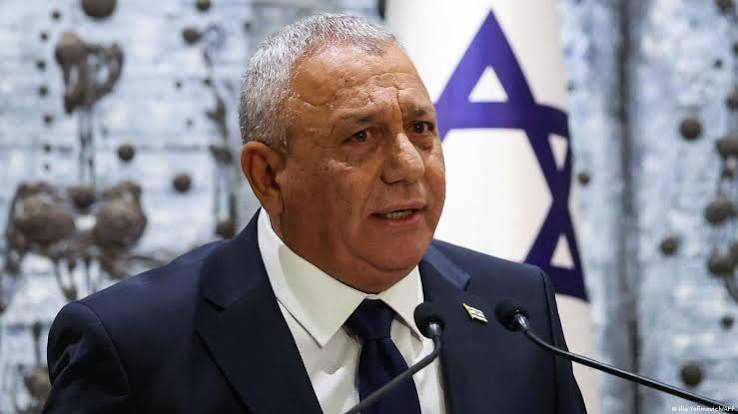
The Knesset consists of 120 seats. On 27 October, opposition parties won 67 seats in the legislature. This majority should have allowed liberal opposition leader Gadi Eisenkot to form a government easily. However, 19 of those seats belong to majority-Arab party representatives.
Despite this majority, Eisenkot signaled he will exclude Arab Knesset representatives from any cabinet he leads. Eisenkot plans to include only Jewish left-wing parties and far-right figures like Avigdor Liberman. Liberman previously proposed making citizenship conditional on a loyalty oath.
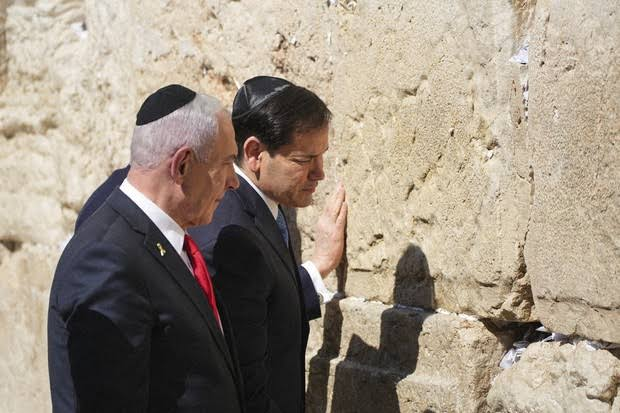
Marco Rubio and Benjamin Netanyahu at Western Wall. Image : Supplied.
Security Arguments Used to Justify Exclusion
Prominent American-Israeli journalist Gil Hoffman published a column in the Jerusalem Post regarding the election outcome. He offered talking points to help Israelis explain the absence of Arab ministers to foreign observers. Hoffman wrote that Israelis should explain the decision does not stem from racism.
However, Hoffman claimed an Arab cabinet member would vote on sensitive security issues. He argued that the current security situation remains too problematic for that arrangement. This view relies on the core belief that Arab Knesset representatives pose an inherent security risk. Most Israeli politicians accept this consensus, rarely viewing it as discriminatory or racist.
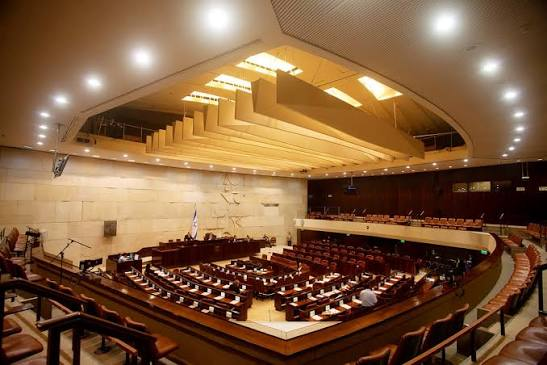
Inside Israel Knesset. Image: Sourced.
Coalition Options and the Ongoing Settler Agenda
Eisenkot is currently considering two potential paths to power. First, he has conducted negotiations with Netanyahu regarding a government of national unity. This option would involve all major Jewish parties with Netanyahu at the helm. Second, Eisenkot has discussed forming an emergency government.
An emergency cabinet would consist only of anti-Netanyahu Jewish parties, holding just 48 seats. Such a government could take power if Arab Knesset representatives vote for it despite their exclusion from the cabinet. Eisenkot could then secure the premiership without offering them executive power.
Regardless of which coalition emerges, the core government objectives remain unchanged. The new administration will maintain the status quo with Israeli settlers. Settlers will continue driving Palestinians off their land, while voting for whichever government enables their expansion.
PREPARED BY YACOOB CASSIM