Can AI Read Your X-Ray? Dr Mario Haines Explains How AI Is Changing Medical Imaging
Artificial intelligence can already analyse X-rays, flag possible abnormalities and help urgent cases reach radiologists faster. But can patients trust AI with something as important as a medical diagnosis?
You have an X-ray taken and are told to wait for the results.
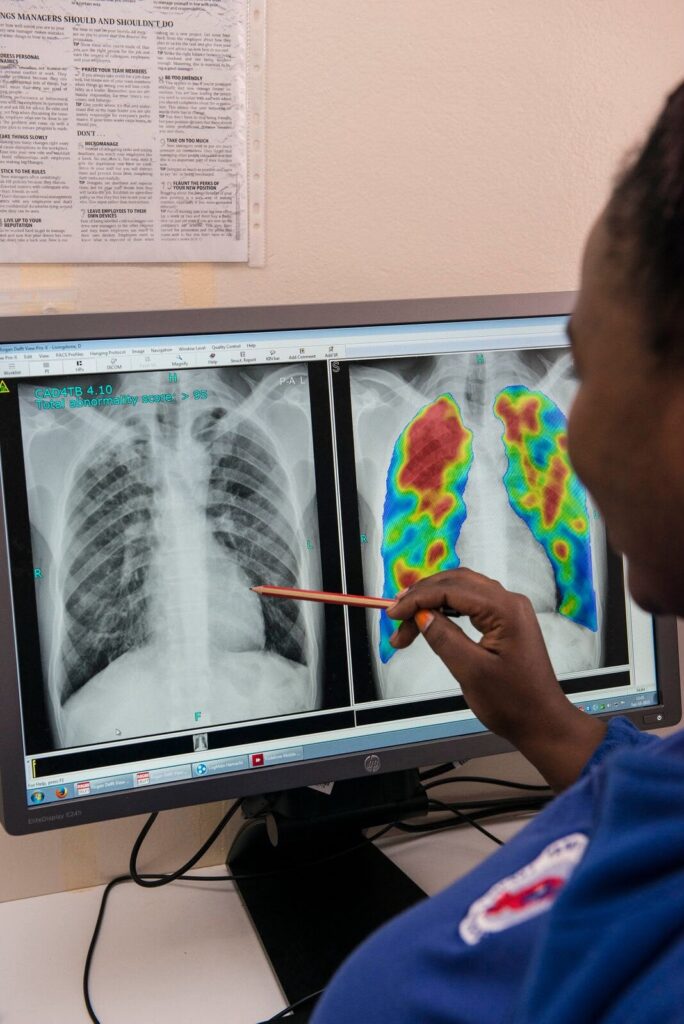
While you sit wondering what the image might show, an artificial intelligence system may already be analysing it. Within seconds, the software can highlight a suspicious area and help determine how urgently a radiologist should review your scan.
That speed could make a real difference. A small shadow detected earlier may lead to further testing sooner. An urgent scan moved to the front of the queue could change what happens next.
But behind every medical image is a person waiting for answers. Their treatment and future may depend on what is seen, and what is missed.
The question is no longer whether AI can read an X-ray. It is how much of a patient’s diagnosis we should trust it to handle.
How Is AI Being Used in Medical Imaging?
Dr Mario Haines is an interventional radiologist and managing partner at Jackpersad & Partners Inc. in Pietermaritzburg. He has approximately 15 years of experience in radiology and holds an MBA in healthcare leadership from Stellenbosch University.
Haines says artificial intelligence in radiology is not completely new. Earlier computer-assisted systems were already being used in areas such as breast imaging, where software could flag possible lesions.
The AI system does not make the final decision. It directs the radiologist towards an area that may require closer examination.
The radiologist must then decide whether the finding is genuinely suspicious or simply an imaging artefact caused by movement, equipment or overlapping tissue.
According to Haines, AI can act as an additional set of eyes. It may help professionals notice small abnormalities, particularly when they are working through large numbers of medical images.
A machine does not become tired after examining its hundredth image of the day. A human can. However, the machine does not understand what it sees in the same way a trained medical professional does.
What Can AI Detect on an X-Ray?
AI X-ray analysis can be trained to recognise patterns associated with lung nodules, pneumonia, fractures, tuberculosis and other abnormalities.
A study involving 1,529 patients at four Danish hospitals found that an AI tool identified abnormal chest X-rays with 99.1% sensitivity. Researchers said the technology could help separate normal examinations from those requiring further review.
The result sounds impressive, but it is not a guarantee.
The system also produced a critical false-negative result, missing subtle signs of disease. For the patient whose illness is overlooked, a 99% success rate offers little comfort.
Haines says chest X-rays are particularly challenging because bones, organs, blood vessels and soft tissue overlap within one flat image. AI may confuse these structures, flag something harmless or fail to recognise an unusual presentation of disease.
There is also the problem of explanation. An AI system may label a lung nodule as suspicious without clearly explaining why it reached that conclusion.
A radiologist can study the image alongside the patient’s symptoms, medical history, laboratory results and previous scans. AI can recognise a pattern. It cannot recognise fear on a patient’s face.
Why AI in Medical Imaging Matters in South Africa
Artificial intelligence in medical imaging could help South Africa reduce backlogs and expand screening in communities where specialists are scarce.
In 2024, the National Department of Health said it was considering AI-assisted chest X-rays to accelerate screening for tuberculosis and silicosis, particularly among current and former mineworkers.
The two diseases can appear similar on chest X-rays, making them difficult to distinguish.
The World Health Organization has approved six software products that met its performance standards for TB screening in people aged 15 and older. However, anyone who screens positive still needs confirmatory testing before treatment begins.
South African researchers are also studying how AI could make TB screening more accurate.
Stellenbosch University is coordinating the R46 million AddiCAD project, which combines AI-powered chest X-ray analysis with a finger-prick blood test.
Preliminary findings showed that the combined approach improved specificity by 20% compared with AI imaging alone, without reducing sensitivity. Researchers will test the technology in approximately 1,000 adults across South Africa, Namibia and The Gambia.
This is where medical AI could make its greatest difference. Not by replacing specialists, but by helping the right patient reach one sooner.
Could AI Help Patients Receive Results Faster?
A 2026 study involving 296 patients found that AI assistance improved the quality of chest X-ray reports produced by junior radiologists and reduced interpretation time by 18.3%.
Senior radiologists still reviewed and finalised the reports before releasing them. This supports using AI alongside medical professionals instead of allowing the technology to diagnose patients on its own.
“AI will make its greatest impact in assisting both radiographers and radiologists,” Haines said.
Radiographers produce medical images, while radiologists are doctors who interpret them. If AI helps both groups work more efficiently, urgent cases could be identified sooner and more patients could move through the healthcare system.
However, faster image analysis does not always mean faster treatment. A patient may still need another scan, a laboratory test, a biopsy or an appointment with a specialist.
AI can shorten one part of the journey. It cannot repair the broken road that sometimes follows.
What Happens When Medical AI Gets It Wrong?
“The tricky part will be if you become totally reliant on AI. Mistakes happen,” Haines warned.
If an AI system misses a tumour or incorrectly flags a healthy patient, responsibility becomes difficult to assign.
Is the hospital responsible? Is it the company that developed the software? Or is it the medical professional who accepted the recommendation?
Haines believes that as new AI systems enter the healthcare market at different price points, strong safeguards will be needed to ensure that affordability does not come at the expense of accuracy or patient care.
His concern is not to undermine existing systems. It is to protect the quality of medical imaging by ensuring that every AI tool is properly tested, clinically validated and held to consistent regulatory standards before being used on patients.
This will be particularly important in resource-constrained settings, where access to new technology and the quality of that technology must improve together.
The South African Health Products Regulatory Authority has issued requirements for AI-enabled medical devices. Regulation matters because software that performs well in one country or hospital may not perform equally well among different patients, equipment and clinical environments.
Will AI Replace Radiologists and Radiographers?
Haines is excited about the future of artificial intelligence in medical imaging, but he does not believe it will replace the professionals responsible for producing and interpreting scans.
“I don’t think AI will replace a radiologist or radiographer,” he said. “You can never take out the human factor.”
A machine can highlight a shadow. It cannot sit with a frightened patient and explain what that shadow may mean.
So, Can AI Read Your X-Ray?
In a limited but increasingly powerful sense, yes. It can recognise patterns, identify suspicious areas and help urgent cases reach healthcare professionals sooner.
But a scan is not the patient, and a probability score is not a diagnosis.
The future of medical imaging should be a partnership in which AI helps healthcare professionals see more clearly, while judgement, responsibility and compassion remain unmistakably human.