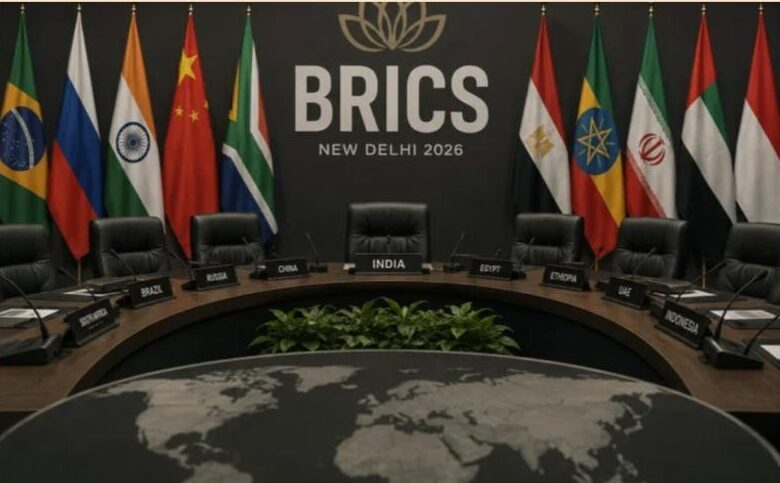
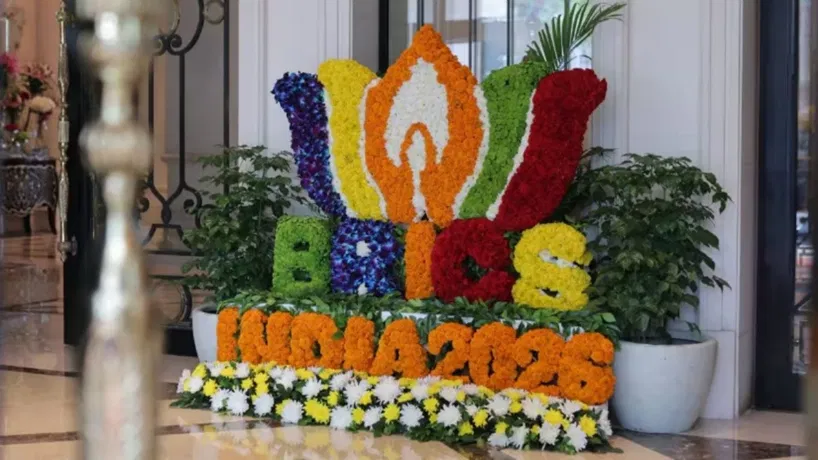
New Delhi hosts the 18th BRICS Leaders’ Summit on 12 and 13 September 2026. The BRICS Business Forum opened the programme on 11 September at Bharat Mandapam.
Indian Prime Minister Narendra Modi chairs the summit under India’s 2026 BRICS presidency. Russian President Vladimir Putin has confirmed his attendance. Chinese President Xi Jinping is also expected in New Delhi.
This year’s theme is “Building for Resilience, Innovation, Cooperation and Sustainability.” Leaders will focus on trade, technology, energy security, healthcare and reform of global institutions.
BRICS now includes eleven member states: Brazil, Russia, India, China, South Africa, Saudi Arabia, Iran, Indonesia, Egypt, Ethiopia and the United Arab Emirates. South Africa joined the original bloc in 2010 and remains the group’s gateway to the rest of the continent.
As the summit draws comparisons to the G7, here is how the two blocs measure up.
Population Gives BRICS a Demographic Edge
BRICS includes the world’s two most populous nations, India and China. Brazil and Indonesia add further scale to the bloc’s consumer base. This gives BRICS access to vast labour pools and long-term growth potential. The G7 holds a smaller share of the global population. It still commands several of the world’s wealthiest economies.
Energy and Commodities Remain a Strategic Asset
Russia, Saudi Arabia, the UAE and Iran rank among the world’s largest oil and gas producers. Brazil contributes major agricultural and energy output. India and China, as Asia’s industrial giants, consume vast amounts of energy. This combination gives BRICS considerable weight in global energy markets.
BRICS Nations Push for a Bigger Voice in Global Trade
The bloc now accounts for roughly a quarter of global trade. Its New Development Bank offers emerging economies an alternative source of infrastructure financing. Analysts see this as a platform for the Global South to gain more influence over the international financial system.
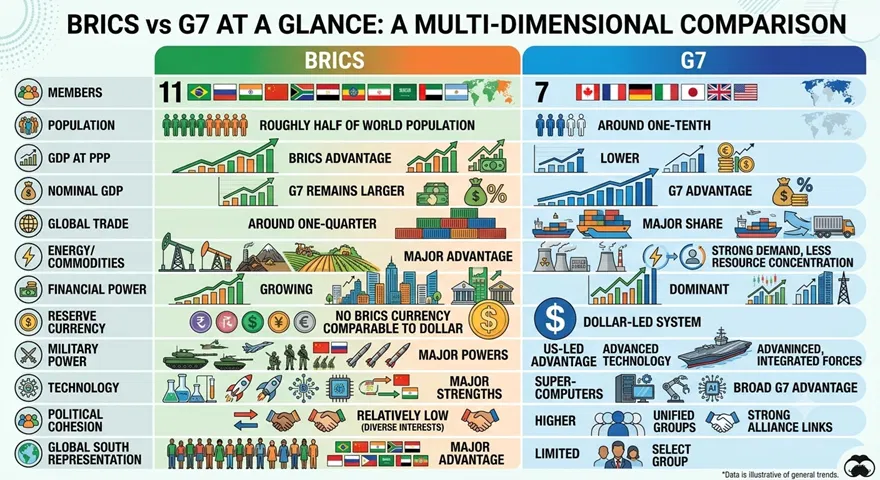
BRICS vs G7 at a Glance
| Measure | BRICS | G7 |
|---|---|---|
| Member states | 11 | 7 |
| Share of world population | Roughly half | About one-tenth |
| Share of global trade | Around a quarter | Major share |
| Reserve currency status | No shared alternative to the dollar | US dollar dominant |
| Energy production | Major oil and gas producers | Strong demand, less production |
| Technology and finance | Growing strengths | Established global lead |
Demographic and Resource Pressures Loom
China and Russia face declining populations, a trend that could reduce their long-term labour supply. India also has a smaller female population than expected due to sex-selective practices, though its decline is far less severe than China’s. Oil and gas reserves face growing scarcity as more countries shift toward renewable energy.
The G7 Still Leads in Finance and Technology
The United States alone dwarfs other G7 economies in financial and industrial power. Washington also maintains the world’s most dominant military. The US dollar remains the leading global reserve currency. G7 members hold major strengths in semiconductors, aerospace, pharmaceuticals, artificial intelligence and advanced manufacturing.
However, G7 nations depend heavily on minerals sourced from developing economies. Africa increasingly favours trade with Asia over the West, a shift reflected in African countries seeking BRICS membership. South Africa, Ethiopia and Egypt are already part of the bloc.
South Africa’s Place in a Shifting Global Order
Africa is deepening its own integration through the African Continental Free Trade Area and Agenda 2063. These frameworks are expected to boost trade between African neighbours. South Africa’s membership in BRICS positions the country as a link between the continent and the wider bloc.
Cooperation, Not Competition, Likely Ahead
Analysts expect BRICS to build cooperation with the G7 rather than compete directly. Russia was a member of the G8 before its war in Ukraine. Neither the Global South nor Russia is seeking to replace the major Western economies or Japan.