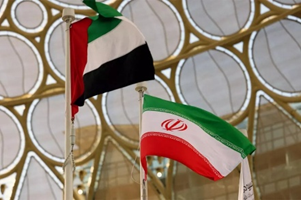
At the BRICS Summit in New Delhi, Iranian President Masoud Pezeshkian and Abu Dhabi Crown Prince Sheikh Khaled bin Mohamed bin Zayed Al Nahyan agreed to move past recent tensions. Both leaders stressed the need to “put the past behind us” and focus on the future.
This meeting marked a possible de‑escalation after months of strained ties. The UAE had suspended trade and financial exchanges with Tehran following Iranian missile attacks. In addition, both nations have long disputed the Gulf islands of Abu Musa, Greater Tunb, and Lesser Tunb.
BRICS Diplomacy and the New Delhi Declaration
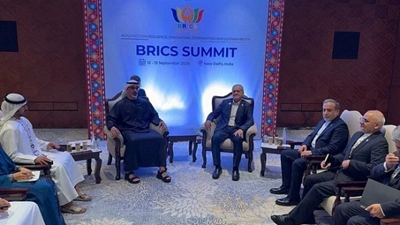
The summit provided a platform for dialogue. Both Iran and the UAE supported the New Delhi Declaration, which called for restraint in West Asia, protection of civilians, and safeguarding of energy flows and maritime trade.
Importantly, the declaration avoided direct blame. This wording gave both sides space to endorse the statement, signalling a step toward regional stability.
Why This Matters
- Regional Stability: The Strait of Hormuz, controlled by Iran and the UAE, is vital for global oil supply.
- Economic Impact: Disruptions in oil flows have previously affected BRICS economies such as India and China.
- Geopolitical Balance: Abu Dhabi’s alignment with the United States and Tehran’s ties to Russia highlight the bloc’s role in bridging divides.
Future Outlook
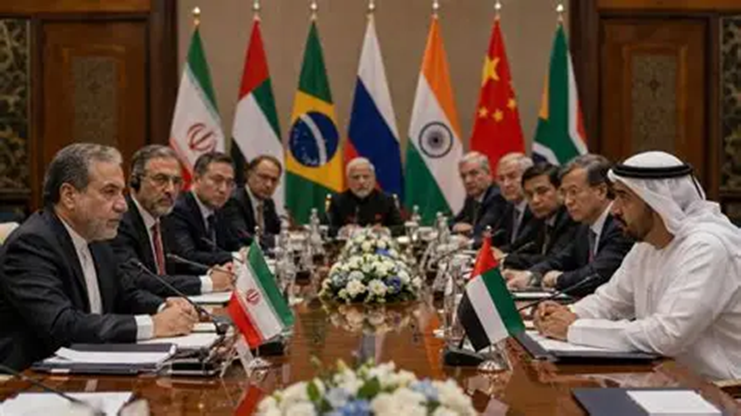
Both Iran and the UAE joined BRICS in 2024. Their disputes created challenges for the bloc, but the 2026 summit showed progress. By supporting the New Delhi Declaration, both nations signalled willingness to cooperate.
For BRICS, this agreement strengthens its role as a stabilizing force in West Asia. For global markets, it offers hope of secure energy flows and reduced conflict.