First, a massive Saudi-led offensive Yemen campaign has drastically intensified the ongoing war. Specifically, 100 fighter jets currently provide heavy air support to government forces. Consequently, these government troops continue battling Houthi rebels for critical territory near the Bab al-Mandab Strait. Importantly, this strategic strait serves as a major route for global commercial trade.
According to officials, the Saudi-led coalition aircraft support forces aligned with Yemen’s internationally recognised government. Currently, these forces push aggressively into Houthi-held areas along the western coast of the country.
Government Forces Claim Major Gains
Recently, government forces stated they recaptured several important positions during this Saudi-led offensive Yemen operation. For example, military sources claim they took back the port city of Mocha and the Dhubab airport. However, the Houthis strongly dispute this claim. Therefore, independent organizations have not yet confirmed the total government control of the city.
Meanwhile, Saudi-led coalition spokesman Major-General Turki al-Malki confirmed the heavy aerial involvement. Specifically, he stated that 100 fighter jets recently joined the new “Dawn of Yemen” military operation. Additionally, the coalition announced they successfully destroyed over 300 high-value Houthi targets. Furthermore, they provide continuous air protection directly over the Bab al-Mandab Strait.
On the ground, the government forces recently recaptured Dhubab just north of the strait. Ultimately, they want to regain crucial territory from the Houthi rebels. Before this, recent Houthi advances in western Yemen put the government forces under severe military pressure.
Why the Bab al-Mandab Strait Matters
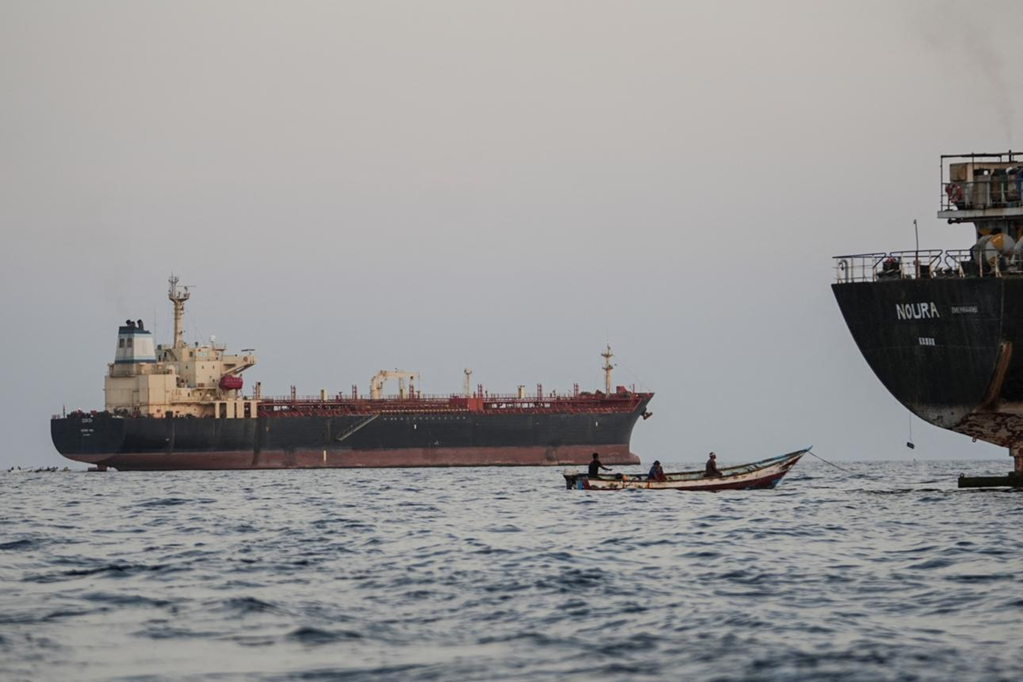
Globally, the location of this heavy fighting makes the latest developments extremely important. Specifically, the Bab al-Mandab Strait connects the Red Sea directly with the Gulf of Aden. According to reports, approximately 12 percent of all global trade passes through this narrow waterway.
Consequently, this intense fighting could negatively affect commercial ships. Furthermore, it threatens energy supplies travelling between Asia, the Middle East, and Europe.
According to researchers, international attention focuses heavily on the Red Sea because these shipping routes remain vital. Moreover, analysts predict a bigger change in the war if government forces begin taking territory deeper inside Yemen. For instance, government troops hope to recapture areas such as Taiz, al-Bayda, and Ibb.
The Human Cost Rises as Fighting Continues
Simultaneously, the Saudi-led offensive Yemen conflict has spread beyond the country’s borders. Recently, the Houthis claimed they launched missiles and drones at several targets inside Saudi Arabia. Specifically, they targeted King Khalid International Airport in Riyadh and an Aramco refinery in Rabigh. Additionally, the US Embassy in Riyadh warned American citizens to remain alert to potential missile attacks.
Unfortunately, the human cost of this decade-long conflict continues to rise rapidly. Recently, the World Health Organization confirmed that the latest violence killed at least 959 people and wounded more than 4,200. Moreover, the UN migration agency stated that the fighting forced more than 174,000 people to leave their homes inside Yemen.
Looking ahead, international observers will watch closely to see if government forces can hold their newly recaptured areas. In conclusion, the heavy involvement of Saudi fighter jets raises serious concerns that the fighting could spread into a wider regional conflict.