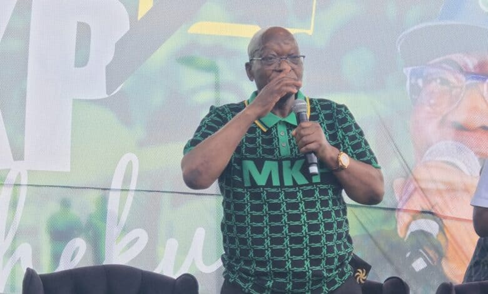
eThekwini Breakdown: MK Leads Without a Majority
Officials have finished counting all 839 voting districts. Overall, the results show a dramatic shift from the 2021 elections. Furthermore, they end single-party dominance in one of South Africa’s largest metros.
Here is the final voter share breakdown for the metro compared to the previous election:
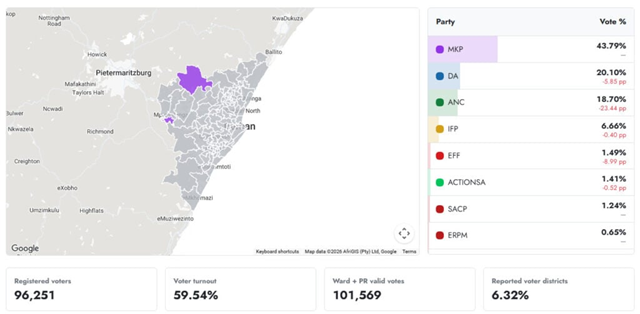
| Party | 2021 Result | 2026 Final Result |
| MK Party | – | 38.3% |
| Democratic Alliance (DA) | 26.0% | 25.5% |
| African National Congress (ANC) | 42.1% | 16.4% |
| Inkatha Freedom Party (IFP) | 7.0% | 6.8% |
| ActionSA | – | 2.9% |
| Economic Freedom Fighters (EFF) | 10.5% | 1.6% |
Out of 223 council seats, MK will likely take 86. Meanwhile, the DA expects 57 seats, and the ANC expects 37. A governing majority requires 112 seats. Therefore, this leaves MK about 26 seats short. Both eThekwini and Msunduzi municipalities now face hung councils. Indeed, this raises the likelihood of a leadership change at City Hall.
The Provincial and National Picture
In KwaZulu-Natal, MK leads the provincial vote share at roughly 34%. Next, the IFP and ANC follow in the low-to-mid 20% range. This confirms a significant political realignment in the province. Moreover, older parties continue to lose ground. In the meantime, the DA successfully retained control of the uMngeni Municipality.
Nationally, the ANC leads with approximately 30.8% of the vote. This marks a sharp decline from its 45.6% finish in 2021. Similarly, the DA secured roughly 24.6%, up from 21.7%. The MK Party took approximately 9.8% of the national share. Ultimately, these figures closely track the CSIR election model projections.
MK Party Objects to the Counting Process
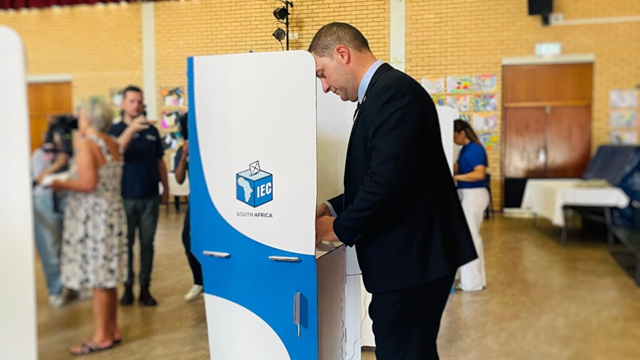
Despite leading in eThekwini, the MK Party lodged a formal objection. They submitted this to the Independent Electoral Commission (IEC) on November 6.
The party alleges a critical system failure occurred during live results capturing. Specifically, this happened at the eThekwini Results Operations Centre. MK claims they saw disrupted data streams and altered audit trails. Additionally, they reported systematic mismatches between the ROC leaderboards and the certified physical results slips.
MK officials demanded the IEC quarantine disputed votes and conduct an independent audit. At the same time, they urged their supporters to remain calm. The IEC expects to finalize outcomes around November 8.
What Happens Next in eThekwini?
Picture: moneyweb.co.zamoneyweb.co.za
The 2026 local elections produced many hung councils nationwide. This reflects the continued decline of previous majorities. Furthermore, it shows the rapid rise of regional and newer parties.
In eThekwini, politicians have already started coalition talks. However, the DA publicly ruled out a partnership with MK. Finalizing a governing arrangement will require complex negotiations. Undoubtedly, these talks will include MK, the ANC, IFP, ActionSA, and smaller parties. In conclusion, final seat allocations and IEC rulings will determine the new council’s makeup.
Prepared by Yacoob Cassim