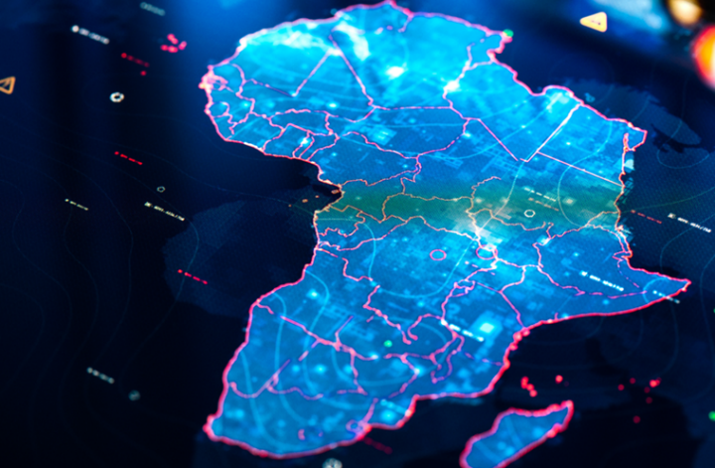

South Africa’s communications regulator was issued prospective satellite operators a frank piece of advice: if you want to run a constellation service such as Starlink in in this country, do not expect a new network licence from us – go and buy one from a company that already holds it. In a notice gazetted on 29 June, Independent Communications Authority of South Africa (ICASA) set out precisely which authorisations a communications service requires – an individual electronic communications service (I-ECS) licence and the relative spectrum – and then explained why it cannot, for now, issue the network licence at all.

Under the Electronic Communications Act (ECA), it may consider I-ECNS applications only once the minister has issued a policy direction and it has published an invitation to apply. No such invitation is open. The department, in fact, directed Icasa in August 2025 to first hold an inquiry into whether new network licences are needed at all. That inquiry is still running. SpaceX has amassed $17-billion in spectrum and is preparing to offer its own mobile service so the regulator points instead to a side door: acquire an existing licensee under section 13 of the ECA. In plain terms, the fastest lawful route into the South African market for the most capable communications networks ever built is to purchase a second-hand licence from an incumbent. The notice does not mention Starlink by name; it applies equally to Eutelsat OneWeb and Amazon Leo.

Communications network service companies such as Telcom, Cell C, Vodacom, MTN etc have to respect the legislation and obey the rules of the game. The state for its part does not have a monopoly on internet broadband licences such as Starlink. Since Starlink is a division of SpaceX which is owned by South African born businessman and billionaire Elon Musk. When referring to a broadband network the term is inclusive of different types of area networks such as local area network, wide area network, City wide area network, or your own personal area network. It is a reference to all telecommunications technology that enables high-capacity data transmission over a single communication medium, allowing multiple signals or data streams to be sent at the same time. For now, when it comes to purchasing licences, South African companies must turn to the creator companies to be supplied with those licences as mentioned above.
Regulator authorities are urging consumer network companies to supply themselves would secondary and inefficient access to broadband frequencies. Broadband frequencies are used in connecting internet networks across nation, and this demands efficiency. The structures in terms of frequencies need to be purchased according to the current upgrades.
Another form of technology that has raised concern is Artificial Intelligence (AI) as a research tool in relation to working alongside humans or being in someway managed by humans.

Customer service offers one example. As organisations automate front-line support, people are increasingly routed through chatbots before they can reach a human being. This may reduce costs. It may also improve speed for simple queries. But it can create a tiered system in which some customers receive human attention while others are left with automated interaction. The labour implications are also becoming visible. Salesforce, one of the world’s largest providers of customer service and business software, has reported that AI agents now handle a growing share of customer interactions.
AI as a research tool is now undergoing a role as a service provider. AI is certainly an innovation of risk, as it replaces human service providers. However, this perfect form of independent thinking computerised chatbot service providers, can become ineffectual depending on how they interact with customers. Whereas AI agents will not necessarily replace all human service providers, if restrictions are not imposed, there appears to be no end to acceleration of this technology. It will be the children of the younger generations that will pay the price unless a wider discussion is held by the common people about the progress of both AI and robotics. The future cannot just be about progressing to the latest upgrades in technology, but ensures it serves the interests of everyone.
Article written by:
Yacoob Cassim
Journalist at Radio Al Ansaar