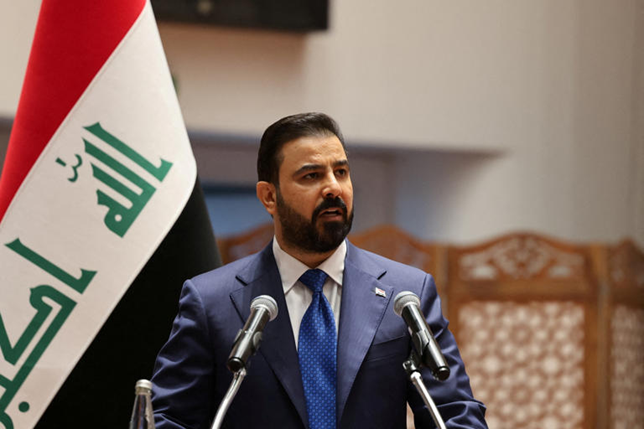

The Iraqi capital of Baghdad bore witness to an anticorruption campaign led by the new Prime Minister Ali al-Zaidi. On Sunday before the crack of dawn, armoured vehicles moved into the city’s fortified Green Zone, the sealed district that hosts Iraq’s parliament, government ministries and foreign embassies. Gunfire was heard in the streets that are normally the most protected in Iraq. By that Sunday morning, dozens of politicians and senior officials – suspected of corruption – were under arrest. Meanwhile images of cash and gold allegedly pulled from their homes were circulating on social media although they have yet to be verified.

Anticorruption activists have complained that Iraq’s political structure is built around graft, with parties and politicians using their patronage networks and powers to plunder state resources. Iraq was placed 136 out of 182 countries in Transparency International’s Corruption Perceptions Index for 2025, with the report noting some improvements in the country’s fight against corruption. But the report did say that “significant structural hurdles” need to be overcome for the situation to dramatically improve, highlighting activists’ complaints about the problem of systemic corruption in Iraq’s political system.
(Oil Ministry Undersecretary for Refining Affairs Adnan) Al-Jumaili is the most high-profile government figure to be arrested on corruption charges since Prime Minister al-Zaidi took office on May 16.
Alaa Samir al-Jubouri, a leading official in the Iraqi Ministry of Electricity, was arrested in Baghdad in June, accused of corruption and wasting public funds.

There is a flourishing culture of corruption in Iraq that dates back to independence in 1932. Despite attempts to transition the country to a legal system that respects transparency and accountability, the country’s graft scandals worsened after Iraq became a republic in 1958, when it came under the rule of a series of dictatorships that culminated in Saddam Hussein’s rise to power in 1979. At the heart of this culture of corruption is the management of the country’s oil industry. Billions are being looted from the state-owned company, when the national treasury is allotted its share of the profit. This institutionalised corruption is extensive with the banks being used to launder millions for politicians like Al-Jumaili. Gold is a major investment, given its value remains the same, as does silver.
The sectarian patronage that dominates Iraq’s politics lies at the heart of the country’s day to day policies with one’s family or network of friends and associates being the main beneficiaries. The banks are a major source of money laundering. It should also be pointed out that the United States (US)-led 2003 invasion of Iraq did not help matters, despite then US President George W Bush’s promises to install a democracy in the country. The US military’s decision to dismiss senior Iraqi government officials and civil servants and more or less partially train a new bureaucracy did not improve the situation.

The crackdown is the boldest move yet by Prime Minister Ali al-Zaidi, a 40-year-old businessman who took office in May and became Iraq’s youngest prime minister. A political newcomer, he was chosen to break a months-long deadlock that followed the November 2025 election, and he took power promising to confront the corruption that has shadowed Iraqi politics for two decades. He has framed the raids as a direct answer to public demand. “Public money must return to the people,” he said, adding that no corrupt official would be shielded from prosecution. He called the operation the first stage of a wider campaign and said the arrests would continue.
Al-Zaidi is using strong arm tactics to bring Iraqi mid-level officials to yield, his anticorruption drive has yet to targe Iraq’s most powerful figures. The raids no matter how extensive, look like minor steps. It is still early days, and more legal inquiries and investigations could follow. However, it is not just solely up to the PM to pursue corrupt leaders and other such participants such as former Prime Minister Nouri Al-Maliki, but the engagement of civil society, the independent media, the legal community and the judiciary to expose money laundering and other activities. Social media Platforms are powerful tools to create transparency by spreading the word, but they are still tools none the less.
How this new drive to end corruption in Iraq’s fragile political system manifests itself, remains to be seen.
Article written by:
Yacoob Cassim
Journalist at Radio Al Ansaar