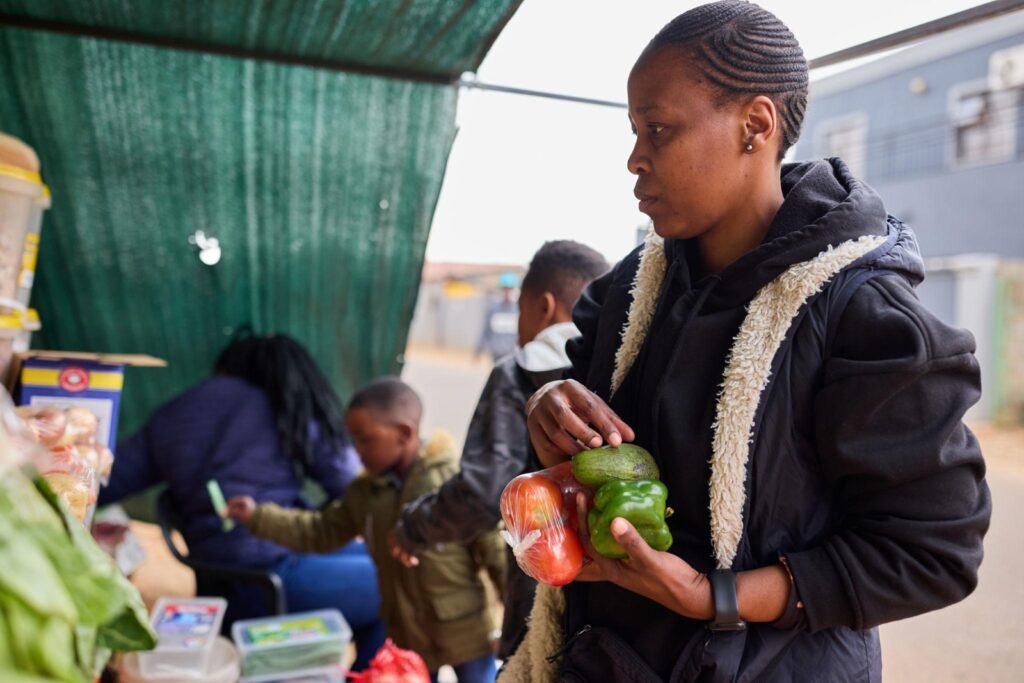

Imagine two South Africans standing in the same supermarket.
One has R5 000 available in their account.
The other has just R500 left until payday.
Who is more likely to pay more for everyday life?
The answer may seem surprising.
In many cases, it is the person with the least money.
Economists call this the “poverty premium” – the hidden cost of being poor. It describes a reality where people with less money often end up paying more for basic goods and services because they cannot access the discounts, bulk purchases and financial flexibility available to wealthier households.
Take something as simple as groceries.
A family with money can buy in bulk, stock up during specials and take advantage of lower prices per item. A family living from week to week often buys smaller quantities because that is all they can afford at the time. While the upfront cost may be lower, the price per kilogram or litre is often higher.
The same principle applies across everyday life.
People with savings can absorb unexpected expenses. People without savings may be forced to borrow money, make repeated trips to shops, buy smaller quantities or pay higher costs over time.
In other words, poverty is not only about having less money.
It is often about paying more.
This reality is becoming increasingly difficult for many South Africans.
The Competition Commission’s latest Cost of Living Report found that rising prices continue to place disproportionate pressure on low-income households. While wealthier consumers may be inconvenienced by increases in food, electricity and transport costs, poorer households often have little room to adjust their budgets.
Every increase matters.
A few rand more for bread.
A few rand more for electricity.
A few rand more for transport.
Each increase may seem small on its own. Together, they can push a struggling household closer to crisis.
Transport provides one of the clearest examples.
Research highlighted by Eyewitness News found that many South Africans spend more than 25% of their income on transport. Statistics South Africa has also identified transport as the third-largest household expense in the country, accounting for 15.3% of household spending.
Think about that for a moment.
Before food is bought.
Before school shoes are purchased.
Before rent is paid.
A significant portion of income has already disappeared simply getting people where they need to be.
The burden does not fall equally.
Statistics South Africa’s poverty data shows that poverty remains a reality for millions of South Africans. In KwaZulu-Natal, more than 60% of adults were found to be living in poverty according to the data, highlighting the scale of the challenge facing many households in the province.
Behind those numbers are real people.
The worker who skips breakfast because taxi fare comes first.
The parent who buys mobile data in small amounts because a monthly package is out of reach.
The family deciding which account can wait another week.
The young graduate who finds a job but struggles to afford the cost of getting there.
These stories rarely make headlines.
Yet they are lived every day by millions of South Africans.
Perhaps that is the cruelest part of poverty.
People often assume that having more money means spending more.
But the opposite can also be true.
When you have money, you can buy in bulk, plan ahead and absorb financial shocks.
When you do not have money, every unexpected expense hits harder. Every increase hurts more. Every setback costs more.
The system does not simply punish people for being poor.
It often charges them extra for it.
And that leaves South Africa facing an uncomfortable question.
If millions of people are already paying more just to survive, how are they ever supposed to get ahead?
Because the real cost of poverty is not only what people lack.
It is what they are forced to pay simply to keep going.
Article written by:
Hudaa Ahmed
Journalist at Radio Al Ansaar