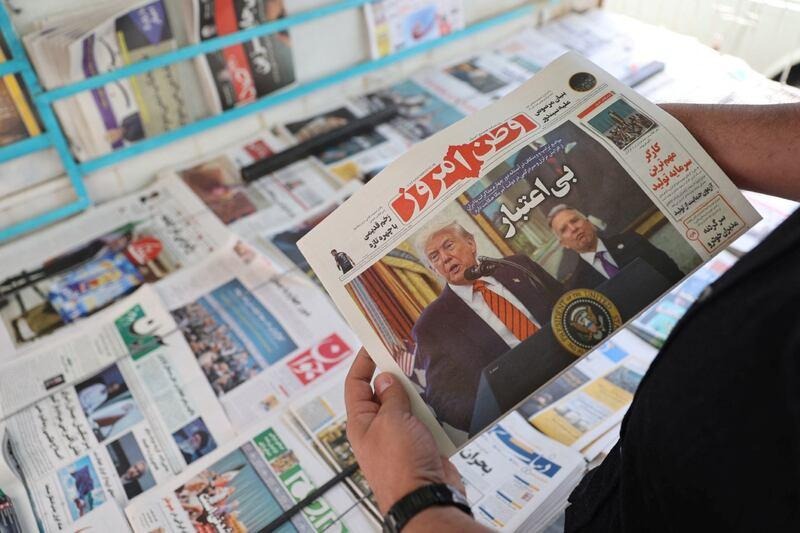

Global attention remains fixed on the Middle East after former United States President Donald Trump claimed that a possible agreement with Iran is now “largely negotiated”, raising hopes of easing tensions in a region that plays a major role in the world’s oil supply and economic stability.
The proposed agreement is aimed at reducing tensions around the Strait of Hormuz – one of the world’s busiest and most strategically important shipping routes. A significant portion of the world’s oil passes through the narrow waterway each day, making developments in the region a major concern for governments, businesses, and financial markets across the globe.
According to international reports, uncertainty in the region has already begun affecting shipping activity, with only a limited number of vessels continuing to move through parts of the Strait during periods of heightened tension. Analysts warn that any serious disruption to the route could have far-reaching consequences, including rising fuel prices, increased transport costs, and further pressure on already strained global economies.
For ordinary consumers around the world, instability in the region could eventually be felt through higher petrol prices, increased food and transport costs, and growing pressure on household expenses. Economists say even the threat of conflict in the Strait of Hormuz is enough to trigger concern in global financial and energy markets.
While Trump has described the negotiations as a major diplomatic breakthrough, the proposed deal has sparked fierce debate within the United States. Several Republican lawmakers and conservative commentators have criticised the reported direction of the talks, arguing that Iran should not be trusted and warning that the agreement may give away too much in exchange for temporary stability.
Concerns have also been raised over Iran’s nuclear programme and whether Tehran would be expected to fully limit parts of its uranium enrichment activities under any final agreement. Iranian officials have denied several international reports surrounding the negotiations, insisting that some claims linked to the country’s nuclear programme are inaccurate or premature.
Trump responded forcefully to criticism from within his own political camp, dismissing opponents of the negotiations as “losers” and accusing them of undermining efforts to prevent a wider regional conflict. His comments have further intensified political tensions in the United States, where Middle East policy remains deeply divisive ahead of the country’s upcoming political season.
International diplomats and mediators continue to push for a breakthrough as negotiations remain active but fragile. Although officials have expressed cautious optimism, no final agreement has yet been formally confirmed.
Observers say the coming days could prove critical – not only for relations between the United States and Iran, but also for global economic stability and the wider future of the Middle East.
The situation continues to develop.
Article written by:
Hudaa Ahmed
Journalist at Radio Al Ansaar