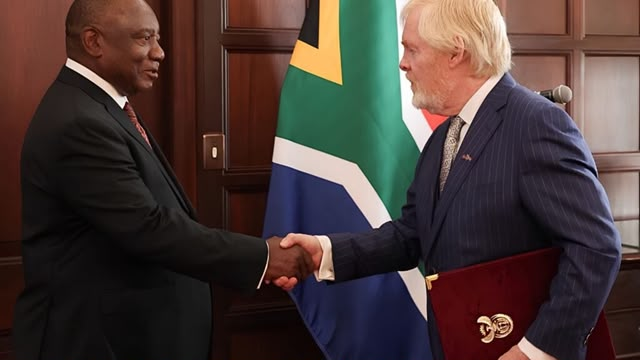
In Washington, two legislative bills seeking to impose US sanctions on South Africa are set to expire on 3 January 2027 unless enacted into law, as the diplomatic divide between the two nations reaches unprecedented levels. This looming deadline coincides with the critical eligibility review for the African Growth and Opportunity Act (AGOA), with outcomes expected by 1 November 2026, alongside new tariffs imposed by US President Donald Trump.
For deeper context on global diplomatic shifts and trade policies, visit Al Ansaar News.
These high-stakes deadlines are fast approaching as South Africa faces mounting pressure from Washington to concede to specific policy demands. According to risk analysts at the Institute for Security Studies (ISS), the disputes at play are currently driven more by political optics and electoral maneuvering in Washington than by purely economic considerations.
The ISS emphasized that time is of the essence, describing the converging deadlines as a “ticking bomb.” With Washington preparing for its midterm elections on 3 November, South Africa’s foreign policy positioning has become a focal point for Congressional lobbyists. Analysts warn that South Africa serves as an “easy target,” with its international relationships easily folded into domestic American political narratives. Consequently, legislative moves such as two pending bills calling for US sanctions on South Africa, alongside Washington’s “Five Asks,” have become convenient political levers for US lawmakers.
Washington’s Demands and US Sanctions on South Africa
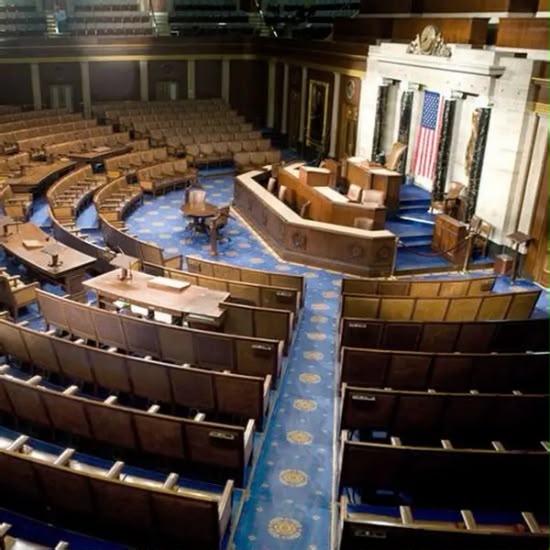
Washington has put forward “Five Asks” to the South African government. The table below outlines these requests alongside the official positions and responses of both nations:
| Washington’s Demand (“Ask”) | US Position & Status | South African Government Response |
| 1. Processing of Afrikaner Refugees | Demands Pretoria not interfere with US refugee processing for Afrikaners. Addressed. | Pretoria has raised no opposition or interference. Addressed. |
| 2. Land Expropriation Without Compensation | Demands expropriation without compensation be prohibited. Partially addressed via judicial review. | Government supports land expropriation without compensation; the matter remains before the Constitutional Court for final ruling. |
| 3. Condemnation of “Kill the Boer” Chant | Demands President Ramaphosa and senior officials explicitly condemn the chant. Unaddressed. | Enacted the Prevention and Combating of Hate Crimes and Hate Speech Act 16 of 2023. Courts ruled the chant does not legally constitute hate speech. |
| 4. Prioritising Rural Crime & Farm Murders | Offered financial and technical assistance to establish targeted safety plans. Unaddressed. | Prioritised a comprehensive Rural Safety Strategy; maintains that crime impacts all citizens regardless of race, colour, or social origin. |
| 5. EEIP Alternatives to B-BBEE | Demands Equity Equivalent Investment Programmes (EEIP) as alternatives across all business sectors. | Asserts sovereign right to address historical racial injustice; EEIP frameworks in telecoms are in progress, with B-BBEE under review. |
Sovereignty, Foreign Policy, and Regional Realities
South Africa maintains the sovereign right to assert its independence and remain a pillar within the international community, a stance that Washington, under President Donald Trump, has a diplomatic responsibility to respect. Washington cannot maintain a stance of diplomatic pressure against sovereign nations without facing global strategic repercussions. Conversely, Pretoria must address domestic challenges to solidify its standing both domestically and internationally.
Regarding security and social cohesion, risk assessments confirm there is no “white genocide” taking place in South Africa; rural crime affects the general population as a whole. While the South African government bears the responsibility to address crime comprehensively, accepting technical assistance from the Trump administration could carry political strings attached. Pretoria must remain cautious when navigating assistance offered by both regional and global powers.
Resettlement of Afrikaner Refugees in the United States
On the issue of white Afrikaner refugees in the US, President Donald Trump has restricted refugee allocations primarily to this specific group. Since returning to office in 2024, Trump has fundamentally transformed the US refugee resettlement programme.
During his first administration, Trump significantly reduced annual refugee admissions. Although the subsequent Biden administration rebuilt the system to target 125,000 admissions in its final year, Trump suspended the programme upon taking office for his second term, leaving thousands of applicants stranded worldwide. Subsequently, administration officials reopened the programme with strict limitations favoring white South Africans.
In September, the US administration announced plans to cap total refugee admissions at 17,500 for 2027, with the majority allocated specifically to white South Africans.
Geopolitical Outlook Ahead of US Midterms
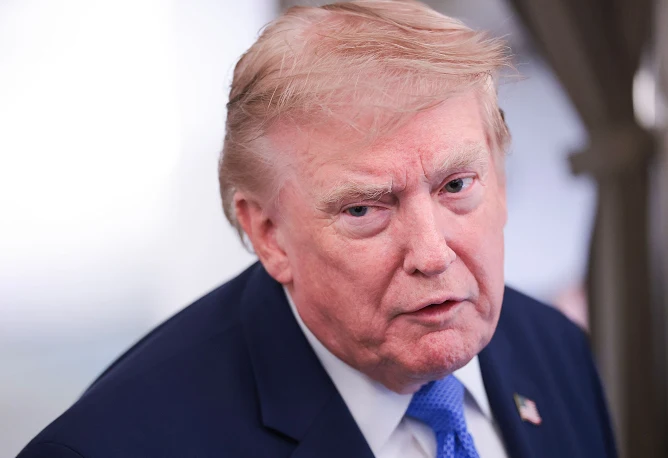
President Trump’s broader geopolitical strategy appears centered on applying multi-layered pressure. On one front, the US utilizes economic levers, such as tariffs, AGOA eligibility reviews, and the threat of US sanctions on South Africa, to encourage policy shifts in Pretoria. On another front, the administration highlights rural crime as targeted racial attacks to justify granting refugee status exclusively to white Afrikaners while excluding other vulnerable global populations.
As the 3 November US midterm elections draw near, the future of bilateral relations, trade agreements, and pending sanctions bills remains closely watched. South Africa faces a critical test in balancing national sovereignty with economic diplomacy on the international stage.