
For many South Africans, the cost of living has become one of the biggest challenges of daily life.
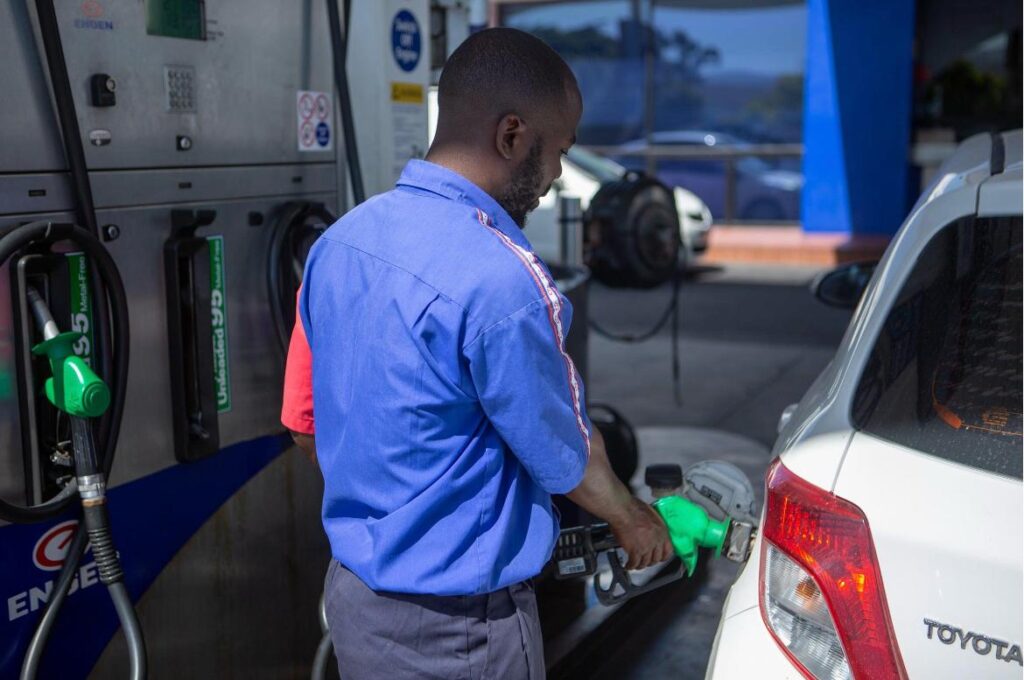
Every month seems to bring another increase. Fuel prices rise, transport costs climb and grocery bills continue to stretch household budgets. Families are constantly looking for ways to make their money go further, often without realising that some of the biggest influences on their finances are decided thousands of kilometres away.
This week, one such decision came from the Middle East.
In a move that has surprised global markets, the United States announced a temporary easing of sanctions on Iranian oil exports for 60 days. The decision forms part of ongoing negotiations between Washington and Tehran and is being viewed as one of the most significant diplomatic developments between the two countries in years.
Within hours of the announcement, oil prices fell as traders responded to the prospect of more Iranian oil entering global markets. U.S. crude dropped below $74 a barrel, reflecting growing optimism that increased supply could help stabilise energy prices.
At first glance, it may seem like another foreign political story with little relevance to ordinary South Africans.
In reality, it could affect far more than international headlines.
For almost five decades, relations between the United States and Iran have been characterised by deep mistrust, sanctions, political confrontation and periodic threats of conflict. The two countries have spent years on opposite sides of some of the world’s most significant geopolitical disputes, making any sign of cooperation noteworthy.
That is why the latest breakthrough has attracted so much attention.
The agreement follows talks held in Switzerland, with mediation support from Pakistan and Qatar. According to reports, the discussions have focused on reducing tensions, maintaining regional stability and working towards a broader agreement that could reshape relations between the two long-time rivals.
As part of the negotiations, Iran has reportedly agreed to allow international nuclear inspections and assist in ensuring the continued safety of shipping through the Strait of Hormuz.
Most people have never heard of the Strait of Hormuz.
Yet this narrow stretch of water is one of the most important locations in the global economy.
A substantial portion of the world’s oil supply passes through the route every day. Whenever tensions rise in the region, markets fear disruptions to supply.
Fuel becomes more expensive.
Transport costs increase.
Businesses spend more to move goods across the country.
Those costs eventually filter through to supermarket shelves, delivery fees and household budgets.
In the end, ordinary consumers pay the price.
This is why a diplomatic breakthrough between Washington and Tehran matters far beyond the Middle East.
The average South African may never visit Iran or the United States, but they experience the effects of global energy markets every time they fill a fuel tank, buy groceries or pay for transport.
For families already struggling with rising living costs, any development that eases pressure on global oil prices is significant.
More oil entering the market generally means greater supply.
Greater supply can help reduce upward pressure on prices.
Lower prices can help ease costs throughout the economy.
While there is no guarantee that consumers will see immediate relief, the market’s reaction shows just how important this development is being viewed internationally.
The story is about more than oil.
It is about whether diplomacy can succeed where decades of confrontation have failed.
It is about whether two countries that have spent years viewing each other as adversaries can find enough common ground to prevent further instability.
And it is about how events taking place in distant parts of the world can have real consequences for ordinary people.
The coming weeks will be critical.
The sanctions relief is temporary, and negotiations remain ongoing. Years of hostility cannot be resolved overnight. If talks collapse, oil prices could rise again and markets could quickly lose confidence.
For now, however, investors are choosing optimism over uncertainty.
The sharp decline in oil prices following the announcement suggests that many believe the negotiations have the potential to lead to something more substantial.
Whether that optimism proves justified remains to be seen.
What is clear is that this is one of those stories that demonstrates just how interconnected the modern world has become.
A decision made in Washington.
Negotiations taking place in Switzerland.
Oil flowing from Iran.
And a family in South Africa trying to make their salary last until the end of the month.
They may seem like separate worlds, but they are connected by the same global economy.
Over the next 60 days, diplomats will continue their discussions, markets will watch every development and governments will assess the implications of what could become a historic breakthrough.
Sometimes the world’s biggest stories are not measured by the countries involved.
They are measured by their impact on ordinary people.
What happens over the next 60 days between Washington and Tehran could help shape global oil prices, influence the cost of living and determine whether struggling households receive some much-needed relief.
For South Africans already feeling the pressure of rising expenses, that makes this far more than a foreign policy story.
It is a story about what everyday life could cost tomorrow.
Article written by:
Hudaa Ahmed
Journalist at Radio Al Ansaar