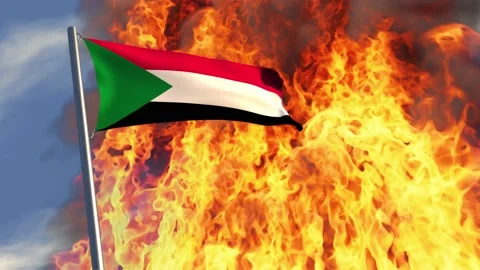

Sudan has gone from having set the thatch alight to being engulfed in a ferocious blaze that threatens its neighbours. The Paramilitary Rapid Support Forces (RSF) and the formal Sudanese Military have entered into a stalemate amid the bloodshed with no side gaining further victory. The United States has presented both sides with a peace plan that would see them declare a truce. American Senior envoy Massad Boulos explained that a peace proposal by his boss US President Donald Trump was rejected. The conflict has lasted over three years with no clear victor and the vast majority of the Sudanese populace have either faced a genocide of immense proportions or fled to refugee camps close to the border.
Trump said last week he would intervene to stop the devastating conflict, which broke out in April 2023 and has spread famine and ethnic killings across the country and threatened a split, the second in its history. Previous efforts led by the United States, Saudi Arabia, Egypt, and the United Arab Emirates have failed to bear fruit. The group submitted a proposal to the two forces in early November. Boulos, US President Donald Trump’s advisor for African and Arab affairs, said both Sudan’s warring factions had welcomed the US plan but neither had formally accepted the text.
On Sunday however, army chief Abdel Fattah al-Burhan described the US’s latest proposal as the worst he’d seen, saying it sidelined the army and granted the RSF legitimacy.
Boulos, speaking at a press conference in Abu Dhabi, said the army had come back with “preconditions” but the US wanted the plan accepted in its original form.

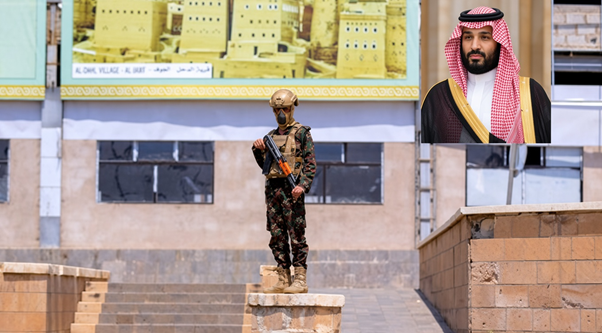
The second split being discussed in the extract above is a reference to the splintering of Darfur and possibly even Kordofan regions from Sudan proper while the first was the 2011 independence referendum that gave the world an imperfect South Sudan. Egypt of course does not want the civil conflict in its southern neighbour to escalate. Nor does Saudi Arabia which is another neighbour to Sudan proper across the Red Sea. It was Saudi Crown Prince Muhammad bin Salman who requested US President Trump to intervene. It would seem now both the formal military Junta of Al-Burhan in Khartoum and the RSF militia of Commander Mohamed Hamdan Dagalo had warmed to Washington’s peace proposal.
The Khartoum Junta appears to be made up of stubborn-hard pressed generals led by Al-Burhan. They and the paramilitary RSF have a tendency to rule over their respective parts of Sudan with an iron fist. Trump may not have the patience to contemplate both sides’ reasons for continuing the conflict. Above all the people of Sudan want a return to civilian democratic rule. However, the best solution for a fast truce is to end the sale of weapons for gold to Sudan. This is a practice that the Emiratis are especially guilty of and needs to stop.
While this should be made clear, the RSF are the only ones who have warmed to Trump’s peace proposal.

Monday’s statement appeared to announce a unilateral ceasefire. It came a day after Sudan’s army chief rejected the Quad’s proposals, and criticized the inclusion of the United Arab Emirates, which has been accused of arming the RSF, as a mediator.
The UAE has denied such accusations and said it aims to stop the war. “In response to international efforts, chiefly that of His Excellency US President Donald Trump … I announce a humanitarian ceasefire including a cessation of hostilities for three months,” General Mohamed Hamdan Dagalo of the RSF said in a speech on Monday. “We hope the Quad countries will play their role in pushing the other side to engage with this step,” he added.
His comments come at a time when the RSF has come under fire for brutal attacks on civilians in the aftermath of its takeover of the city of al-Fashir in late October. That takeover cemented its control of the Darfur region, and the force has subsequently stepped up attacks on the Kordofan region in a bid to take control of the country.
Sudan’s army chief, General Abdel Fattah al-Burhan, in his speech on Sunday accused the US proposal of aiming to weaken the Sudanese army while allowing the RSF to maintain the territory it has seized.

A three month cease fire as proposed by the Americans is meant to lay the ground work for talks between the Khartoum military regime and the RSF. In this scenario however the Khartoum Junta believes it can win this fight despite the grim genocide and ethnic cleansing as well as the famine unfolding under its watch. Add to that Al-Burhan’s own unpopularity and the desire of ordinary civilians to return to democratic, non-military rule the Junta is resting on unsteady foundations. The involvement of the quadrilateral (quad) alliance between Saudi Arabia, Egypt, the UAE and the US is meant to secure Sudan’s path to stability. If there is going to be a truce for peace talks and food aid to be delivered then weapon sales to the Sudanese military and the RSF need to be cancelled.
Abu Dhabi needs to come under close investigation by the International Court of Justice (ICJ) for its close relationship with the RSF and its involvement in the genocide. The RSF on its side appears to have come to the realization that they can’t impose a new junta on South Sudan due to the fact they are unaware of statecraft and are not popular with the peoples whom they have massacred. It will be the Sudanese people above all else who will give legitimacy to any peace plan or government that takes over. A return to civilian leadership must be a necessity. In the meantime, the arms trade to both sides must stop. This could ease the way for a ceasefire between the Khartoum junta and the RSF.
Article written by:
Yacoob Cassim
Journalist at Radio Al Ansaar